
Key Takeaways
- Dust control is two problems, not one: particles in the air, and particles settled into fabric where they are re-released by movement.
- Cleaning with soap and water removes most household soil and germs, and disinfection is reserved for specific situations rather than routine use.
- Damp dusting holds particles on the cloth, while dry dusting moves them into the air — which matters if anyone in the house has allergies.
- Dust mites live in house dust and feed on shed skin, so bedding and fabric get their own routine rather than sharing the floor one.
- Ventilation and humidity control do as much as cleaning: biological contaminants need moisture to thrive.
Introduction
Reducing dust in a home is usually treated as one job, and it is really two. The first is the dust in the air, which settles onto surfaces and is what most people see on a shelf. The second is the dust already settled into fabric — carpet, upholstery, bedding and curtains — which is not visible but is re-released into the air every time somebody walks, sits or makes a bed. Working on only one of the two explains the common experience of a house that looks clean and still makes somebody sneeze. The two halves need different tools and a different routine.
The health framing is worth stating plainly, because it changes the method. Household dust carries more than grit: dust mites live in house dust and feed on flakes of dead skin shed by people and pets, and they are a common trigger for allergy and asthma symptoms (NIEHS, 2025). Meanwhile, public health guidance draws a clear line between cleaning and disinfection, noting that cleaning with soap and water removes most germs and soil in ordinary household settings, and that disinfection is reserved for specific situations such as illness in the home (CDC, 2025). For dust management that means the goal is removal rather than sterilising, and removal is mostly mechanical.
This guide separates the airborne problem from the fabric problem, covers damp versus dry dusting, explains how vacuuming can make air quality worse before it makes it better, and covers the two environmental controls that matter most: ventilation and humidity. In our experience, households that fix the fabric half of the problem notice the difference in the air before they notice it on the shelves.
Dust Is Two Problems
The airborne problem is about particles you can see and lift. Dust settles continuously, so a surface is never actually dust-free; it is only dust-free until the next hour. This is the half that responds to dusting, and the method matters more than the frequency, because a dry cloth or a dry duster moves particles off the shelf and into the air where they drift and settle again. The fabric problem is about particles that have already been captured by a surface and are being released slowly. Carpet, upholstery and bedding hold dust and dander until something disturbs them, which is why a room can feel dusty the day after it was cleaned without anyone having touched a shelf.
The two halves need different responses. Airborne dust responds to damp removal on hard surfaces, because moisture makes particles stick to the cloth instead of becoming airborne. Fabric dust responds to extraction and washing, because the particles are inside the material and no amount of surface wiping reaches them. Consequently, a routine that only dusts and never vacuums will under-perform in a carpeted room, and a routine that only vacuums and never dusts leaves the shelves coated. In our experience, the households that report the biggest improvement are the ones that added a damp dusting pass and a regular fabric clean to a cleaning routine they already had.
Airborne Dust: Damp Beats Dry
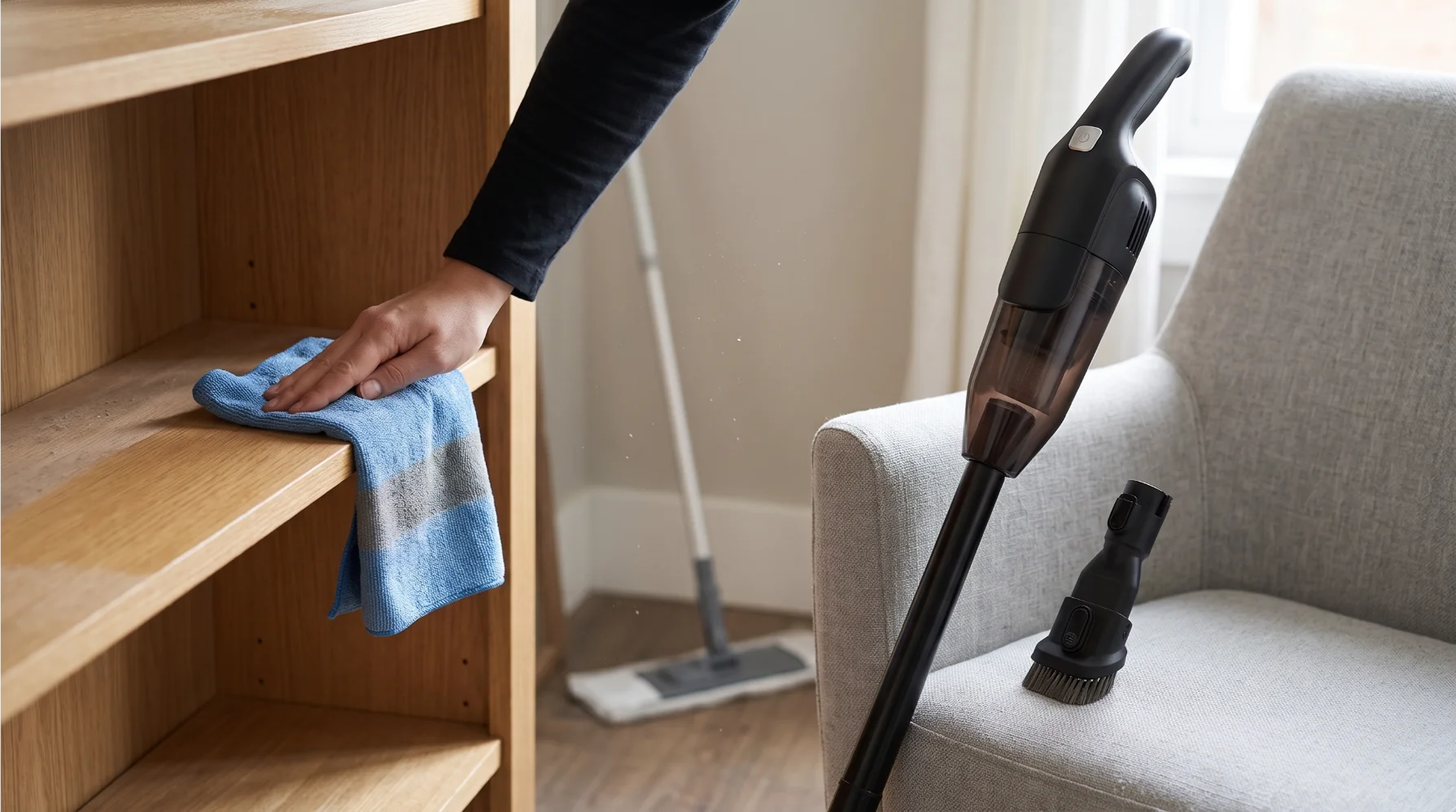
Damp dusting is the single most effective change for airborne dust, and the reason is mechanical. A dry cloth or feather duster lifts particles and leaves many of them suspended, where they drift and settle again within hours; a damp cloth wets them so they adhere to the surface of the cloth and are removed from the room. Public health guidance for reducing everyday dust build-up recommends dusting with a damp cloth, and it also recommends controlling indoor humidity, because biological contaminants multiply in damp conditions (EPA, 2025). Together those two recommendations cover most of what a household can control.
The method is simple enough to keep. Work from the top of a room downwards, because anything dislodged will fall onto surfaces you have not yet cleaned, and finish with the floor. Use a damp cloth or a damp microfibre pad on hard surfaces, and keep the cloth rinsed, because a cloth loaded with dust simply redistributes it. For screens, electronics and unfinished wood, stay dry and use microfibre, which traps particles by electrostatic attraction without moisture. Notably, the same logic explains why a vacuum attachment is better than a brush on blinds and vents: extraction removes the particles rather than moving them into the air, which is the whole point of the exercise.
| Surface | Best method | Why | Avoid |
|---|---|---|---|
| Hard surfaces, sealed | Damp cloth or damp microfibre | Moisture holds particles on the cloth | Dry dusters that release dust into the air |
| Screens and electronics | Dry microfibre, light pressure | Traps particles without moisture damage | Sprays and wet cloths |
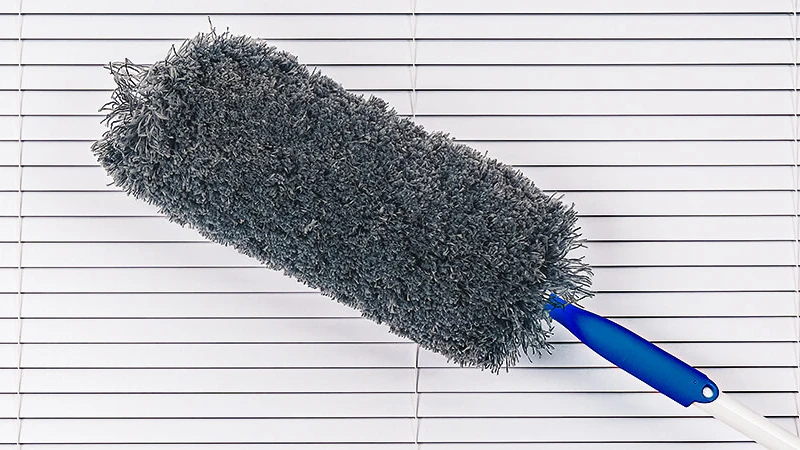
| Blinds, vents, radiators | Chenille head or vacuum brush attachment | Reaches between slats and extracts | Flat cloths that skim the front face |
| Carpet and rugs | Vacuum slow, in two directions | Lifts particles from the pile | Beating or dry brushing |
| Bedding and throws | Wash on a hot cycle | Removes dander and mites, not just dust | Vacuuming loose fabric |
| Ceilings, cornices, fans | Extendable microfibre duster | Reach without disturbing settled dust elsewhere | Dry brushing from below |
Fabric: Where Dust Comes Back From
Fabric is the half of the problem people miss, and it is the half that keeps the air dusty. Carpet holds a reservoir of dust and dander that is released by foot traffic, upholstery releases it when somebody sits down, and bedding releases it every night. Because the particles are inside the material, surface cleaning does nothing, and a room can be dusted thoroughly and still refill within a day. Consequently, fabric needs extraction and washing rather than wiping, and it needs them on a schedule rather than when it looks dirty, because the reservoir is invisible.
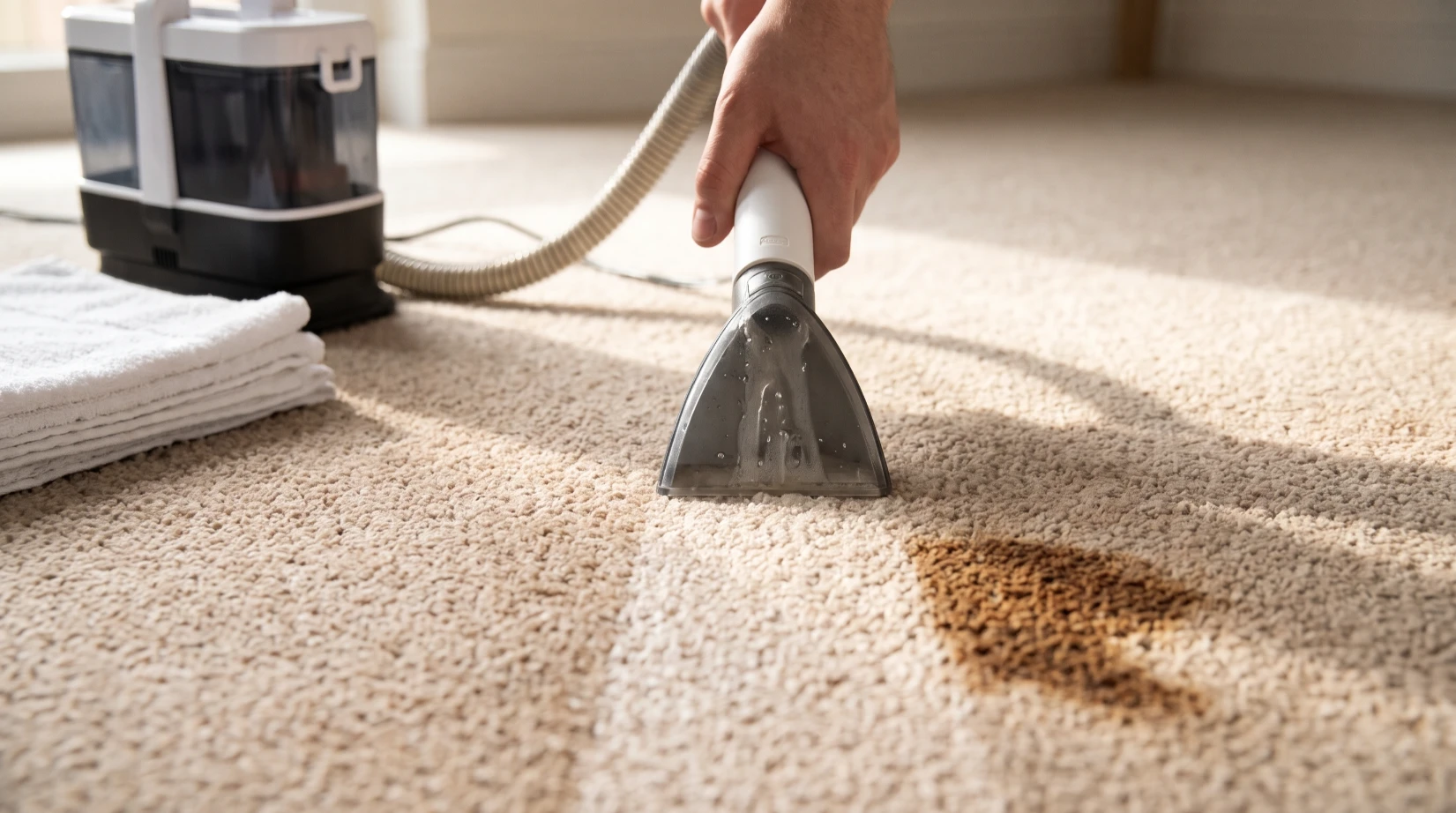
Three routines cover most of it. Vacuum carpet and rugs slowly, in two directions, because hair and fibre align with the pile and a single pass leaves what the first pass pushed down. Vacuum upholstery with a brush attachment, or use a rubber tool first to gather hair that a nozzle would press deeper into the weave. Wash bedding, throws and washable cushion covers regularly on a hot cycle, because heat is what removes mites and dander rather than merely moving the dust. In our experience, the bedding routine is the one with the most noticeable effect on symptoms, and it is also the one most often skipped because it is not visible from the doorway.

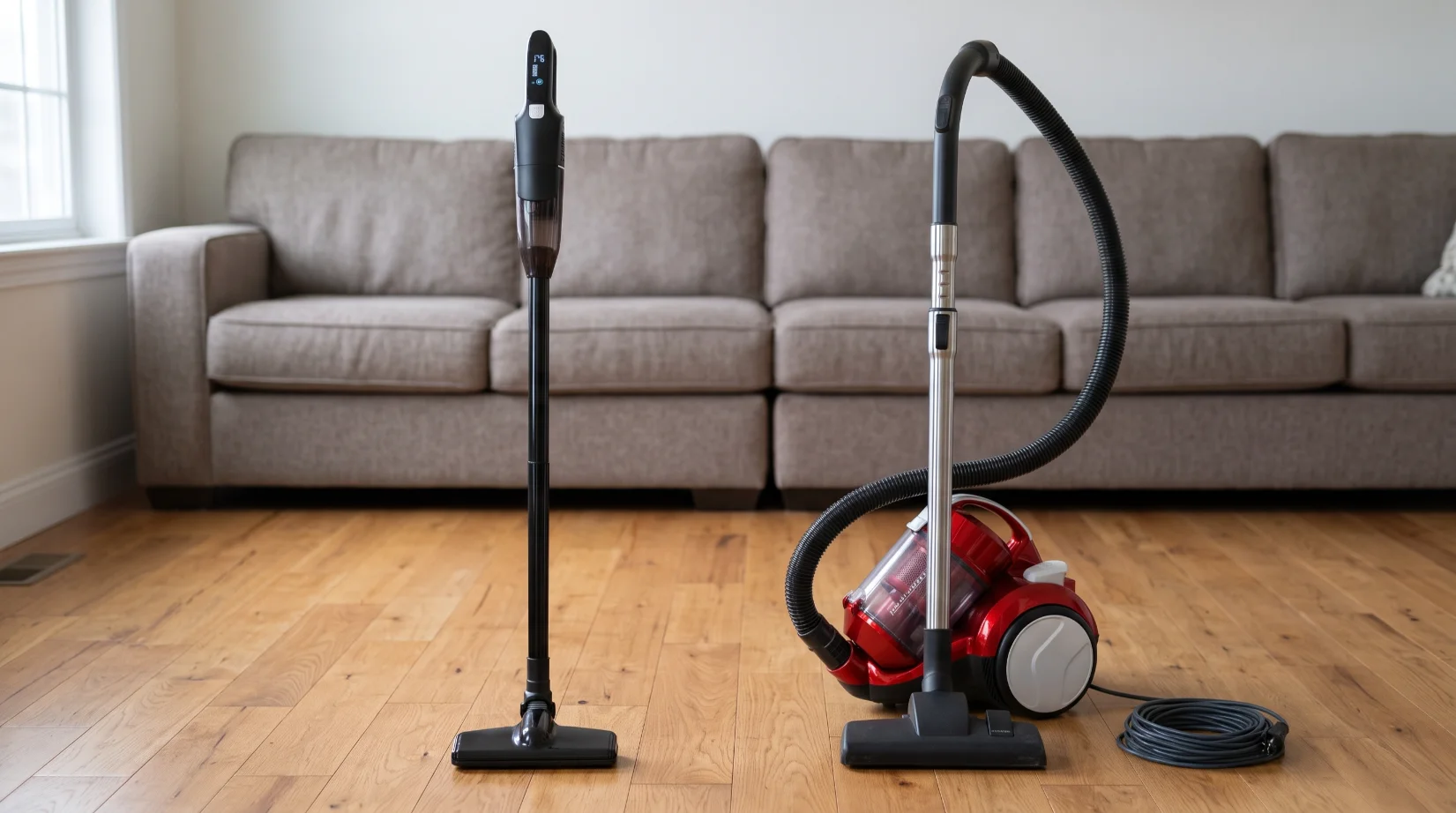
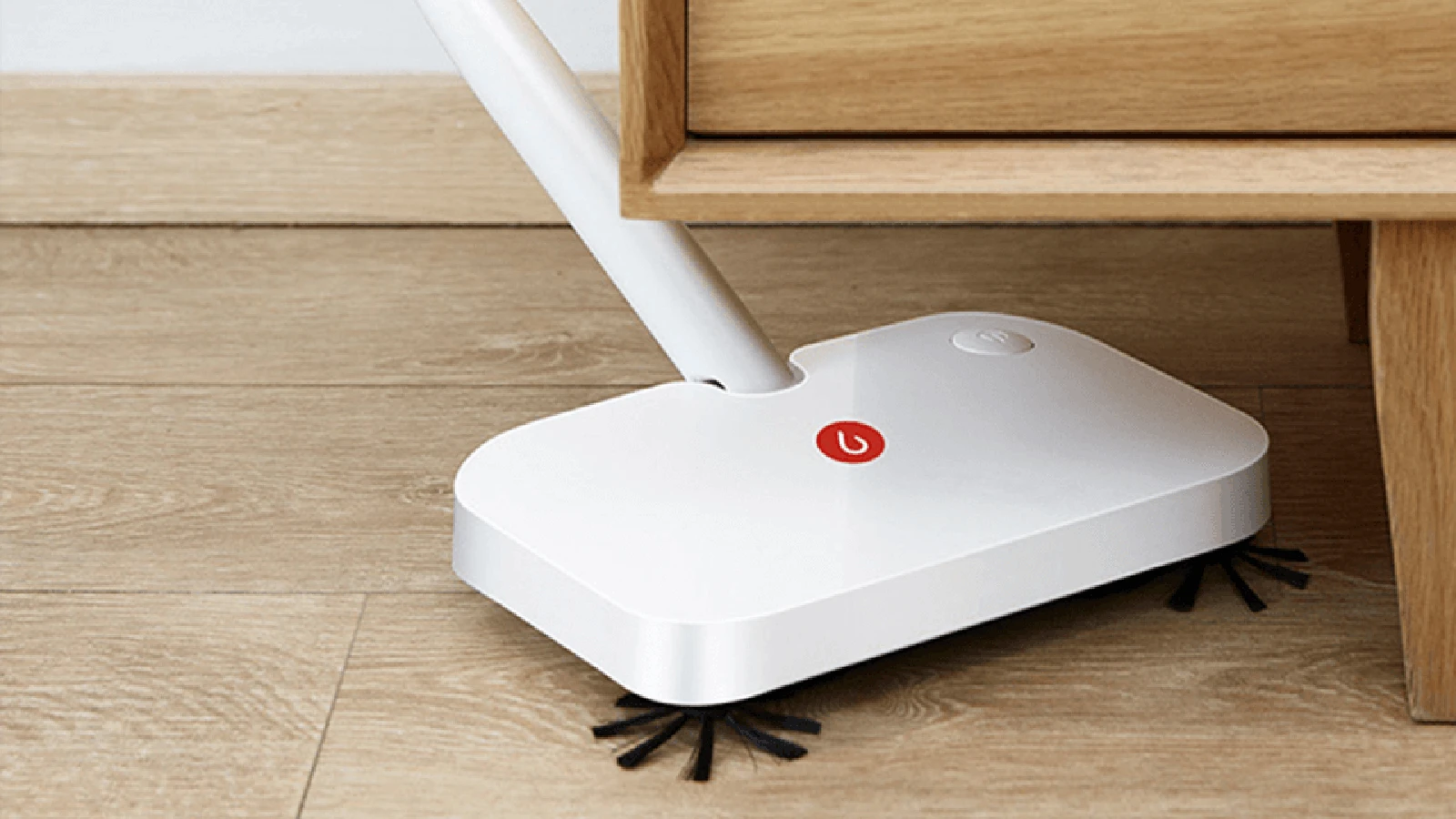
JESUN Multi-purpose Cordless Stick Vacuum (K908)
Cordless stick vacuum, 1.3 kg, with a 500 ml dust cup, 2000 mAh battery and two suction levels (3000 Pa and 8000 Pa), 25 minutes on low and 13 on high. A washable filter means airflow can be restored by rinsing rather than replacing.
Vacuuming Without Re-Releasing Dust
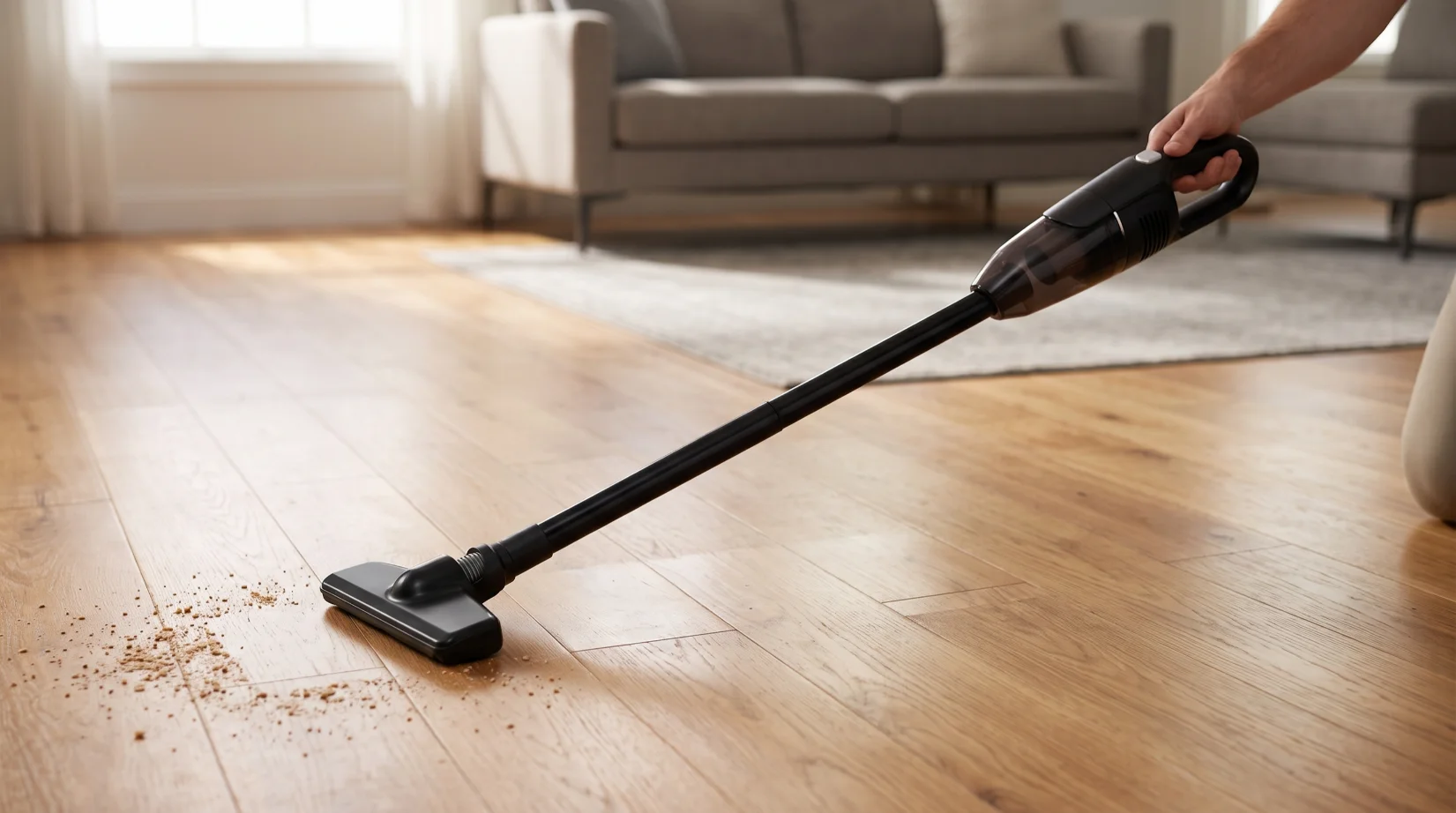
A vacuum can improve air quality or worsen it, and the deciding factor is filtration and sealing rather than suction. The machine draws air and dust in, but it also exhausts air, and whatever the exhaust carries goes back into the room. On a low-pile carpet that exhaust is close to the floor and to the person using it, which is why some people sneeze after vacuuming rather than during it. Public health guidance for allergy households recommends filtration that keeps dust contained, including HEPA filtration on carpet and fabric-covered furniture to reduce dust build-up (EPA, 2025). When you shop, that is the feature to look for, and it is worth checking the joints and the bin seal as well, because a filter at the exhaust cannot compensate for a leak elsewhere in the airflow path.
The routine matters as much as the machine. Empty the bin outdoors rather than in the room, because the dust you collected is still in the bin and the act of emptying releases some of it. Wash or replace the filter on schedule, since a loaded filter reduces airflow and forces more passes over the same area. And vacuum slowly, because speed reduces the time the brush and the airflow have to lift particles, which means more passes and more dust in the air. In our experience, a modest vacuum used slowly with a clean filter and an outdoor bin-empty leaves a room noticeably less dusty than a more powerful machine used quickly with a loaded filter.
Humidity, Ventilation and Dust Mites
Two environmental controls do as much as cleaning, and they are free. The first is ventilation: air movement and fresh air reduce the concentration of whatever is suspended, and it also dries surfaces, which matters because moisture is what biological contaminants need to thrive. The second is humidity, which public health guidance recommends controlling because high humidity encourages biological contaminants to multiply indoors (EPA, 2025). Practical targets are commonly given as roughly 30 to 50 percent relative humidity in living space, and the tell-tale signs of too much are condensation on windows in the morning and a musty smell in a bathroom or a basement.
The relevance to dust is that a humid home has a biological half to the problem that cleaning alone cannot fix. Dust mites feed on shed skin and need moisture, so a bedroom that stays humid supports them regardless of how often the sheets are changed, while the same bedroom with ventilation and humidity control does not. Meanwhile, heating and drying a home in winter raises airborne dust by lowering relative humidity, which is when static makes particles cling and dusting feels least effective. In our experience, the two changes with the biggest effect on how dusty a home feels are damp dusting and keeping the bathroom and bedroom dry, and neither of them costs anything beyond attention.
The Order That Works
Sequence saves time, and the sequence for a room is top to bottom and dry to wet. Start at the highest surfaces — cornices, tops of wardrobes, light fittings, ceiling fans — using an extendable duster so you are not disturbing the dust directly above your head. Work down through shelves, blinds and vents, using damp cloths on hard surfaces and microfibre on anything moisture-sensitive. Then vacuum the fabric: upholstery first, then carpet, slowly and in two directions. Finish with a damp mop or a damp flat pad on the hard floor, because the floor collects everything you dislodged, and leave the room to dry rather than walking through it.
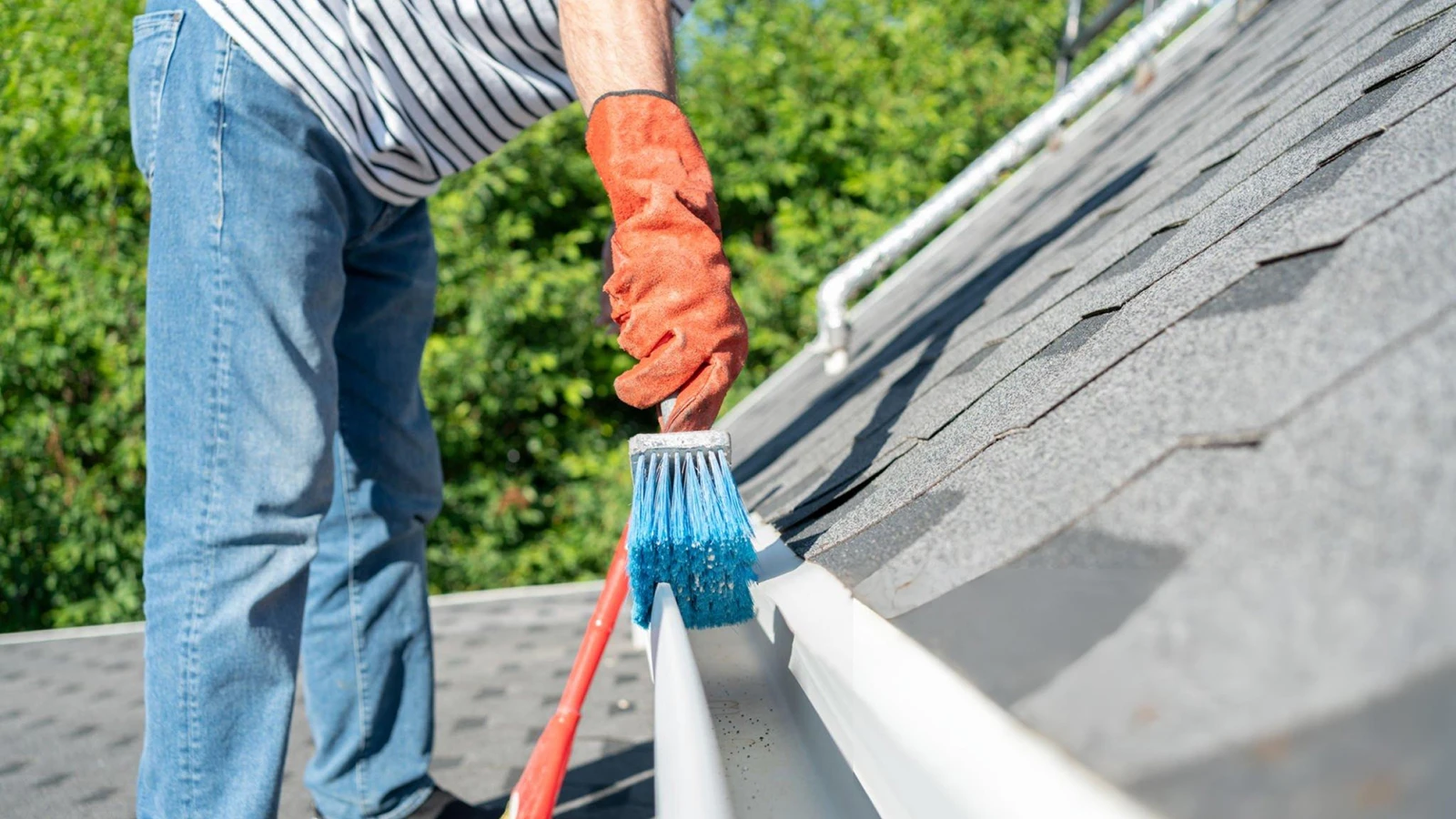
Two habits make the routine hold. Wash the cloths, the duster and the mop pad after use and dry them fully before storing them, because a damp cleaning cloth becomes a contamination source rather than a cleaning aid, and that is true of brushes and pads as well (Illinois Extension, 2024). And repeat the fabric half more often than the dusting half, because the reservoir in carpet and bedding refills continuously while the shelves refill slowly. For reference, cleaning tools that are not washed and dried between uses are one of the more common reasons a home feels dusty and slightly musty at the same time, and the fix costs nothing but a drying rack.
Frequently Asked Questions
Does vacuuming help with allergies and dust?
It helps when the machine keeps dust contained, which depends on filtration and sealed airflow rather than on suction alone. Public health guidance recommends filtration that traps fine particles, including HEPA filtration on carpet and fabric-covered furniture. Empty the bin outdoors and keep the filter clean, or vacuuming can put dust back into the air.
What filter should I look for in a vacuum?
One that traps fine particles at the exhaust, with a sealed airflow path so air cannot bypass the filter through joints or the bin seal. HEPA filtration is the standard recommendation for allergy households. Check that the filter can be washed or replaced easily, because a loaded filter reduces airflow and forces more passes.
How often should I vacuum and dust?
Vacuum the high-traffic fabric twice a week rather than once, because loose particles are easier to lift than particles pressed into the pile. Dust hard surfaces weekly with a damp cloth. Wash bedding regularly on a hot cycle, since that removes dander and mites rather than just moving dust around.
Why does dust come back so quickly?
Because fabric is a reservoir. Carpet, upholstery and bedding hold particles that are re-released by foot traffic, sitting and moving, so a room refills from the fabric rather than from outside. Extracting and washing fabric, plus damp dusting hard surfaces, addresses both halves of the problem.
Do air purifiers help with household dust?
They can reduce airborne particles, but they do not remove the reservoir in carpet and bedding, which is the source of what settles back onto surfaces. Treat an air purifier as a supplement to vacuuming and dusting rather than a replacement, and keep humidity in the recommended range so biological contaminants do not thrive.
Sourcing vacuums and dusting tools?
We manufacture cordless vacuums with washable filters, microfibre dusters and mop pads, and extendable cleaning tools, plus OEM or ODM packaging, from low MOQs.
Request Wholesale Pricing →Conclusion
Dust control works when you treat the airborne half and the fabric half separately. Damp dusting removes particles from hard surfaces instead of releasing them into the room, vacuuming with a contained airflow path extracts them from carpet and upholstery, and washing bedding on a hot cycle removes the dander and mites that no surface clean reaches. Ventilation and humidity control then decide how much of the problem comes back, because biological contaminants need moisture to thrive. That said, the two cheapest improvements are the ones most often skipped: a damp cloth instead of a dry duster, and cleaning tools that are washed and dried rather than stored damp.
We build cordless vacuums with washable filters, microfibre dusters and pads, and extendable tools for high surfaces, and we are happy to help you match a range to your market.
References
- US Environmental Protection Agency — “Asthma Triggers: Gain Control” (HEPA filtration on carpet and fabric-covered furniture to reduce dust build-up; damping dusting; controlling indoor humidity). epa.gov/asthma/asthma-triggers-gain-control
- National Institute of Environmental Health Sciences — “Dust Mites and Cockroaches” (dust mites are microscopic pests that live in house dust and feed on flakes of dead skin, or dander, shed by people and pets). niehs.nih.gov/health/topics/agents/allergens/dustmites
- US Centers for Disease Control and Prevention — “When and How to Clean and Disinfect Your Home” (cleaning with soap and water removes most germs and soil in ordinary household settings; disinfection is reserved for specific situations such as illness in the home). cdc.gov/hygiene/about/when-and-how-to-clean-and-disinfect-your-home.html
- University of Illinois Extension — “A guide to keeping your sponges, dish rags and scrub brushes clean” (cleaning tools that are not washed and dried between uses become a contamination source rather than a cleaning aid). extension.illinois.edu/blogs/simply-nutritious-quick-and-delicious
- US Environmental Protection Agency — “Text Version of the Indoor Air Quality House Tour” (dust and vacuum regularly; dust mites can trigger allergy and asthma attacks, and are found especially on pillows, blankets, carpets and upholstered furniture). epa.gov/indoor-air-quality-iaq/text-version-indoor-air-quality-house-tour
This guide was written by the JESUN Cleaning Tools Team and reviewed by our product engineering group. You can read more about us or contact our team with questions about filtration and dusting tool specifications.
Continue Learning
- Types of Dusters: Every Style and When to Use Each — damp versus dry, and which head for which surface.
- How to Control Dust in the House — the existing guide on the same problem.
- Vacuum cleaner manufacturer — cordless, handheld and wet/dry lines in bulk.

 English
 Spanish
 Russian
 Arabic