
Key Takeaways
- Most sweeping fails for one reason: fine dust goes into the air and settles again, so the floor looks the same an hour later.
- Short controlled strokes keep particles low. Long pushes launch them into the air, which is the redistribution problem.
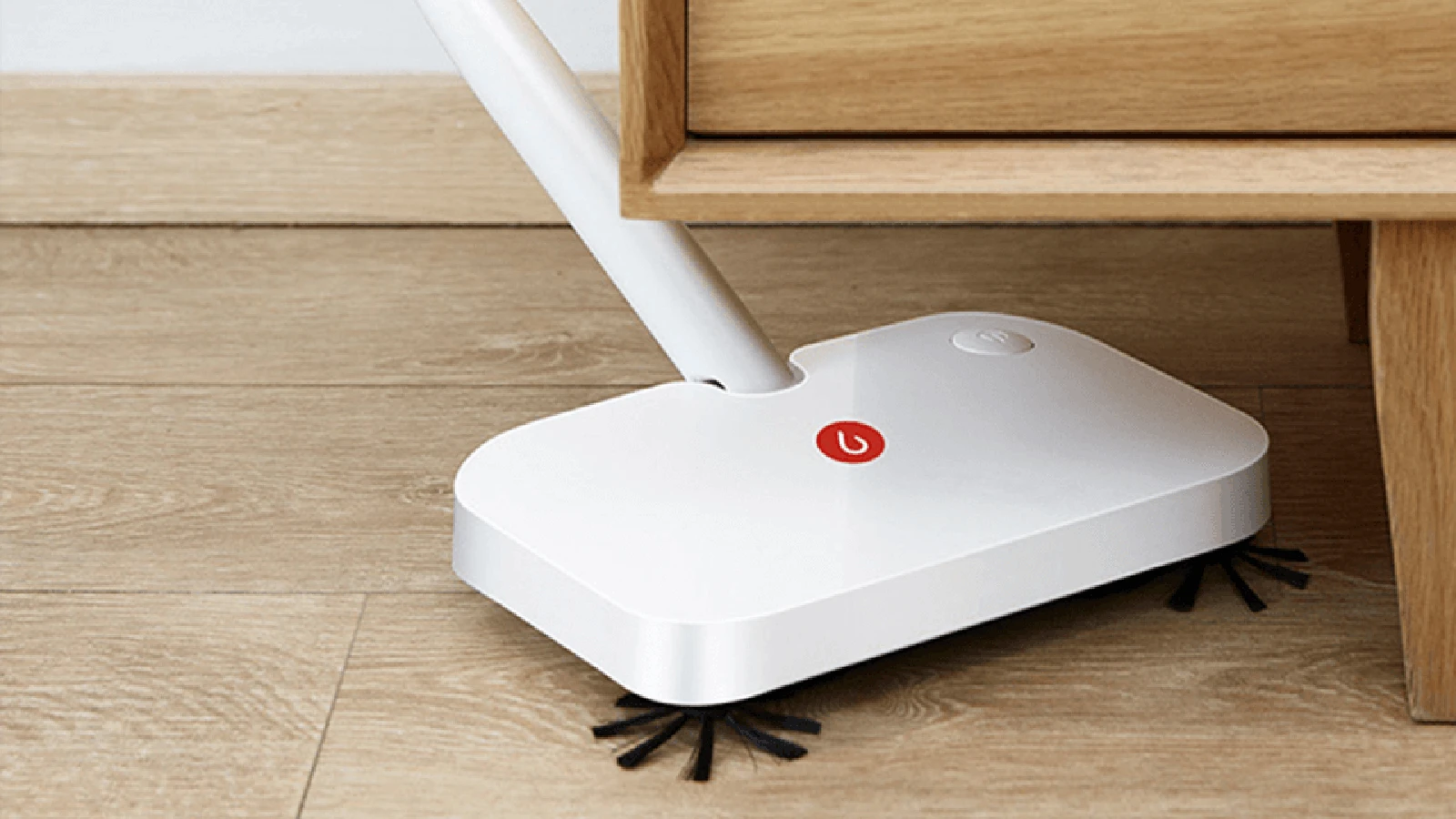
- Sweep the perimeter first. Baseboards, corners and the gap under low furniture are where debris collects and gets redistributed from.
- Soft fine bristles collect dust on hard interior floors; stiff outdoor brooms scatter it. The broom has to match the floor, not the dirt.
- A slightly damp broom on the final stroke, or a microfibre dust mop, traps the fine particles a dry broom leaves behind.
Introduction
Sweeping looks like the simplest task in the house, which is why almost nobody does it well. The usual result is a floor that looks clean for an hour and then shows a fresh film of dust, and the cause is not effort. It is the fact that sweeping moves particles in two directions at once: some go into the dustpan, and some go into the air, where they drift and settle back down. An effective technique minimises that second direction. Short controlled strokes, the right bristle type for the floor and a steady pace all keep fine particles low and moving towards collection rather than launching them upward (DomusFlux, 2026).
The health angle makes this more than a cosmetic problem. Dust that goes airborne is breathed in before it settles, and the surfaces that feed it are the ones people sweep last or not at all. As one cleaning service puts it, the gap between the floor and the baseboard, and the space under low furniture, are the primary reservoirs from which foot traffic and air circulation redistribute debris back across the floor you just cleaned (E&R Cleaning Services, 2026). Consequently, the difference between a good sweep and a bad one is mostly about sequence and bristle choice rather than about how hard you push.
This guide covers the six mistakes that cause most of the problem, the order that avoids them, how to match a broom to a floor, and the two techniques that capture fine dust rather than moving it. In addition, it covers the dustpan, which is the part of the kit that decides how much of what you swept actually leaves the room. In our experience, fixing the sequence and the broom type changes the result more than sweeping harder ever does. We tested both on the same dusty floor, and the sequence alone removed noticeably more fine dust than doubling the number of passes.
Why Sweeping Leaves Dust Behind
Fine dust behaves differently from crumbs and grit. Grit is heavy enough that a broom pushes it along the floor, while fine dust is light enough that the bristles lift it into the air with almost no effort. Once airborne, it follows air currents rather than your broom, drifts across the room, and settles over the next hour onto surfaces that include the one you were cleaning. That is why a swept floor can look worse in some ways than an unswept one: the visible crumbs are gone, but the fine layer has been redistributed across a wider area. Consequently, sweeping harder makes the problem worse rather than better, because more force means more particles in the air.
Two properties of dust make it worse. The first is static: dry indoor air gives fine particles a charge that makes them cling to surfaces and to the broom itself, so a dry broom in winter tends to leave a grey film no matter how carefully you sweep. The second is that dust accumulates where airflow is weakest rather than where foot traffic is heaviest. Corners, baseboards and the space under low furniture collect it first, and those are exactly the places a quick sweep skips. Notably, the same logic applies to the tool: a microfibre dust mop with an electrostatic charge covers more area and traps fine particles rather than pushing them into the air, which is why it is the better choice in homes with allergy sufferers (E&R Cleaning Services, 2026).
The Six Mistakes
Mistake one: sweeping the open floor first. This is the most common error and the most consequential, because it pushes dust from the middle of the room towards the edges, where it joins the reservoir under the baseboard and gets redistributed on the next pass. Perimeter first, then the middle. Notably, this single change fixes most of the problem, because it removes the reservoir before you disturb the open floor.
Mistake two: long pushing strokes. A long push accelerates the broom and throws fine dust upward. Short, controlled strokes of roughly a broom-head’s length keep the particles on the floor and moving in one direction, and they are faster in total because you are not re-sweeping the same patch.
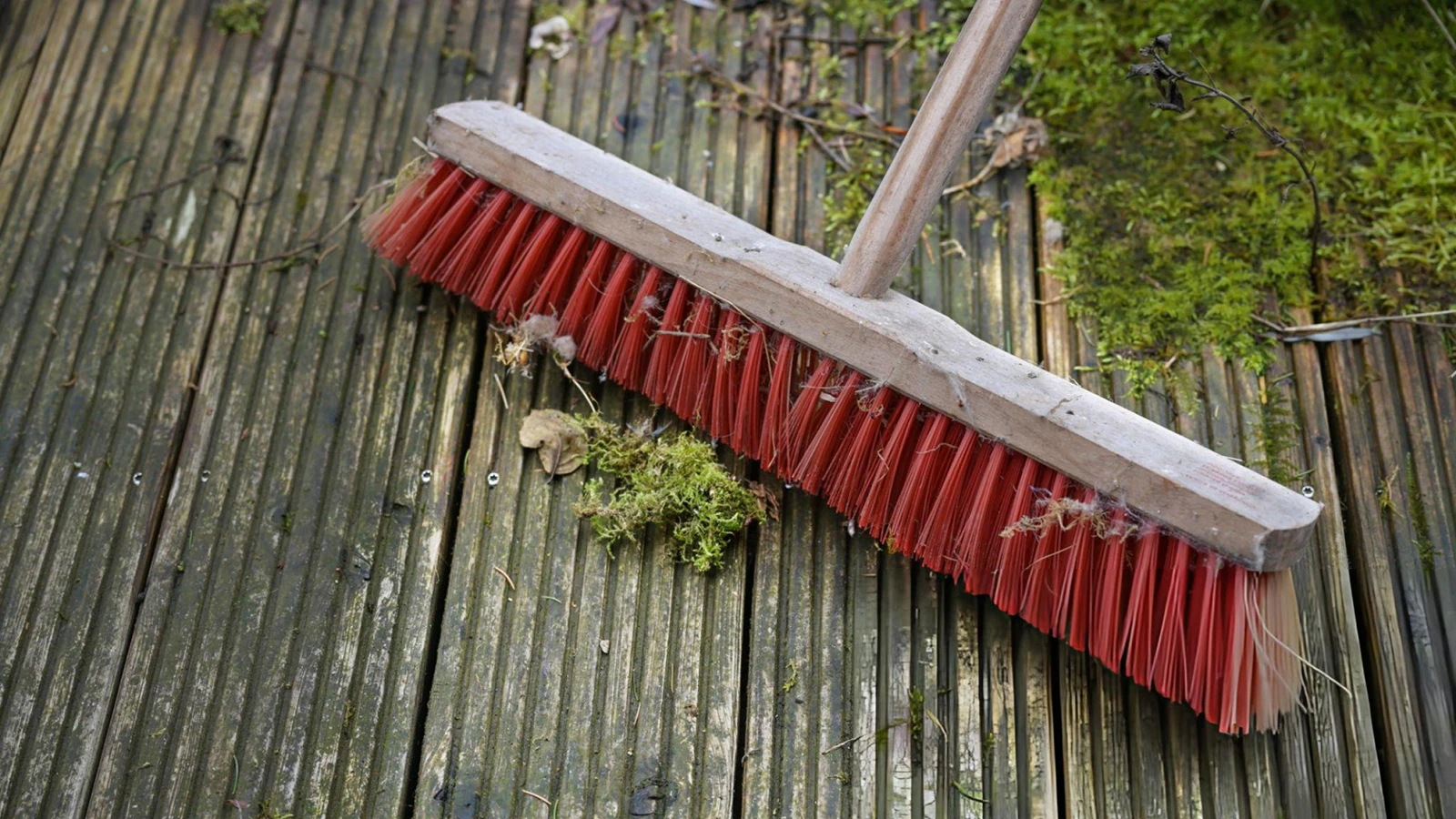
Mistake three: a broom that does not match the floor. A stiff outdoor broom used indoors scatters fine dust rather than collecting it, because the bristles flick particles instead of sweeping them. On hard interior floors, fine soft bristles are the right choice, and a stiff broom belongs outside on grit and leaves.
Mistake four: sweeping in the wrong direction relative to the exit. Work from the far end of the room back towards the door, so you never walk through the pile you just built, and so the debris ends up where you can collect it rather than in a corner behind a chair.
Mistake five: skipping the dustpan’s edge. A dustpan that does not sit flat on the floor leaves a line of debris behind every time, and a pan with a raised lip cannot collect fine dust at all. Press the pan down so the edge contacts the floor, and sweep into it with a short stroke rather than a shove.
Mistake six: sweeping instead of vacuuming when the floor is carpeted. A broom on carpet drives dust into the pile rather than lifting it, and the fibres hold it until a vacuum extracts it. On rugs and carpet, the vacuum is not an upgrade on sweeping; it is the correct tool.
The Order That Works
The sequence below is the one professional cleaners use, and the first two steps are the ones most households skip. Remove loose items from the floor first, including chairs, rugs and mats, because sweeping around furniture is how corners get missed. Then sweep the perimeter before the open floor: run the broom along the baseboards and into the corners, and work the space under low furniture where the broom fits, because those are the reservoirs that feed the rest of the room.
After the perimeter, work the open floor in lanes, starting at the far end and moving towards the door, and pull debris into a single pile rather than pushing it around. On a large floor, divide the room into sections and build one pile per section, then collect each pile before moving on. Finish by sweeping the pile into the dustpan with a short stroke, and wipe the dustpan lip afterwards, since a pan with a residue line on it will leave that line on the floor next time. If you are going to mop as well, sweep first and mop second, because mopping over loose debris turns dust into a film that dries onto the floor (E&R Cleaning Services, 2026).

JESUN Self-Cleaning Broom and Dustpan Set with Teeth (ALA03)
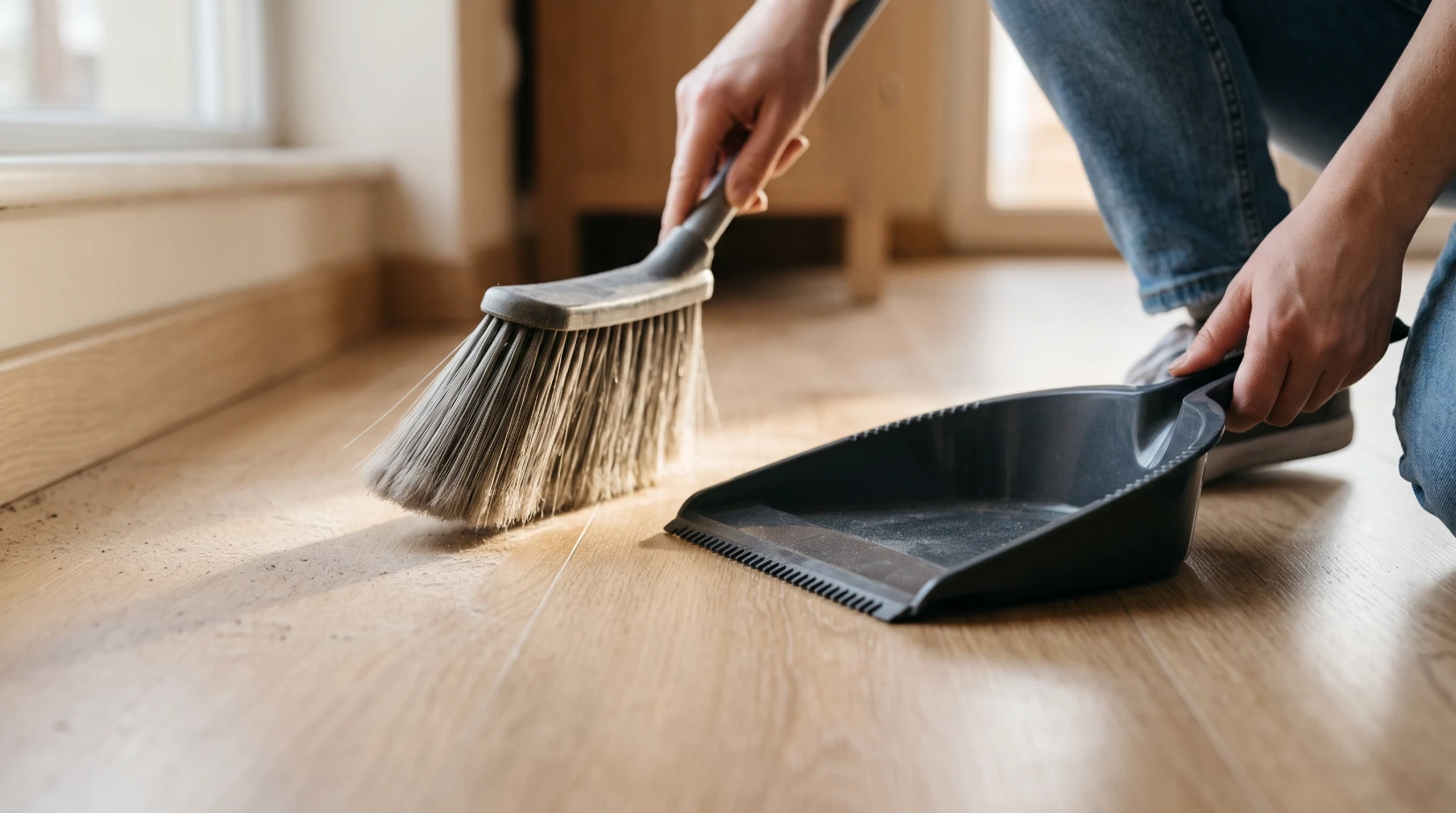
PP, TPR, steel and PET set, broom 22×3.5×102 cm, 0.82 kg. The built-in comb pulls hair and fibre off the bristles, which keeps the broom collecting dust instead of pushing it.
Matching the Broom to the Floor
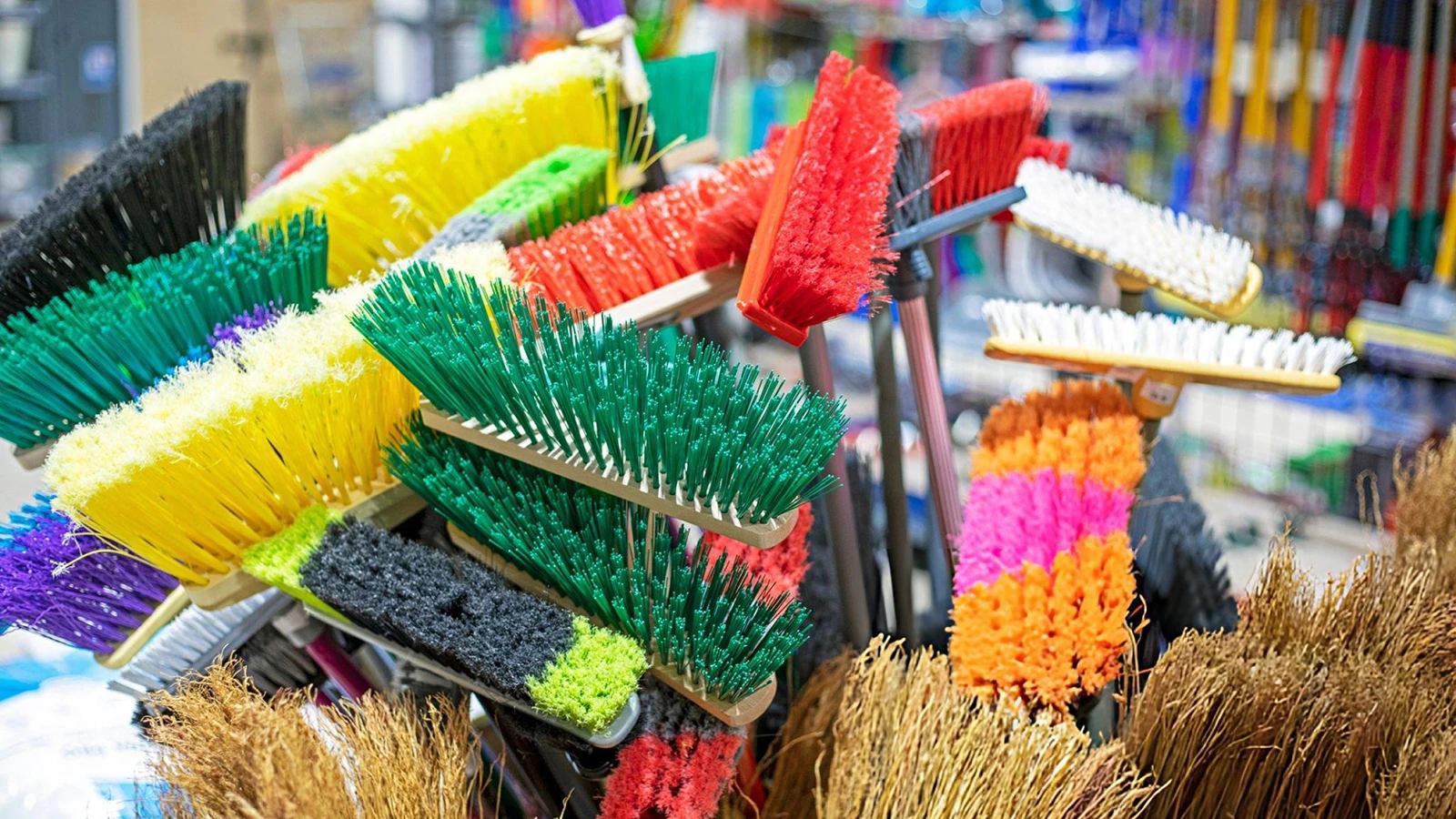
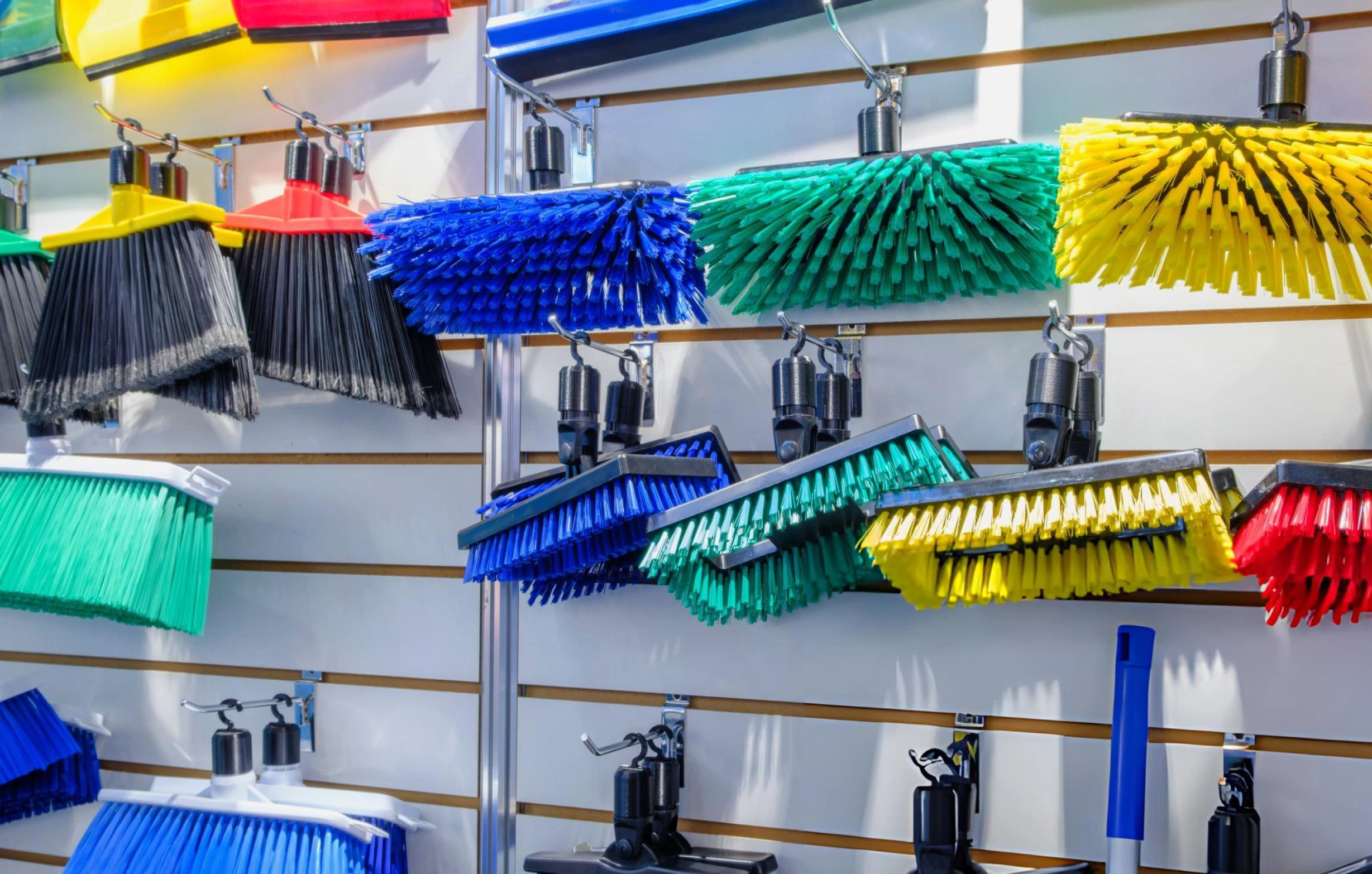
Bristle stiffness is the specification that decides whether a broom collects or scatters, and it is the one buyers check least often. Fine soft bristles work on hard interior floors because they conform to the surface and lift particles into the tufts. Medium bristles handle general household debris on mixed floors. Stiff bristles belong outdoors on grit, sand and wet leaves, and using them inside is the single most common reason a floor ends up dustier after sweeping. Meanwhile, flagged bristles, which are split at the tips, sweep fine dust noticeably better than blunt ones because the split ends catch particles rather than pushing them. Similarly, a broom with a threaded socket lets you match the handle length to your height, which reduces the fatigue that makes people sweep in long, dust-launching strokes.
| Floor or debris | Bristle type | Why |
|---|---|---|
| Sealed hard floors, fine dust | Fine soft, flagged | Conforms to the surface and traps fine particles |
| General household debris | Medium, flagged | Balances pickup and control |
| Corners and edges | Angled head with a short precision edge | One broom handles open floor and corners without changing stance |
| Grit, sand, wet leaves | Stiff outdoor | Lifts heavy debris; scatters fine dust, so keep it outside |
| Pet hair on hard floors | Soft with a comb or teeth | Comb removes hair from the bristles so they keep collecting |
| Carpet and rugs | None — vacuum | A broom drives dust into the pile rather than lifting it |
Head design matters as much as bristle stiffness. An angled broom, with a long side for open floor and a short precision edge for corners, is the most versatile household design, because one tool handles both jobs without you changing your grip or your stance. A straight-headed broom is fine for large open floors but leaves the corners to a second tool. If you sweep a lot of hard floor, the combination of an angled head, soft flagged bristles and a broom with a comb built into the dustpan covers almost every indoor situation.
Getting the Fine Dust
Fine dust is where a dry broom runs out of ability, and there are two established ways to finish the job. The first is a slightly damp broom on the final stroke: the minimal moisture helps fine particles stick to the bristles and transfer cleanly into the pan rather than floating up as you sweep them (DomusFlux, 2026). Damp means barely damp — a light mist from a spray bottle across the bristles, not a wet broom, because a wet broom leaves streaks on the floor and mats the tufts.
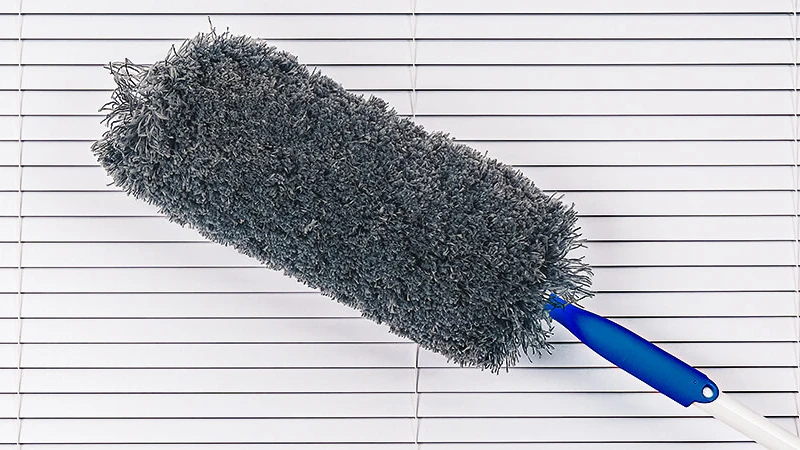
The second is a microfibre dust mop, which picks up fine dust, pet dander and allergen particles by electrostatic attraction rather than pushing them ahead of the sweep. On a hard floor, a dust mop is faster than a broom for a maintenance pass and leaves noticeably less airborne dust, which is why it is the tool of choice in homes with allergy sufferers. In our testing, a microfibre dust mop removed visibly more fine dust from a hard floor than a soft broom in the same number of passes, and the difference was largest in dry winter air when static makes dry sweeping least effective. Notably, a dust mop is also the better pre-mop step, because it removes the loose dust that would otherwise turn into a film when wet.

JESUN Broom and Dustpan Combo
Broom with a matching dustpan designed to sit flat on the floor, so the edge contacts the surface and fine dust sweeps in rather than collecting along the lip.
The Dustpan Nobody Thinks About
The dustpan decides how much of what you swept actually leaves the room, and it is usually the cheapest part of the kit. Two design details matter. First, the edge: a pan whose lip sits flush with the floor collects fine dust, while a pan with a raised or rounded lip leaves a line behind on every pass and encourages the user to sweep harder, which throws more dust into the air. Second, the size and depth of the pan relative to the pile, because a shallow pan forces you to stop and empty it mid-room, and every stop is a chance to scatter what you have already collected.
Two more details are worth checking before you buy a set. A pan with a comb or teeth built into the handle lets you clean hair and fibre off the broom in one stroke, which keeps the bristles collecting rather than matting. A pan that stands upright on its own stores without leaning against a wall, and a stored broom with the bristles off the floor keeps its shape. In our experience, the households that sweep most effectively are not using better brooms than everyone else. They are using a pan that sits flat, a broom with soft flagged bristles, and a sequence that starts at the baseboards. That combination costs very little and solves most of the problem.
Frequently Asked Questions
What is the correct way to sweep a floor?
Sweep the perimeter first, then the open floor. Run the broom along the baseboards and into the corners before the middle of the room, work in lanes from the far end back towards the door, and use short controlled strokes of about a broom-head’s length so fine dust stays low instead of going airborne.
Should I use soft or stiff bristles?
Soft, fine, flagged bristles for hard interior floors, because they conform to the surface and collect dust. Medium bristles suit general household debris. Stiff bristles are for outdoor grit, sand and wet leaves, and using them indoors scatters fine dust rather than collecting it.
Why does sweeping make dust fly?
Fine dust is light enough that bristles lift it into the air with almost no effort, and long pushing strokes accelerate it upward. Once airborne it follows air currents and settles over the next hour. Short strokes, the right bristle type and a slower pace keep particles low and moving towards the dustpan.
Should I sweep before mopping?
Yes, always. Mopping over loose debris turns dust into a film that dries onto the floor, which is why floors can look streaky after a thorough mop. Sweep or vacuum first, including along the baseboards, then mop from the far end of the room towards the door.
How do I stop fine dust from coming back?
Finish with a microfibre dust mop, which traps fine particles by electrostatic attraction, or mist the broom bristles very lightly before the final stroke so the dust sticks to them. On carpet, use a vacuum instead, because a broom drives dust into the pile rather than lifting it out.
Sourcing brooms and dustpan sets?
We manufacture indoor, outdoor and angled brooms with soft, medium and stiff bristles, plus dustpan sets with built-in combs, and OEM or ODM packaging, from low MOQs.
Request Wholesale Pricing →Conclusion
Sweeping works when you treat it as a sequence rather than a motion. Clear the floor, do the baseboards and corners first, work the open floor in short controlled lanes towards the door, and collect each pile before you build the next one. Match the bristles to the floor, because a stiff broom indoors is the most common reason a swept floor ends up dustier than it started, and finish with a microfibre dust mop or a barely damp broom so the fine particles leave the room rather than the floor. That said, the cheapest upgrade in the whole routine is the dustpan: a pan that sits flat on the floor collects fine dust, and one that does not will leave a line behind no matter how good your technique is.
We build brooms and dustpan sets for every floor type, along with the angled heads and combs that make the sequence easier, and we are happy to help you match a range to your market.
References
- E&R Cleaning Services — “Sweep the floor the right way: 6 mistakes that leave dirt behind” (baseboards, corners and the space under low furniture are the primary reservoirs from which debris is redistributed; fine soft bristles for interior hard floors and stiff brooms scatter fine dust; a microfibre dust mop traps fine particles electrostatically; sweep before mopping). ercleanservice.com/how-to-sweep-the-floor
- DomusFlux — “How to Sweep the Floor: The Full Guide to Cleaner Floors in Less Time” (the dust redistribution problem and indoor air quality; short controlled strokes keep fine particles low; perimeter first; the angled broom as the most versatile design; a slightly damp broom for the final stroke; dustpan design determines how much debris is collected). domusflux.com/sweep-the-floor
- US Centers for Disease Control and Prevention — “When and How to Clean and Disinfect Your Home” (cleaning with soap and water removes most germs in ordinary household settings). cdc.gov/hygiene/about/when-and-how-to-clean-and-disinfect-your-home.html
- University of Illinois Extension — “A guide to keeping your sponges, dish rags and scrub brushes clean” (cleaning tools that are not washed and dried between uses become a contamination source rather than a cleaning aid). extension.illinois.edu/blogs/simply-nutritious-quick-and-delicious
This guide was written by the JESUN Cleaning Tools Team and reviewed by our product engineering group. You can read more about us or contact our team with questions about broom specifications.
Continue Learning
- How to Clean Broom Bristles — the six-step wash that keeps a broom collecting.
- Different Types of Brooms — how head shapes differ by floor and use.
- Broom Bristle Materials: PP vs PET vs Nylon — which synthetic bristle suits which job.
- Broom manufacturer — indoor, outdoor and commercial brooms in bulk.
- Outdoor broom catalog — stiff bristle brooms for grit and leaves.

 English
 Spanish
 Russian
 Arabic