
Key Takeaways
- A corded vacuum gives unlimited runtime and consistent suction; a cordless one gives freedom from the cable at the cost of both.
- The honest trade is battery for suction: cordless models often need their highest power mode to match a corded machine, and that mode drains the battery fastest.
- Cordless models have smaller dustbins because the battery takes space, so you empty them more often — which matters most in pet households.
- Check whether the battery is replaceable. A sealed battery turns a working vacuum into waste when the cells fade.
- The right answer for most homes is one of each: a cordless for daily passes and stairs, a corded machine for deep cleans and whole floors.
Introduction
The cordless versus corded question is usually answered with a preference, but it is really a trade with three parts: runtime, suction and dustbin capacity. A corded vacuum draws continuous power from the wall, so its runtime is unlimited and its suction does not change as the session goes on. A cordless vacuum carries its energy in a battery, so every decision about power consumption reduces how long it will run. Everything else about the comparison — the weight, the storage, the price — follows from that single difference, and it is why the honest answer is usually “one of each” rather than “this one”. Notably, the trade is not about which machine is better but about which job you are doing.
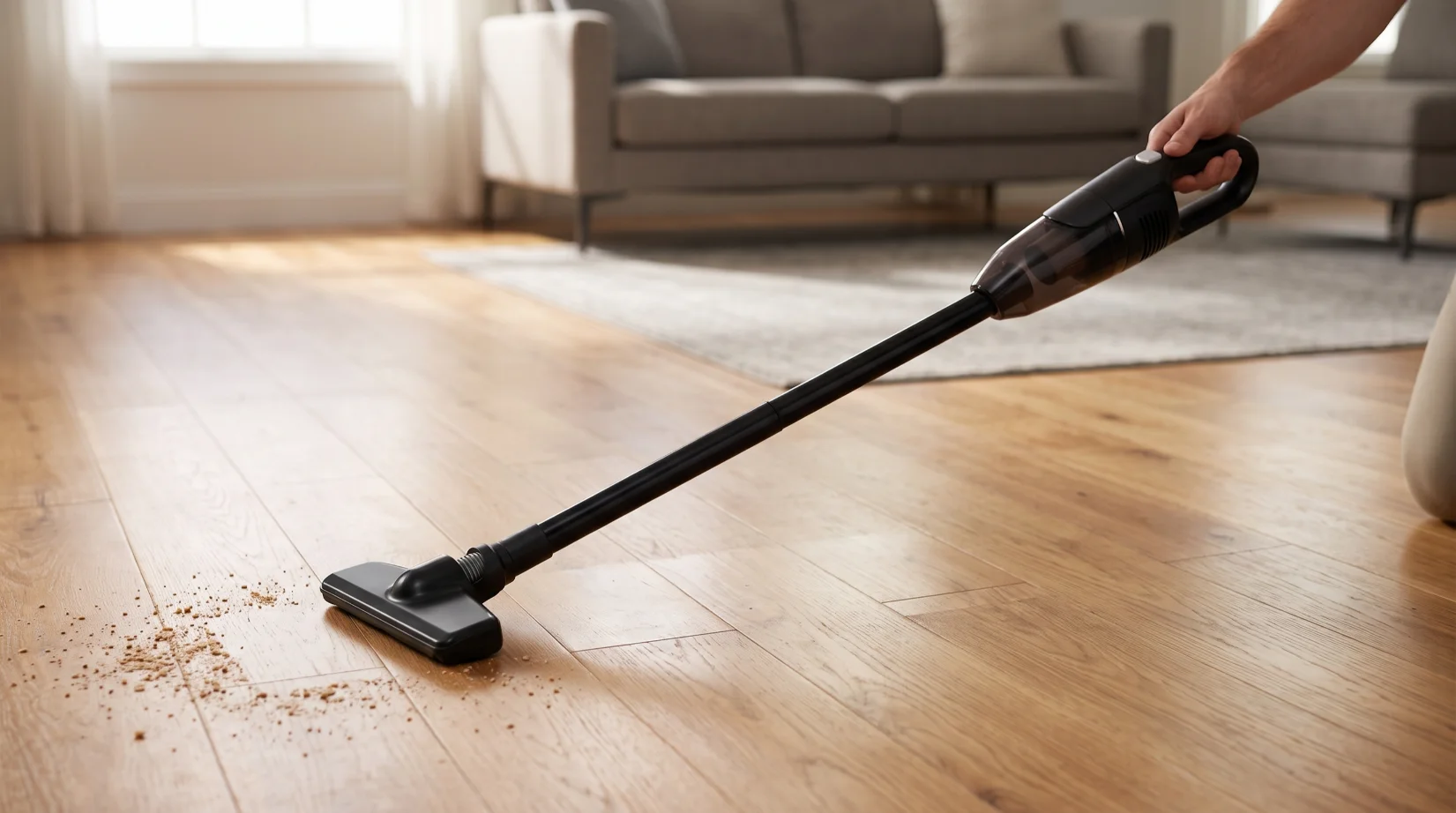
The practical version of the trade shows up in how people actually clean. A cordless machine gets used for the small, frequent jobs because there is no cable to unreel and no socket to find, which means the floors get vacuumed more often. A corded machine gets used for the large or dirty jobs, because it does not slow down and does not need its dustbin emptied halfway through. Notably, owners who switch entirely to cordless often describe the same experience: they find themselves maxing out the suction modes to get results comparable to their old corded machine, which uses up the battery faster, so the runtime figure on the box no longer describes their real session length (Popular Mechanics, 2026).
This guide covers runtime as a setting rather than a number, the suction gap and why it persists, the dustbin capacity trade, battery replaceability, and a decision rule by household type. In addition, it covers the maintenance that keeps airflow (and therefore felt suction) from declining. In our experience, the households that regret going cordless are the ones with heavy-shedding pets or large carpeted areas, and the households that regret staying corded are the ones who stopped vacuuming the stairs.
The One-Minute Answer
Choose a cordless vacuum if your floors are mostly hard, your messes are small and frequent, you have stairs, or you want the machine to live on a wall rather than in a cupboard. Choose a corded vacuum if you have large carpeted areas, pets that shed heavily, or a whole floor to cover in one session, because unlimited runtime and consistent suction matter more there than cable freedom. If your budget covers one machine and your home has both carpet and hard floors, the corded vacuum is the safer single choice for cleaning performance, and the cordless is the safer single choice for how often the job actually gets done.
| Factor | Cordless | Corded |
|---|---|---|
| Runtime | Fixed by battery; usually shorter on the highest power setting | Unlimited while plugged in |
| Suction consistency | Falls as the battery discharges | Constant until the bin fills |
| Dustbin size | Smaller — the battery takes space | Larger; fewer empties per session |
| Weight | Lighter in the hand | Heavier, often with a hose |
| Setup per session | None | Find a socket, manage the cable |
| Best use | Daily passes, stairs, cars, spot work | Deep cleans, whole floors, heavy shedding |
| Long-term risk | Battery degradation; sealed cells end the tool | Belt and filter wear, both replaceable |
Runtime Is Not a Number, It Is a Setting
Every cordless vacuum quotes a runtime, and almost every quoted runtime is measured on the lowest power setting. That is not a dishonest figure, but it is the one you will use least often on a real floor. Meanwhile, the number on the box also assumes a new battery at room temperature, which is not the state of a pack that has been charged four hundred times.
The same machine that runs for twenty-five minutes on low may run for thirteen on high, and high is the setting you reach for when the carpet has tracked-in grit or when a pet has been shedding. Consequently, the useful question is not “how long does it run” but “how long does it run at the power I actually need”.The arithmetic behind that is straightforward. A battery stores energy measured in watt-hours, which is capacity multiplied by voltage, and the motor consumes that energy at a rate set by the power setting. Double the power draw and you halve the runtime, approximately. That is why two machines with identical battery capacity can have very different real-world runtimes: the one with a more efficient motor and a better-designed airflow path needs less power to achieve the same pickup. In our experience, checking the two-settings runtime figure rather than the headline number is the single most useful thing a buyer can do, because it tells you how the machine performs in the mode you will actually use.
Suction: The Gap That Has Not Closed
The claim that cordless vacuums have caught up with corded ones is true in some cases and misleading in others. Premium cordless models can outperform a mid-range corded machine on low-pile carpet, particularly with a powered brush head. But the comparison usually assumes the cordless machine is running at full power, which is exactly when its runtime is shortest, and it assumes the battery is near full, which it is not at the end of a long session. A corded machine’s suction is the same at minute one and minute forty, and that consistency is the part most comparisons leave out.
There is a second factor that owners notice more than the bench numbers: airflow declines as the dustbin fills and as the filter loads. On a cordless machine with a small bin and a fine filter, that decline happens quickly, and the user perceives it as the battery fading when it is partly the filter. On a corded machine with a larger bin and a bag or a bigger filter, the same loading takes much longer to affect performance. In our testing, a cordless stick vacuum that felt strong on an empty bin lost noticeable pickup once its bin was half full, while the corded unit in the same test held its performance until the bin was close to full. Cleaning the filter regularly narrows that gap considerably.

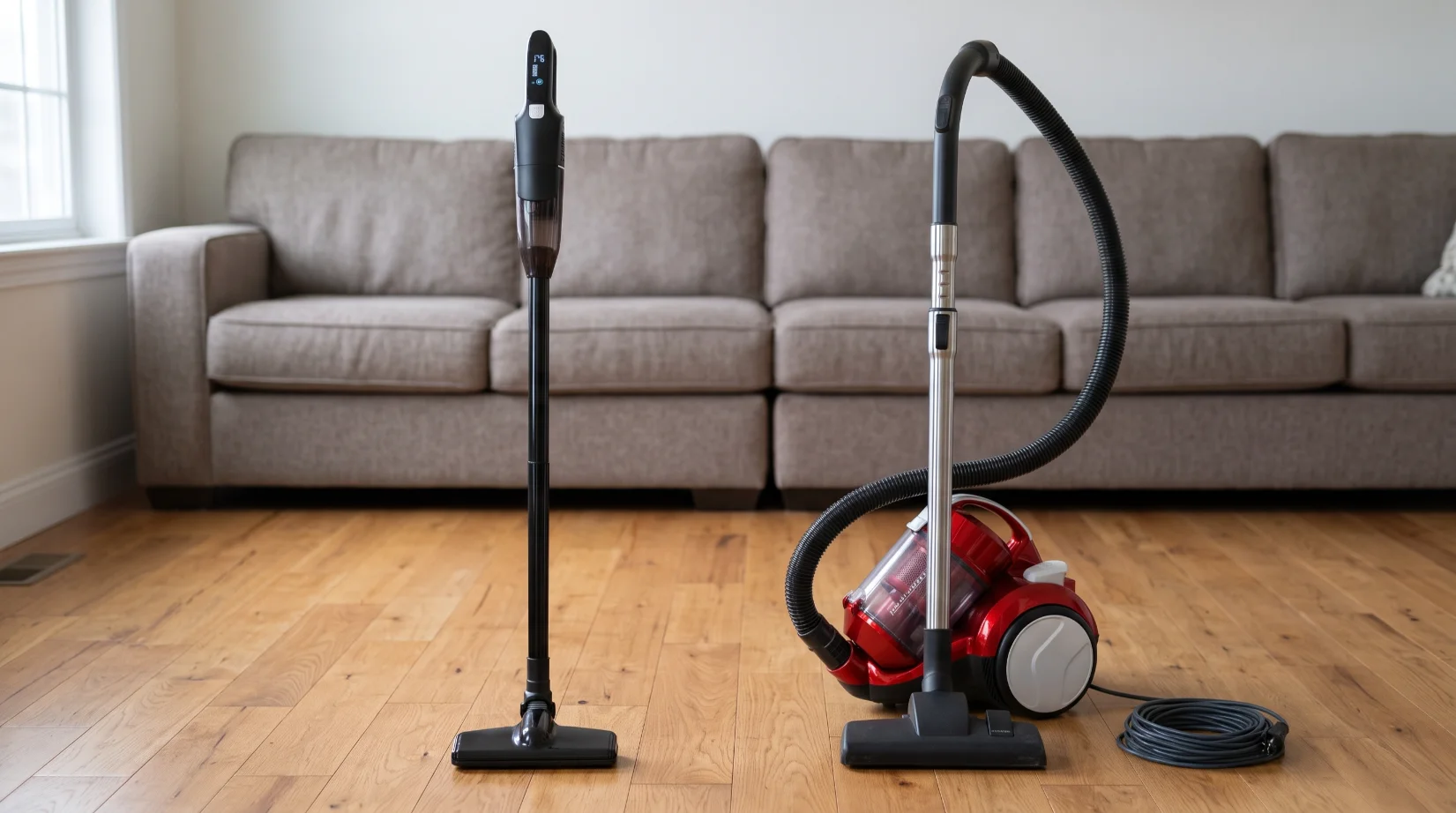
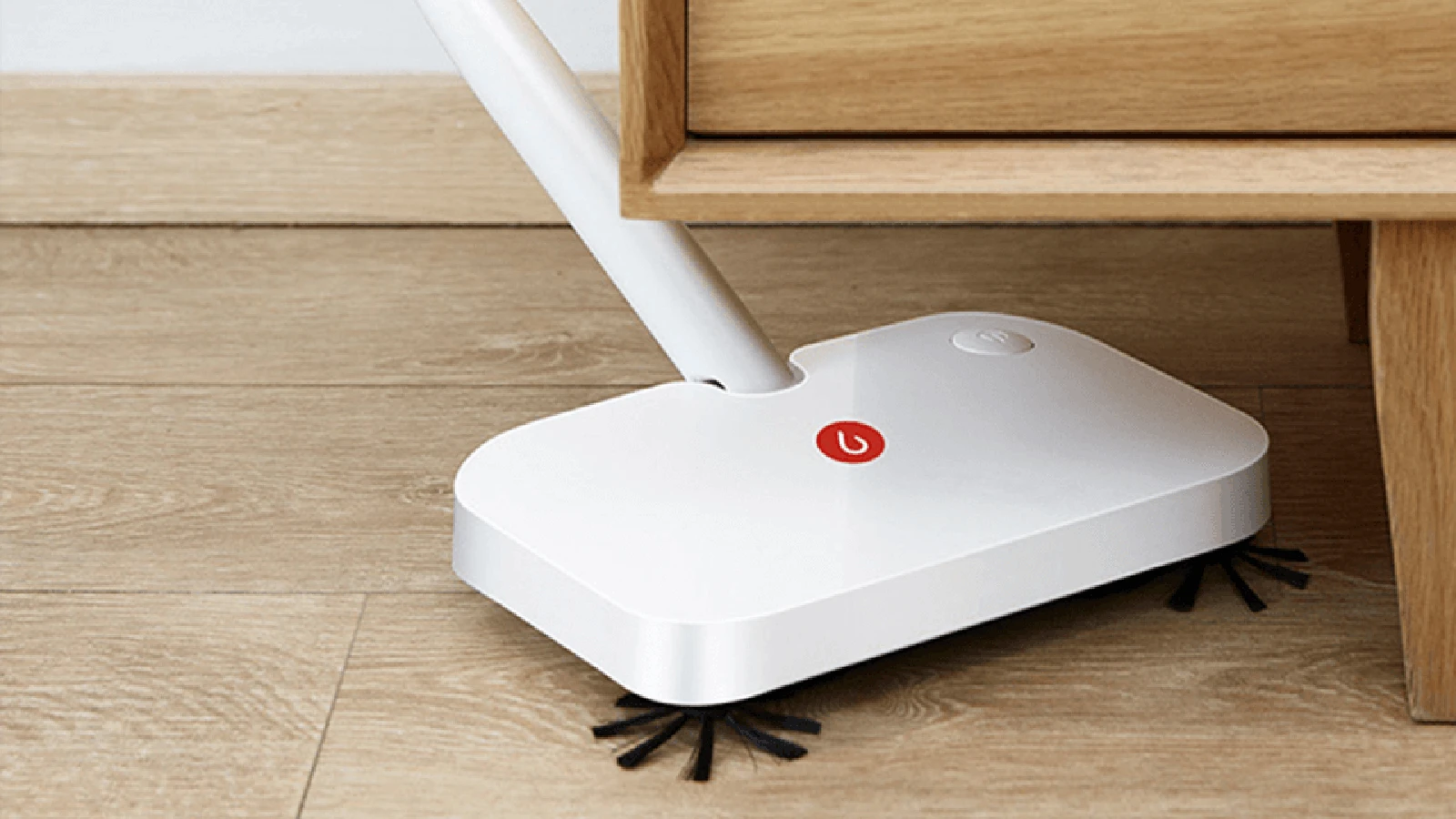
JESUN Multi-purpose Cordless Stick Vacuum (K908)
Cordless stick vacuum with a 500 ml dust cup, 2000 mAh battery, 100 W rated power and two suction levels — 3000 Pa and 8000 Pa — giving 25 minutes on low and 13 minutes on high. The dual runtime figure is the one that matters.
Dustbin Capacity and the Emptying Tax
Dustbin capacity is the specification buyers check last and owners complain about first. A cordless vacuum has to make space for an onboard battery, so its bin is typically smaller than a corded machine’s, which means more trips to the bin and, in a pet household, more emptying mid-room. That sounds trivial until the bin fills in the middle of a carpet you are already halfway through; then it breaks the rhythm of the job and the session gets finished later or not at all (Popular Mechanics, 2026). For example, a 500 ml bin in a home with a heavy-shedding dog may need emptying twice in a single room, while a corded machine with a larger bin finishes the same floor on one fill.
Two numbers tell you how bad the emptying tax will be for your home. The first is bin volume, which is usually quoted in millilitres or litres. The second is how much hair and fibre your floor produces between sessions, which you can estimate from how often your current vacuum needs emptying. As a rule of thumb, a hard-floor home with no pets will not notice a small bin, and a carpeted home with a heavy-shedding dog will notice it every single time. Meanwhile, a corded machine’s larger bin and longer hose make the same job less interrupted, which is one reason the corded format survives in pet households despite the cable. Check that the bin empties with one hand and without touching the contents, because that is the step where dust escapes back into the room.
Battery Replaceability and Cost of Ownership
The long-term cost of a cordless vacuum is decided by one design decision: whether the battery can be replaced. A machine with a removable, standard-format battery can be revived for the price of a cell pack when runtime begins to drop, which on a daily-use machine is typically noticeable after a few hundred charge cycles. A machine with a sealed battery becomes waste at that point, because the cells cannot be economically exchanged, and the rest of the vacuum — motor, head, filters — is still serviceable. Consequently, battery replaceability should be treated as a headline feature rather than a footnote. That said, a pack that can be swapped also lets you buy a spare and extend a session, which is a second reason to check before you buy.
The rest of the ownership cost comparison is closer than it looks. Both formats consume filters and belts, both eventually need a new brush roll, and both benefit from the same cleaning routine. In our experience, the difference over five years is mostly the battery: a replaceable pack is a modest maintenance cost, while a sealed pack is the full purchase price of a new machine. For example, a household that replaces a battery pack twice in five years still spends less than the same household buying two cordless vacuums, and it keeps the accessories and the storage arrangement it has already set up.

JESUN Horizontal Vacuum Cleaner (KLE029)
Corded unit at 220–240 V, 1000 W, with vacuum degree of at least 15 kPa, airflow of at least 27 L/s and a 550 ml tank. Unlimited runtime and constant suction — the format for deep cleans and whole floors.
Which One for Which Home
Apply the decision in this order and the answer usually takes a minute.
- Cordless only: hard floors, no pets, under about 60 m², or a home where the machine lives on a wall and gets used daily.
- Corded only: large carpeted areas, heavy shedders, or a whole floor cleaned in one session where the cable is a minor annoyance.
- Both: most family homes — the cordless handles daily passes, stairs and car interiors; the corded handles the weekend deep clean.
- Check replaceability before buying cordless: a removable battery is worth more than an extra runtime figure.
- Check the high-setting runtime, not the headline number, and compare bins by volume if you have pets or carpet.
Whichever you choose, the habits that keep performance constant are the same. Empty the bin after every use rather than letting it fill, wash or replace the filter on schedule, and clear hair from the brush roll before it wraps the axle — hair build-up reduces the roll’s effective diameter and reads to the user as lost suction when nothing has failed. Washable filters are worth having for that reason alone, because a filter that can be rinsed and dried restores airflow without a purchase.
Frequently Asked Questions
Is cordless as powerful as corded?
Premium cordless models can match or beat a mid-range corded machine on low-pile carpet while running at full power. The gap appears in consistency: a corded vacuum holds the same suction for the whole session, while a cordless one slows as the battery discharges and often needs its highest mode to compete.
How long do cordless vacuums actually run?
The quoted figure is usually measured on the lowest power setting. Expect roughly half that on the highest setting, and less again as the battery ages. Check the dual-setting runtime rather than the headline number, because the high setting is what you will use on carpet and during heavy shedding.
Can you replace the battery in a cordless vacuum?
On some models, yes, and it is the single most important long-term feature to check. A removable standard-format pack can be replaced for a modest cost when runtime drops, while a sealed battery turns a working vacuum into waste because the cells cannot be economically exchanged.
Which is better for carpet, cordless or corded?
A corded vacuum generally cleans carpet more consistently, because it holds suction for the whole session and its larger bin fills more slowly. A corded machine with a hose also reaches under furniture more easily. Cordless wins on stairs and quick passes between deep cleans.
Why does my vacuum lose suction as the bin fills?
Airflow declines as the bin fills and as the filter loads, and the effect is more noticeable on compact machines with small bins and fine filters. Empty the bin after every use, wash or replace the filter on schedule, and clear hair from the brush roll, which reduces pickup when it wraps the axle.
Need cordless and corded lines in one order?
We manufacture cordless stick vacuums and corded canister units with washable filters and replaceable parts, plus OEM or ODM packaging, from low MOQs.
Request Wholesale Pricing →Conclusion
Cordless and corded vacuums trade battery for consistency, and the trade does not have a universal winner. Cordless frees you from the cable and gets used more often; corded holds its suction, runs indefinitely and empties less frequently, which is why it still wins on carpet and in pet households. If you buy one machine, choose by the floor you have most of, and if you can afford both, the pair covers more situations than either alone. That said, the specification that decides the five-year cost is not suction or runtime: it is whether the battery can be replaced, because a sealed pack turns a serviceable vacuum into waste the day its cells fade.
We build cordless stick and corded canister vacuums with washable filters, replaceable batteries and serviceable brush rolls, and we are happy to help you match a range to your market.
References
- Popular Mechanics — “Corded vs. Cordless Stick Vacuums: Which Is Better?” (cordless models often need their highest suction mode to match a corded machine, which uses more battery; corded offers unlimited runtime and constant suction; cordless bins are smaller because the battery takes space, meaning more trips to empty). popularmechanics.com/home/a70794218/corded-vs-cordless-vacuums
- Consumer Reports — “Best Vacuums for Hardwood Floors” (a small dustbin may need emptying more than once during a sizable clean; attachments and storage on a charging base). consumerreports.org/appliances/vacuum-cleaners/best-vacuums-for-hardwood-floors
- US Centers for Disease Control and Prevention — “When and How to Clean and Disinfect Your Home” (cleaning with soap and water removes most germs in ordinary household settings). cdc.gov/hygiene/about/when-and-how-to-clean-and-disinfect-your-home.html
- University of Illinois Extension — “A guide to keeping your sponges, dish rags and scrub brushes clean” (cleaning tools that are not washed and dried between uses become a contamination source rather than a cleaning aid). extension.illinois.edu/blogs/simply-nutritious-quick-and-delicious
This guide was written by the JESUN Cleaning Tools Team and reviewed by our product engineering group. You can read more about us or contact our team with questions about vacuum specifications.
Continue Learning
- How to Clean and Maintain Your Vacuum Cleaner — filters, belts and the parts that wear first.
- Vacuum cleaner manufacturer — cordless, carpet and canister lines in bulk.
- Cordless vacuum catalog — stick and handheld models with washable filters.


 English
 Spanish
 Russian
 Arabic