
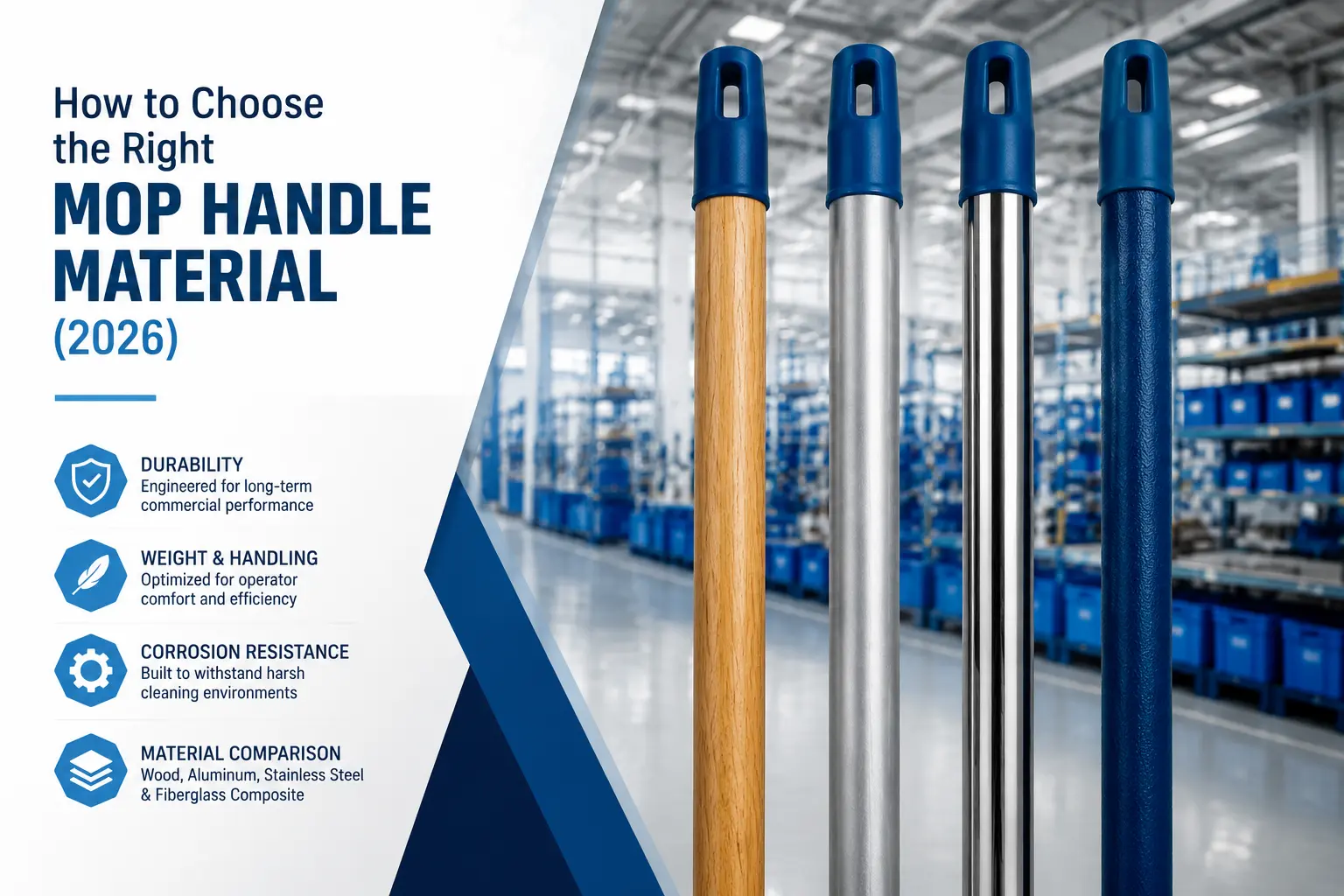
بلغت قيمة سوق مقابض ممسحات الغبار العالمية حوالي 1.2 مليار في عام 2025، وينمو بمعدل نمو سنوي مركب ثابت قدره 3.81 تريليون روبية هندية (تقرير سوق مقابض ممسحة الغبار من إنتيلو، 2025لا تزال مقابض الخشب تستحوذ على الحصة الأكبر بنسبة 31.21 تريليون طن، بينما يُعدّ الألمنيوم القطاع الأسرع نموًا بمعدل نمو سنوي مركب قدره 4.91 تريليون طن. مع ذلك، لا تزال معظم قرارات الشراء تُتخذ بناءً على العادة أو السعر المبدئي بدلًا من التكلفة الإجمالية للملكية أو سلامة العمال.
يحتاج مديرو المرافق إلى أكثر من مجرد قائمة بالمواد. إنهم بحاجة إلى إطار عمل لاتخاذ القرارات يربط بين نوع مادة المقبض ومنطقة التنظيف ومدة الوردية والميزانية. يقارن هذا الدليل بين مقابض الألمنيوم والفولاذ المقاوم للصدأ والخشب والبلاستيك والألياف الزجاجية. المتانة، والوزن، والتكلفة، والنظافة، وبيئة العمل حتى تتمكن من تبرير هذا الاختيار لكل من الموظفين وأصحاب المصلحة. للاطلاع على التحليل المصاحب لأنواع رؤوس الممسحة، راجع قسمنا. مقارنة بين الممسحة الإسفنجية والممسحة المسطحة والممسحة الخيطية.
أهم النقاط
- الألومنيوم يوفر أفضل نسبة قوة إلى وزن لمعظم المناطق التجارية: 1-2 رطل، عمر افتراضي من 5 إلى 7 سنوات، حصة سوقية تبلغ 28.4% ومعدل نمو سنوي مركب يبلغ 4.9%.
- الفولاذ المقاوم للصدأ يدوم من 5 إلى 10 سنوات أو أكثر، لكن وزنه يتراوح بين 3 إلى 5 أرطال - احتفظ به للرعاية الصحية وخدمات الطعام والغرف النظيفة حيث تكون مقاومة المواد الكيميائية مهمة.
- خشب أرخصها مقدماً ($5-15) ولكنها تحتاج إلى استبدال كل 2-3 سنوات ولا يمكن تعقيمها بشكل فعال.
- طول المقبض يؤثر بشكل مباشر على خطر الإصابة: اختر مقاس 54-60 بوصة (من الأرض إلى الذقن) مع إمكانية التعديل التلسكوبي حيثما أمكن ذلك.
- الاختيار القائم على المنطقة يتفوق على الحلول ذات المقاس الواحد الذي يناسب الجميع: قم بمطابقة المواد مع نوع المنشأة، وليس فقط السعر المعلن.
جدول المحتويات
تبديلما هي المواد المتوفرة لمقابض المماسح التجارية؟
تهيمن خمس مواد على سوق مقابض المماسح التجارية: مركبات الألومنيوم والفولاذ المقاوم للصدأ والخشب والبلاستيك والألياف الزجاجيةيحتل كل منها موقعاً متميزاً في سوق $1.2B، مدفوعاً بمفاضلات مختلفة في الوزن والمتانة ومقاومة المواد الكيميائية والتكلفة (ماركت إنتيلو، 2025).
خشب يستحوذ على الحصة الأكبر نظراً لعادات الشراء الراسخة وانخفاض سعره. يتميز بملمسه الدافئ وتوفره الواسع، ولكنه يمتص الرطوبة ولا يتحمل المطهرات القوية. الألومنيوم يكتسب هذا المنتج أسرع معدل نمو لأن مديري المرافق يعطون الأولوية بشكل متزايد للوزن ومقاومة التآكل على حساب أقل تكلفة أولية. الفولاذ المقاوم للصدأ تهيمن على الشريحة المتميزة في قطاعي الرعاية الصحية وخدمات الطعام. البلاستيك و الألياف الزجاجية املأ الفراغات في المنتجات خفيفة الوزن والمقاومة للمواد الكيميائية.
هل الألومنيوم هو أفضل مادة لصنع مقابض الممسحة بشكل عام؟
توفر مقابض الممسحة المصنوعة من الألومنيوم أفضل نسبة بين القوة والوزن مصنوعة من أي مادة شائعة للمقابض، بوزن يتراوح بين 1 و2 رطل، مع مقاومة للتآكل والانحناء. تستحوذ هذه المقابض على 28.41 تريليون طن من السوق، وهي القطاع الأسرع نموًا بمعدل نمو سنوي مركب قدره 4.91 تريليون طن.ماركت إنتيلو، 2025).
بالنسبة للمقابض التجارية النموذجية التي يتراوح طولها بين 54 و66 بوصة، يوازن الألومنيوم بين الخصائص التي تهم معظم المنشآت. فعلى سبيل المثال، يزن مقبض الألومنيوم المريح من ربرميد، الذي يتراوح طوله بين 54 و66 بوصة، حوالي 1.75 رطل، مع دعمه لرؤوس التثبيت من نوع المشبك ورؤوس التغيير السريع (إعلان تجاري لشركة ربرميد، 2026يؤثر هذا الوزن بشكل كبير على مدار نوبة عمل مدتها 8 ساعات. فالمقبض الأخف وزناً يقلل من عزم دوران المعصم ويتيح للعاملين الانتقال من الحركات الرأسية إلى الأفقية دون مقاومة القصور الذاتي.
يُقاوم الألومنيوم الرطوبة ومعظم المطهرات التجارية بشكل أفضل من الخشب، على الرغم من أنه ليس خاملاً كيميائياً كالفولاذ المقاوم للصدأ. ويمكن معالجته بالأكسدة لزيادة صلابة سطحه، ويتوفر بألوان مُرمّزة تُسهّل برامج فصل المناطق. تتراوح تكلفته الأولية عادةً بين $15 و$40، وهي أعلى من تكلفة الخشب والبلاستيك، ولكنها أقل بكثير من تكلفة الفولاذ المقاوم للصدأ عالي الجودة. جدول استبدال رأس المحرك بالإضافة إلى ذلك، فإن استخدام مقبض من الألومنيوم المتين يضمن أن تكون تكاليف التشغيل على المدى الطويل قابلة للتنبؤ.
الأفضل لـ: المكاتب والفنادق والمدارس والجامعات ومتاجر التجزئة ومناطق الرعاية الصحية الخفيفة إلى المتوسطة حيث يكون الوزن وبيئة العمل أكثر أهمية من التعقيم المستمر بالبخار.
متى يبرر الفولاذ المقاوم للصدأ ارتفاع سعره؟
تزن مقابض الممسحة المصنوعة من الفولاذ المقاوم للصدأ من 3 إلى 5 أرطال — أغلى بنحو 2-3 مرات من الألومنيوم — لكنها توفر مقاومة فائقة للتآكل، وتحملاً للمواد الكيميائية، وخصائص تعقيم تبرر سعرها المرتفع في بيئات الرعاية الصحية وخدمات الطعام (فومتك دبليو سي سي، 2025).
تُعدّ مقابض الفولاذ المقاوم للصدأ الخيار الأمثل عندما يتطلب الأمر تحمّلها للتعرض المتكرر للمطهرات الكاوية، أو التعقيم بالبخار، أو الغسيل بدرجة حرارة عالية. في غرف التنظيف المتوافقة مع معايير التصنيع الجيد (GMP)، توصي شركة Foamtec باستخدام مقابض الفولاذ المقاوم للصدأ في المناطق المصنفة ISO 5-7، لأنها قابلة للتلميع الكهربائي والتخميل، مما يقلل من الشقوق التي قد تؤوي الميكروبات.فومتك دبليو سي سي، 2025). تواجه مطابخ خدمات الطعام كيمياء مماثلة: فالشحوم والمنظفات القلوية وتناوب المطهرات تهاجم التشطيبات المصنوعة من الألومنيوم وتدمر ألياف الخشب.
تتراوح تكلفة المقبض الواحد عادةً بين 1.25 و2.60 جنيه إسترليني أو أكثر، كما أن وزنه الزائد ملحوظ. ففي نوبات العمل الطويلة، قد يُسبب المقبض الذي يزن 1.8 كيلوغرام إرهاقًا كبيرًا. القاعدة بسيطة: إذا كانت عملية التنظيف تتضمن التعقيم بالبخار أو استخدام مواد التعقيم أو التعامل مع الشحوم الثقيلة، فإن المقبض الفولاذي يُعوّض تكلفته. أما إذا لم تكن هذه العمليات مُتبعة، فعادةً ما يكون المقبض المصنوع من الألومنيوم هو الخيار الأفضل من حيث التكلفة الإجمالية.
هل لا يزال الخشب مادة مناسبة لصنع مقابض الممسحة؟
لا تزال مقابض الممسحة الخشبية تستحوذ على الحصة السوقية الأكبر بنسبة 31.21 تريليون روبية هندية.مما يعكس التفضيلات التقليدية وأقل تكلفة أولية. ومع ذلك، فهي تتطلب استبدالًا كل سنتين إلى ثلاث سنوات، وتمتص الرطوبة، ولا يمكن تعقيمها بشكل فعال (ماركت إنتيلو، 2025).
مقبض خشبي من نوع $5-15 رخيص الثمن، دافئ الملمس، ومألوف لدى فرق الصيانة. لكن هذه المزايا تتلاشى سريعًا مع الاستخدام التجاري. إذ تتغلغل المياه والمواد الكيميائية المستخدمة في التنظيف داخل نسيج الخشب، مما يُسبب انتفاخه وتغير لونه، وفي النهاية تشققه. وبمجرد تلف طبقة الطلاء، يصبح الخشب بيئة خصبة للميكروبات، ولهذا السبب تستبعده معايير الرعاية الصحية وخدمات الطعام بشكل متزايد.
الحسابات على مدى عقد من الزمن غير مُرضية. فمقبض خشبي يُستبدل كل سنتين إلى ثلاث سنوات يكلف ما بين 20 و45 جنيهًا إسترلينيًا على مدى عشر سنوات، بينما يدوم مقبض ألومنيوم واحد، بتكلفة 25 جنيهًا إسترلينيًا، عادةً من خمس إلى سبع سنوات. لا يُعدّ الخشب خيارًا مناسبًا إلا في البيئات قليلة الاستخدام والتي لا تُراعى فيها معايير النظافة، حيث تكون التكلفة الأولية هي المعيار الوحيد.
الأفضل لـ: الاستخدام السكني الخفيف، والعمليات التي تركز على الميزانية مع دورات استبدال قصيرة، أو مسح الغبار الجاف حيث يكون التعرض للرطوبة ضئيلاً.
ماذا عن المقابض المصنوعة من البلاستيك والألياف الزجاجية المركبة؟
تهيمن المقابض البلاستيكية على سوق مقابض المماسح الأوسع بحصة سوقية تبلغ 45.21 تريليون روبية. وذلك بسبب فعاليته من حيث التكلفة ومقاومته للرطوبة (تقرير مقبض ممسحة السوق Intelo، 2025توفر المواد المركبة المصنوعة من الألياف الزجاجية مقاومة للمواد الكيميائية والرطوبة مع وزن أقل من الفولاذ.
تُعدّ المقابض البلاستيكية الخيار الأخف وزنًا والأرخص، إذ غالبًا ما يقل وزنها عن رطل واحد وتتراوح تكلفتها بين $3 و10. وهي قابلة للتمييز بالألوان ومقاومة للصدأ، مما يجعلها جذابة لفصل المناطق الأساسية. لكنّها تُعاني من ضعف في المتانة الميكانيكية. فمع الأحمال الثقيلة للتربة أو قوة الرفع المتكررة، ينثني البلاستيك ويتمدد، وفي النهاية يتشقق عند نقاط التثبيت أو رأس الأداة. لذا، يُفضّل التعامل معها كمواد استهلاكية وليست أدوات طويلة الأمد.
يقع الألياف الزجاجية بين الألومنيوم والفولاذ في معظم المقاييس. يزن مقبض ممسحة Integrity Cleanroom القابل للتعديل المصنوع من الألياف الزجاجية 16 أونصة (0.45 كجم)، ويمكن تعقيمه بالبخار، ويقاوم مجموعة واسعة من المواد الكيميائية (ورقة بيانات منتجات غرف التنظيف من إنتغريتي، 2024كما أنه غير موصل للكهرباء، مما يجعله أكثر أمانًا من الألومنيوم أو الفولاذ في مناطق الصيانة الكهربائية. أما عيبه فهو أن مقابض الألياف الزجاجية قد تتلف أو تتشقق إذا تضررت الطبقة الخارجية من الراتنج.
الأفضل لـ: البلاستيك = مناسب للاستخدامات المنزلية الخفيفة والميزانية المحدودة. الألياف الزجاجية = مناسبة للبيئات الصناعية التي تتعرض لكميات كبيرة من المواد الكيميائية، وغرف العمليات النظيفة، ومناطق العمل الكهربائية.
كيف يؤثر طول المقبض وبيئة العمل على سلامة العامل؟
أفاد برنامج SHARP التابع لولاية واشنطن بتسجيل 182 مطالبة تعويضات عمالية ناتجة عن إصابات متعلقة بالممسحة منذ عام 2019، مع تصنيف 30% كاضطرابات عضلية هيكلية مرتبطة بالعمل. وجدت مراجعة أجريت عام 2022 لدراسات مسح الأرضيات أدلة متوسطة على أن مقابض الممسحة القابلة للتعديل تقلل من التعرض البدني في الكتفين والمعصمين (أليريد وفوسيناس، إيجيرف, 2022(نقلاً عن واليوس وآخرون).
آلية العمل بسيطة. المقبض القصير جدًا يُجبر العامل على الانحناء للأمام، مما يُحمّل أسفل الظهر. أما المقبض الطويل جدًا فيُجبر الكتفين على التمدد ويُقلل من التحكم. توصي لجنة خبراء CleanLink بـ الحد الأدنى 54 بوصة، وعادةً 60 بوصة — ارتفاعها تقريبًا من الأرض إلى الذقن — لأنها توفر مدى وصول جيد دون تقويس العمود الفقري (كلين لينك، 2020).
أضافت دراسة فندقية أجرتها مؤسسة MDPI بُعدًا آخر: فقد قللت المقابض القابلة للتمديد بشكل كبير من خطر الإصابة بآلام أسفل الظهر مقارنة بالمقابض ذات الطول الثابت (P<0.05) (أليريد وفوسيناس، إيجيرف, 2022تتيح المقابض القابلة للتمديد للفرق ذات الأطوال المختلفة مشاركة الأدوات دون إجبار أي شخص على اتخاذ وضعية غير مريحة. كما أن ميزات مثل المقابض المبطنة والمفاصل الدوارة وتصميمات المقابض المنحنية تقلل من انحراف المعصم. وتتكامل هذه التحسينات المريحة بشكل خاص مع أنظمة مسح الألياف الدقيقة المسطحةوهي أخف وزناً وأسرع من المماسح الخيطية.
تُظهر بيانات SHARP أيضًا أن تضمنت 40% من مطالبات التنظيف استبدال الأجور أو العجز (وزارة العمل والصناعة بولاية واشنطن، 2025وهذا يعني أن المقبض الخاطئ ليس مجرد مشكلة تتعلق بالراحة - بل هو تكلفة مباشرة في المطالبات والوقت الضائع ودوران الموظفين.
ما هي مادة مقبض الممسحة التي يجب عليك اختيارها حسب المنطقة؟
لا يوجد نوع واحد من المواد المستخدمة في المقابض يناسب جميع المناطق. النهج الأمثل هو الجمع بين المواد ونوع المنشأة: الألومنيوم لمعظم المناطق التجارية، والفولاذ المقاوم للصدأ للرعاية الصحية وخدمات الطعام، والألياف الزجاجية للبيئات التي تحتوي على كميات كبيرة من المواد الكيميائية، والخشب فقط للأغراض الخفيفة ذات الميزانية المحدودة.
| منطقة | مُستَحسَن | لماذا | العمر المتوقع |
|---|---|---|---|
| الرعاية الصحية / غرفة نظيفة | الفولاذ المقاوم للصدأ أو الألومنيوم المؤكسد | مقاومة للمواد الكيميائية، قابلة للتعقيم بالبخار، تساقط منخفض | 5-10 سنوات فأكثر |
| فندق / مكتب | الألومنيوم | خفيف الوزن، مقاوم للصدأ، مريح في الاستخدام | 5-7 سنوات |
| مطبخ المطعم | الفولاذ المقاوم للصدأ أو الألياف الزجاجية | مقاومة الشحوم/المواد الكيميائية، الغسيل المتكرر | 5-10 سنوات فأكثر |
| مدرسة / جامعة | الألومنيوم | فعّال من حيث التكلفة، متين، قابل للترميز اللوني | 5-7 سنوات |
| صناعي / مرافق | الألياف الزجاجية أو الفولاذ | مقاومة كيميائية، قوة تحمل عالية، غير موصل للكهرباء | 5-10 سنوات فأكثر |
| الاستخدام الخفيف / السكني | بلاستيك أو خشب | أقل تكلفة، مقبول للاستخدام العرضي | من سنة إلى ثلاث سنوات |
للحصول على معلومات أكثر تفصيلاً حول جدولة الاستبدال ومطابقة أنواع الرؤوس، راجع قسمنا دليل استبدال رؤوس الممسحات التجارية.
الأسئلة الشائعة
ما هي أكثر المواد متانة لمقابض الممسحة؟
الفولاذ المقاوم للصدأ يُعدّ الأكثر متانة، إذ يدوم من 5 إلى 10 سنوات أو أكثر حتى في ظل الاستخدام التجاري اليومي والتعرض المتكرر للمواد الكيميائية. يزن من 3 إلى 5 أرطال - أي ما يقارب ضعفين إلى ثلاثة أضعاف وزن الألومنيوم - لذا غالبًا ما يكون الألومنيوم الخيار الأفضل من حيث نسبة المتانة إلى الوزن للمناطق التجارية العامة.فومتك دبليو سي سي، 2025).
هل مقابض الممسحة المصنوعة من الألومنيوم أفضل من تلك المصنوعة من الخشب؟
نعم، للاستخدام التجاري. تدوم مقابض الألومنيوم لأكثر من 5 سنوات مقارنة بـ 2-3 سنوات للخشبيتميز الخشب بمقاومته للرطوبة والمواد الكيميائية، ويزن ما بين 1 و2 رطل. تكلفته الأولية أقل ($5-15 مقابل $15-40)، ولكنه يمتص الماء، ويتشقق، ولا يمكن تعقيمه بفعالية. أما من حيث التكلفة السنوية، فعادةً ما يكون الألومنيوم هو الخيار الأفضل.ماركت إنتيلو، 2025).
كم من الوقت يجب أن يدوم مقبض الممسحة التجارية؟
تتراوح فترات العمر التشغيلي النموذجية للمنتجات التجارية فيما يلي: الألومنيوم 5-7 سنواتالفولاذ المقاوم للصدأ: 5-10 سنوات أو أكثر، الألياف الزجاجية: 5-10 سنوات، الخشب: 2-3 سنوات، والبلاستيك: 1-3 سنوات حسب كثافة الاستخدام. عادةً ما يصل عمر مقبض ألومنيوم بطول 60 بوصة يُستخدم 8 ساعات يوميًا في مدرسة إلى 6-7 سنوات قبل الحاجة إلى استبداله.ماركت إنتيلو، 2025).
ما هو طول مقبض الممسحة الأنسب للاستخدام التجاري؟
أ الحد الأدنى 54 بوصة، والأفضل 60 بوصة — ارتفاع يصل تقريبًا من الأرض إلى الذقن للمستخدم العادي. توصي لجنة خبراء CleanLink (2020) بهذا النطاق لأنه يوفر وصولًا جيدًا دون إجبار الكتفين على الانحناء للأمام أو الانحناء المفرط. مقابض قابلة للتعديل لتناسب أطوال الموظفين المختلفة (كلين لينك، 2020).
هل تؤثر مواد مقابض الممسحة على كفاءة التنظيف؟
نعم. تسبب المقابض الأثقل التعب بشكل أسرع ويقلل من سرعة التنظيف خلال فترات العمل الطويلة. أفادت إدارة العمل والصناعة في ولاية واشنطن عن 182 مطالبة تعويضات عمالية ناتجة عن إصابات متعلقة بالممسحة منذ عام 2019، منها 301 حالة مصنفة كاضطرابات عضلية هيكلية. تقلل المقابض المريحة ذات المقابض المبطنة والمفاصل الدوارة والطول القابل للتعديل من خطر الإصابة.وزارة العمل والصناعة بولاية واشنطن، 2025; العوامل البشرية، 2019).
خاتمة
يُعد اختيار مادة مقبض الممسحة المناسبة قرارًا تشغيليًا، وليس مجرد تفضيل من مخزن اللوازم. وتشير البيانات إلى تسلسل هرمي واضح: الألومنيوم بالنسبة لمعظم المناطق التجارية، الفولاذ المقاوم للصدأ للبيئات التي تتطلب معايير نظافة بالغة الأهمية، الألياف الزجاجية للمناطق التي تكثر فيها المواد الكيميائية أو المناطق التي تعمل بالكهرباء، و الخشب أو البلاستيك فقط عندما تكون التكلفة الأولية أهم من طول العمر.
ثلاثة أرقام ينبغي أن توجه القرار النهائي:
- يشهد سوق $1.2B تحولاً نحو الألومنيوم في معدل النمو السنوي المركب 4.91 تريليون طن لسبب وجيه - فهو يوازن بين الوزن والمتانة والتكلفة.
- 182 مطالبة تعويضات العمال أظهرت الدراسات التي أجريت في ولاية واشنطن منذ عام 2019 أن تصميم المقابض يمثل نقطة ضعف حقيقية.
- التكلفة السنوية غالباً ما يفضل المقبض الأغلى ثمناً لأن معدل استبداله أهم من سعره المعلن.
تقوم شركة JESUN، بصفتها أكبر شركة مصنعة لأدوات التنظيف في العالم منذ عام 1986، بإنتاج مقابض الممسحة التجارية من الألومنيوم والفولاذ المقاوم للصدأ والألياف الزجاجية والخشب لجميع أنواع المنشآت. اكتشف أنظمة المسح التجارية لدينا لاختيار مادة المقبض المناسبة لمناطق التنظيف لديك، أو راجع قسمنا مقارنة رؤوس الممسحة للحصول على الصورة الكاملة.
مراجع
- ماركت إنتيلو. "تقرير أبحاث سوق مقابض ممسحة الغبار". 2025. https://marketintelo.com/report/dust-mop-handle-market
- ماركت إنتيلو. "تقرير أبحاث سوق مقابض الممسحات". 2025. https://marketintelo.com/report/mop-handle-market
- وزارة العمل والصناعة بولاية واشنطن / برنامج SHARP. "النشرة الشتوية 2025 - بيانات الإصابات المتعلقة بالممسحة". 2025. https://www.lni.wa.gov/safety-health/safety-research/files/2025/102_201_2025_Winter_Newsletter_English.pdf
- Engström, T. et al. “Musculuskeletal Disorder Risk when Performing the Mopping Tasks with different handle heights: A Systemator Review.” العوامل البشرية، 2019. DOI: 10.1177/0018720818816261. https://journals.sagepub.com/doi/10.1177/0018720818816261
- Allread, WG & Vossenas, P. “تأثير ارتفاع المقبض على خطر الإصابة في أسفل الظهر أثناء المسح” المجلة الدولية للبحوث البيئية والصحة العامة, 19, 14907, 2022. https://mdpi-res.com/d_attachment/ijerph/ijerph-19-14907/article_deploy/ijerph-19-14907-v3.pdf
- لجنة خبراء CleanLink. "خبراء يحللون خيارات المسح". CleanLink، 2020. https://www.cleanlink.com/hs/article/Experts-Analyze-Mopping-Options–26045
- Foamtec WCC. "كيفية اختيار أفضل مقابض المسح لغرف التنظيف GMP." 2025. https://www.foamtecintlwcc.com/how-to-choose-the-best-mopping-handles-for-gmp-cleanrooms-key-factors-for-compliance/
- منتجات ربرميد التجارية. "مقبض ممسحة رطبة مريح مقاس 54-66 بوصة برأس على شكل مشبك." 2026. https://www.rubbermaidcommercial.com/cleaning/wet-mops-handles/54-66-ergonomic-wet-mop-handle-with-clamp-style-head/
- شركة إنتغريتي كلين روم / ويداكو. "ورقة بيانات منتج مقبض الممسحة القابل للتعديل". 2024. https://widaco.net/wp-content/uploads/2024/05/600-1008-adjustable-mop-handle.pdf


 Arabic
  English
  Spanish
  Russian