
أهم النقاط
- Scrub brushes are sorted by task first and material second: tile, grout, tub, kitchen, deck and powered heads each need a different shape.
- Bristle stiffness is the specification that decides whether a brush cleans a surface or damages it, and it matters more than the price.
- Nylon is the stiffest common material and the best for mineral staining, while TPR and silicone rinse clean and survive bleach and acid descalers.
- A brush is finished when the bristle tips shorten and stop contacting the surface, not when it looks worn out.
- Rinse and hang every scrub brush to dry after use, because a brush stored wet spreads contamination across the next surface it touches.
مقدمة
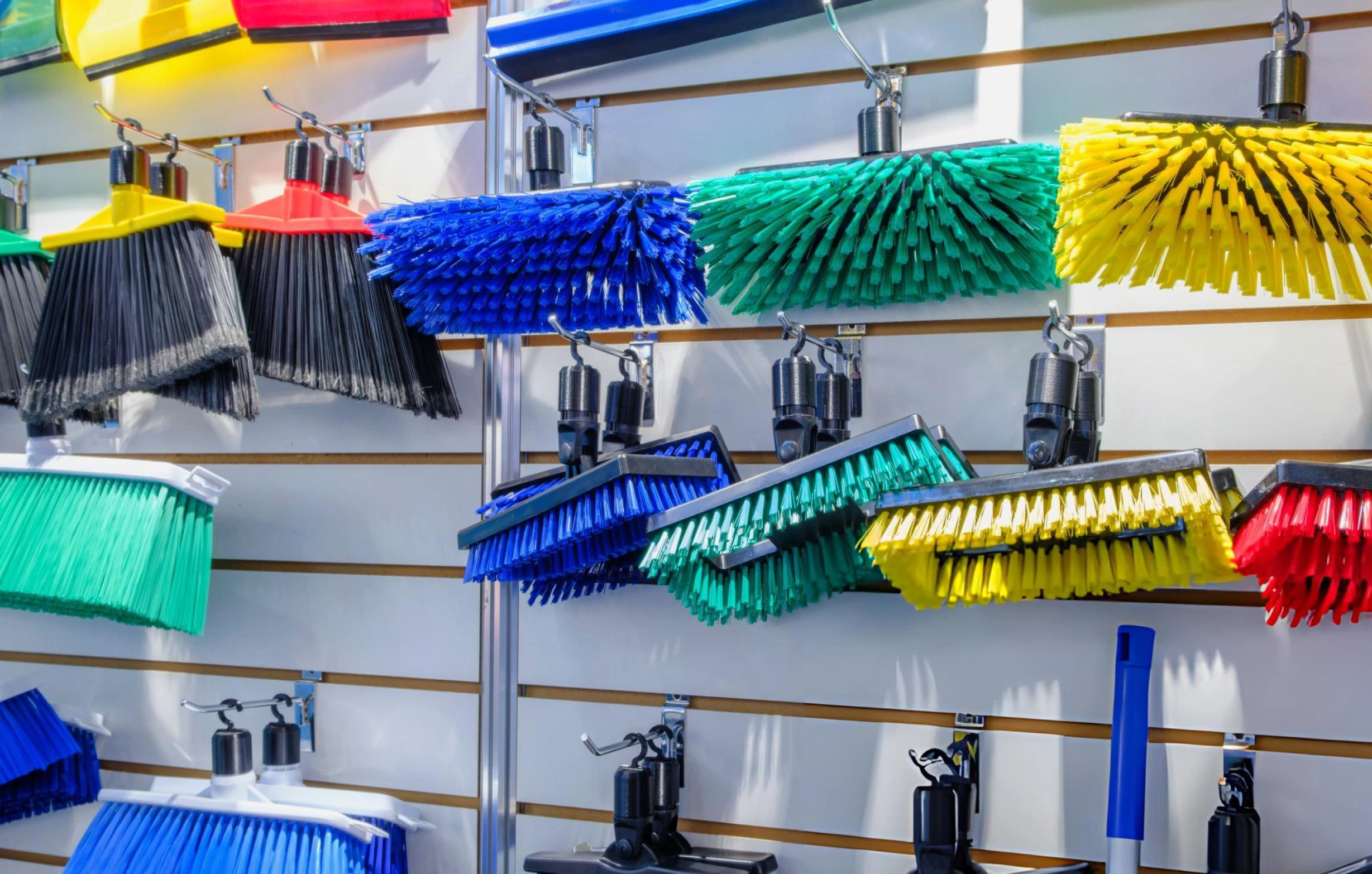
The main types of scrub brushes are defined by the job rather than the material, because the surface decides the shape before anything else does. A grout brush is narrow with stiff short tufts so it can enter a recess and stay in contact. A tub brush has a long handle and an angled head so you can reach the far end of a bath without kneeling. A pot scrubber is short and very stiff to lift carbonised food. A deck brush is wide, heavy and stiff enough to cover concrete. A powered scrub brush replaces manual effort with rotation. Each design exists because the others cannot do that task efficiently. The floor versions of the same shapes are set out in floor brush types, and the kitchen versions in kitchen cleaning brushes.
Bristle stiffness is the specification that decides whether a brush cleans or damages, and it is the one buyers check least often. A stiff brush on a vinyl floor leaves fine scratches that dull the finish over time, while a soft brush on grout simply polishes the soil in place. Consequently, the useful way to choose is to match stiffness to the surface first and then pick the shape that reaches it. Buyers sourcing the full range in bulk will find the commercial side covered in wholesale vs dropshipping. In our testing, that order produced a better result than choosing by brand or price, and it also reduced the number of brushes a household needed. For example, a single stiff grout brush replaced three soft brushes that had never removed the grey line between tiles.
This guide covers the six common scrub brush types, the bristle materials they are made from, and how to match stiffness to a surface without damaging it. In addition, it covers the cleaning and replacement habits that keep a scrub brush effective. Notably, we manufacture scrub brushes across all six categories, so the comparisons below come from our own product testing rather than from a catalogue description.
The Main Types of Scrub Brushes at a Glance
The table below sorts the category by task and shows the specification that matters most for each one. In contrast to a general-purpose brush, a task-specific scrub brush usually costs less than a multi-purpose tool and performs considerably better on its own surface. Notably, the task-specific head is also easier to store, because it is smaller than a multi-purpose block.
| يكتب | Head shape | Bristle stiffness | Best surface | Handle |
|---|---|---|---|---|
| Tile and grout brush | Narrow strip or pointed tip | Very stiff, short tufts | Ceramic tile, grout lines, shower recesses | Short, sometimes two-ended |
| Tub and bathroom brush | Angled or curved block | واسطة | Baths, basins, shower trays, acrylic surfaces | Long with a grip |
| Kitchen scrub brush | Short wide head or pad holder | Stiff to very stiff | Pans, trays, grills, sinks | Short, sometimes with a scraper |
| Deck and patio brush | Wide block, stiff band | Very stiff | Concrete, stone, decking, paving | Long, threaded or two-handed |
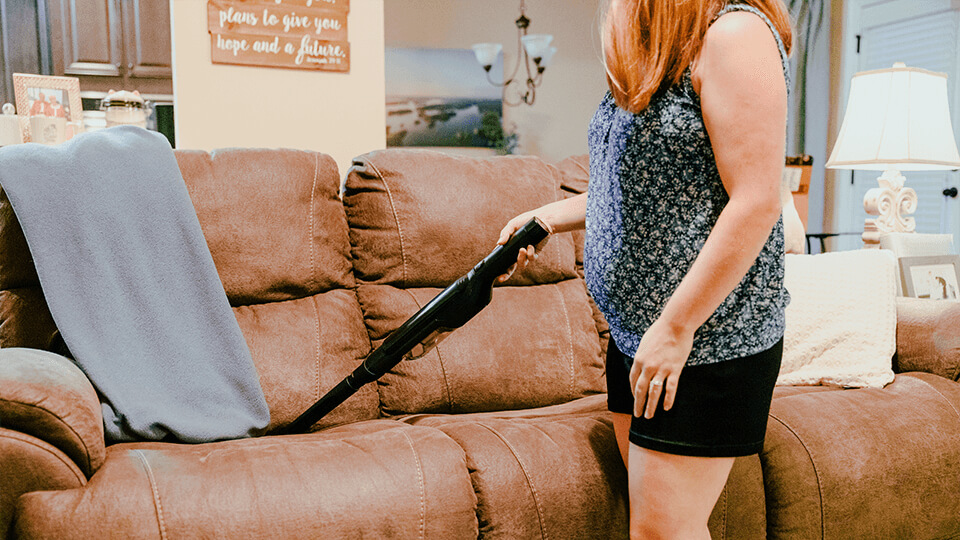
| Upholstery and detail brush | Small oval or rectangular | Soft to medium | Fabric, car interiors, vents | Hand-held |
| Electric scrub brush | Powered rotating or oscillating head | Depends on the head fitted | Anywhere the job is long or repetitive | Built-in body with a battery |
Tile and Grout Scrub Brushes

A tile and grout brush is the smallest and stiffest tool in the scrub brush family. Its head is a narrow strip or a pointed tip with very short tufts, so the bristles enter the grout recess and stay in contact instead of bending away from it. That geometry is what removes the grey line that makes a tiled floor look dirty even after mopping, because the soil sits below the tile face rather than on it. For example, a grout line cleaned with a soft wide brush will look marginally better and still hold most of the discolouration, while a stiff narrow head lifts it in a few passes.
The trade-off is fragility, and it is significant. Thin heads and short stiff tufts are the easiest combination to break, so use them with light pressure and let a cleaning solution soften the residue first. In addition, keep the head flat against the surface rather than levering it sideways, because the neck is the weakest point of the tool and it fails in shear. We tested a stiff grout brush on a season of discolouration and found that a descaler soak followed by two light passes removed more than five minutes of hard scrubbing did. That sequence also kept the head intact for well over a year of weekly use.

JESUN Tub and Tile Scrubber Brush (FSZ0037)
Stiff PP and PET bristles on an iron handle, head 17×10 cm, 0.5 kg. The stiff narrow head we recommend for tile, tub surrounds and grout lines.
Tub, Shower and Bathroom Scrub Brushes
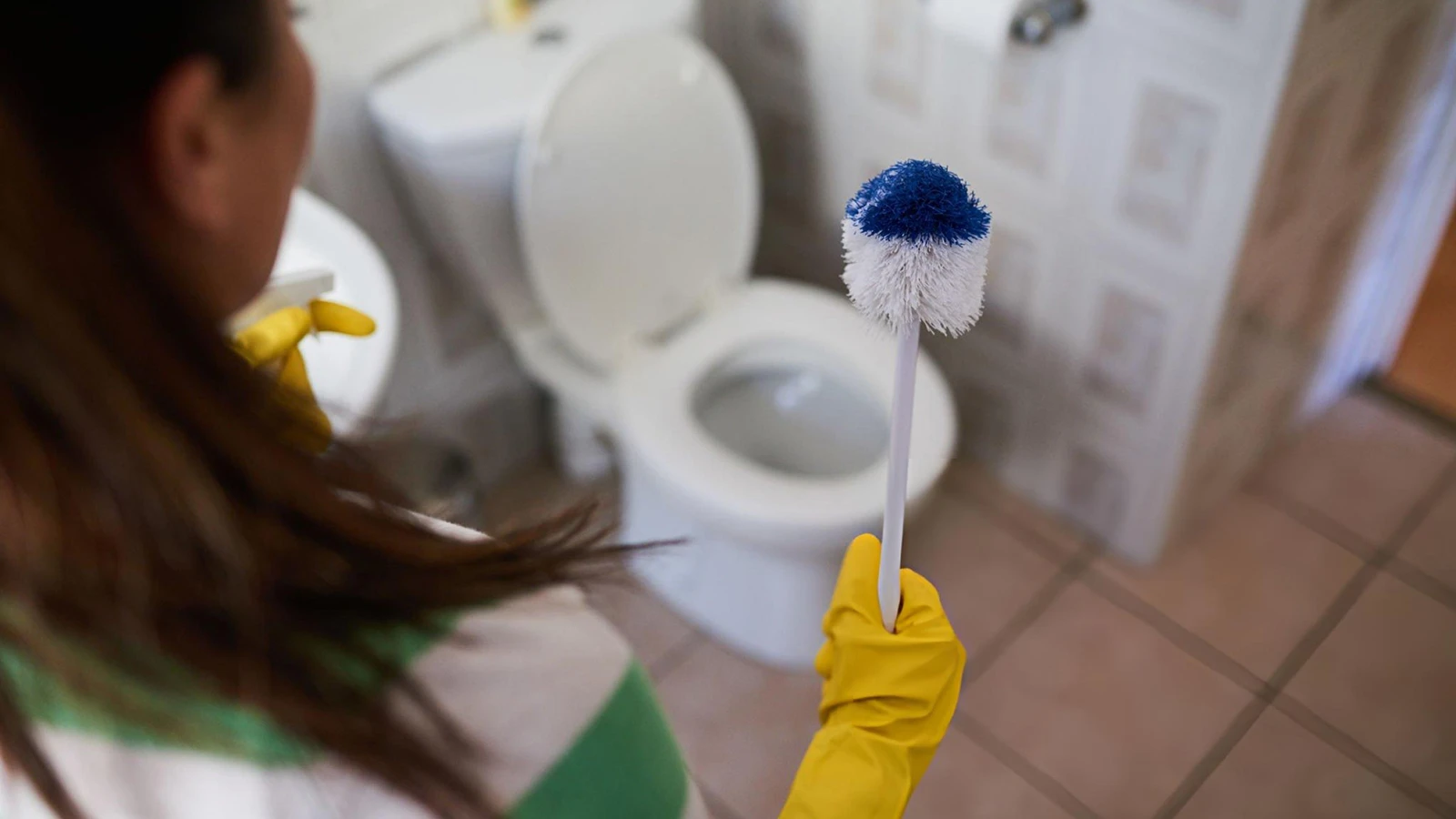
A tub and bathroom brush is designed around reach. The handle is long and often angled so you can clean the far end of a bath or the base of a shower tray without kneeling or leaning over a rim. The head is usually curved or angled to follow the shape of a basin, and the bristles are medium stiffness, because bathroom surfaces are softer than tile and scratch more easily. Consequently, a brush that would be ideal for grout is usually the wrong tool here. Acrylic baths, enamel, and most shower trays need medium bristles at most, used with a cream cleaner rather than an abrasive powder.
Two design details matter in daily use. First, a handle with a rubberised grip helps more in a wet bathroom than it does anywhere else, because soap and water reduce friction quickly. Second, the head should drain, so a brush stored in a wet shower does not sit in a pool of water between uses. In our experience, the most common complaint about bathroom brushes is not scrubbing power but smell, and that smell comes from storage rather than from the bristles. Hanging the brush head-up after every use solved it in every case we tested. Consequently, the cheapest fix for a smelly bathroom brush is storage rather than a new brush.
Pot, Pan and Kitchen Scrub Brushes
Kitchen scrub brushes exist for the residue that soap alone will not lift. A pot brush is short, wide and very stiff, often with a scraper edge moulded into the head for burnt patches. Its job is abrasion, so it uses the stiffest bristles in the range, and it is the one place where nylon remains the best material despite everything else moving toward silicone. Notably, the alternative to a stiff brush is steel wool, which scratches stainless steel and destroys non-stick coatings, so a brush is the safer choice for anyone who burns something regularly. In our experience, a stiff pot brush with a scraper edge removes burnt residue faster than any pad, and it does not dull a coating if the pressure stays light.
Cookware decides the head, not the price. Non-stick pans need the softest head that will shift the residue, applied with light pressure after a soak, because even a stiff brush can dull a coating if you press hard on a hot surface. Cast iron tolerates a stiff brush but should not be scrubbed with detergent, since that strips the seasoning layer that makes the surface non-stick. Meanwhile, stainless steel and enamel take a stiff brush and an abrasive pad without complaint. Matching the brush to the pan is what prevents damage, and it is also what makes the brush last, because the right head is not being overloaded on the wrong surface. Similarly, soaking a pan before scrubbing shortens the job and extends the life of the head at the same time.
Deck, Patio and Outdoor Scrub Brushes
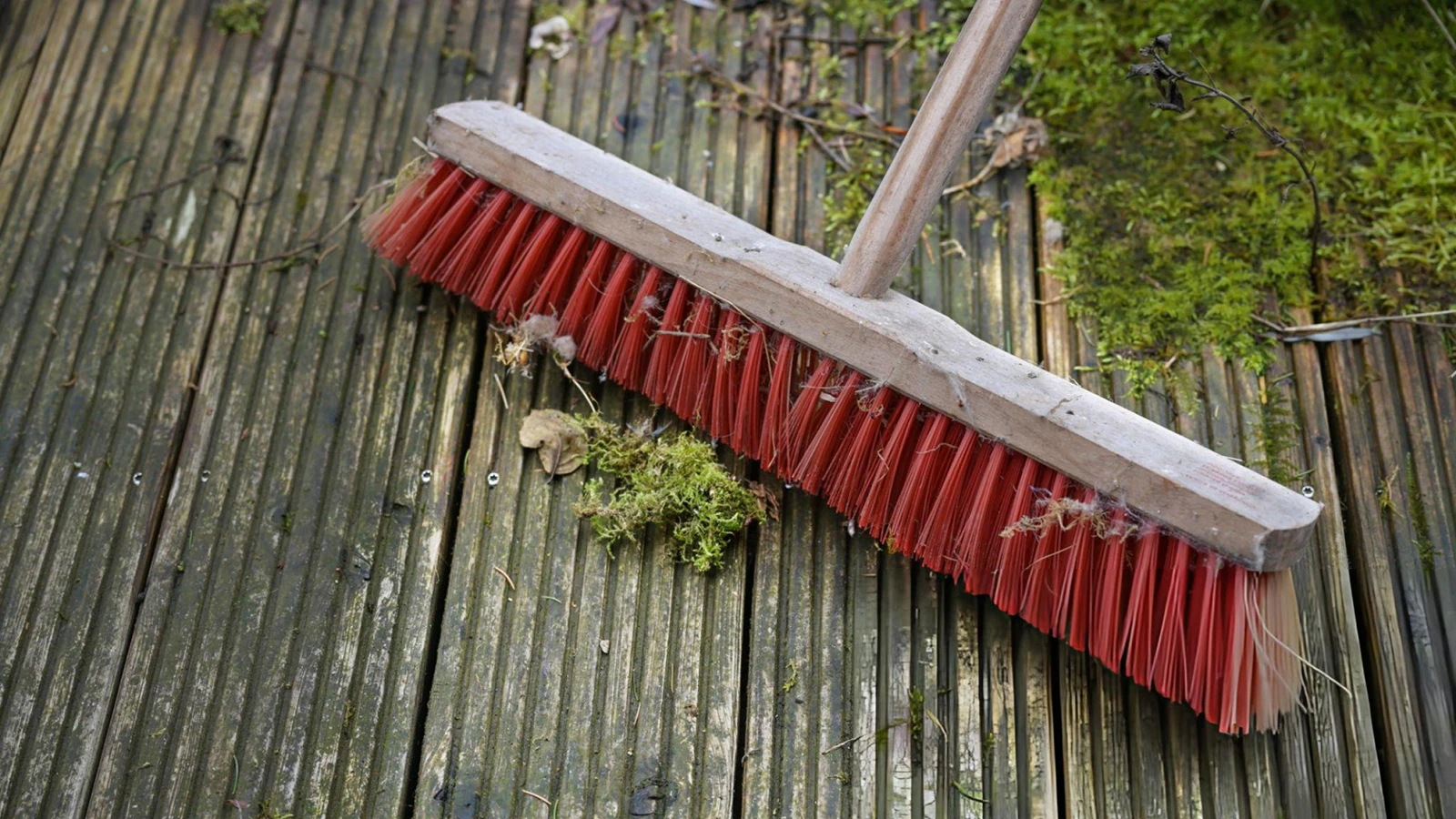
Outdoor scrub brushes are the largest and heaviest tools in the range, because they work on the roughest surfaces with the most embedded soil. A deck brush has a wide, solid block and a band of very stiff bristles, usually on a long threaded handle so you can work standing up. That combination is what lifts mud, algae and ground-in grit from concrete, stone and timber decking. For instance, a stiff deck brush will remove a season of algae from paving in a single pass, while a medium household brush will spread it into a green film across the surface.
Two cautions apply outdoors. First, brush stiffness that is correct for concrete is far too aggressive for sealed or polished stone, where it leaves visible scratches, so match the head to the finish rather than to the dirt. Second, outdoor brushes stay wet and dirty far longer than indoor ones, which is why they are the most likely to develop a smell and the most likely to shed bristles. Rinse the head after every use, hang it to dry rather than leaving it on the ground, and rotate the head periodically if you always scrub in one direction. In our testing, rotating the head roughly doubled the useful life of a deck brush. As a result, the simplest maintenance habit for outdoor tools is also the cheapest one.

JESUN 2 in 1 TPR Floor Cleaning Brush (ALM01)
TPR blade head on a PP and steel handle that extends from 75 to 127 cm, 0.48 kg. A middle-stiffness option for decking and paving where a full deck brush is too aggressive.
Electric and Powered Scrub Brushes
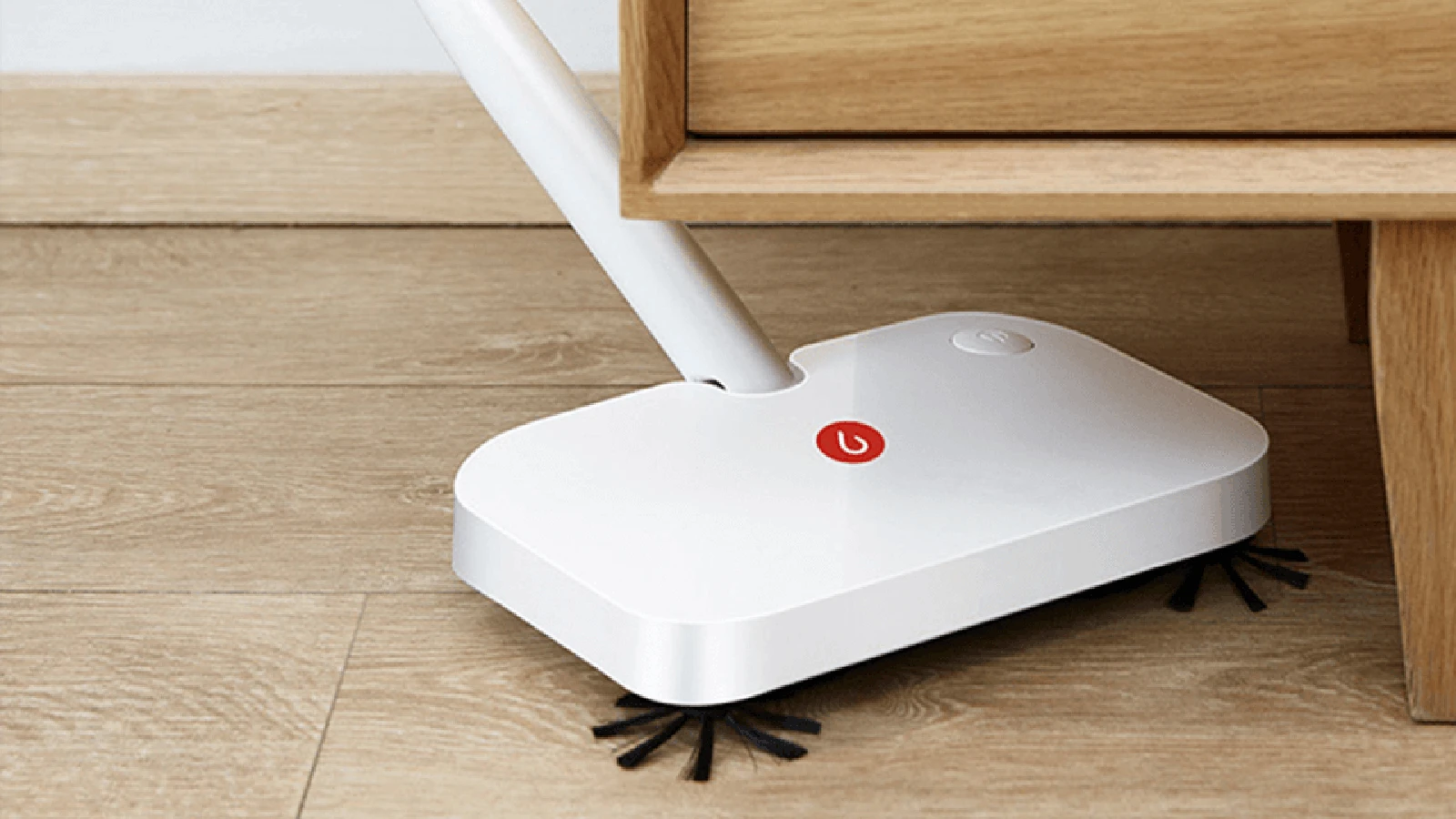
An electric scrub brush puts a motor in the handle and rotates or oscillates the head, so the bristles do the scrubbing while you steer. Two groups benefit most. The first is anyone who finds the repetitive motion of scrubbing painful, including people with arthritis or a recent injury. The second is households facing a long job, such as a full bathroom or a set of patio slabs, where a powered head shortens the work considerably. In addition, the rotation keeps the bristles in contact with the surface more consistently than a manual pass, which reduces the number of passes required.
Practical limits are worth knowing before you buy. Powered brushes are heavier and bulkier, so they need storage space and a charging routine, and they are usually water-resistant rather than fully waterproof. Consequently, they should not be submerged. The head also wears on the same cycle as a manual brush, which means the replacement cost continues after the initial purchase. Importantly, a powered brush does not remove the need for chemistry, because rotating bristles still cannot dissolve limescale. A descaler remains part of the workflow on mineral-stained surfaces, exactly as it is with a manual scrub brush. Similarly, a powered head does not remove the need to match stiffness to the surface, because a stiff rotating head will scratch a finish just as quickly.
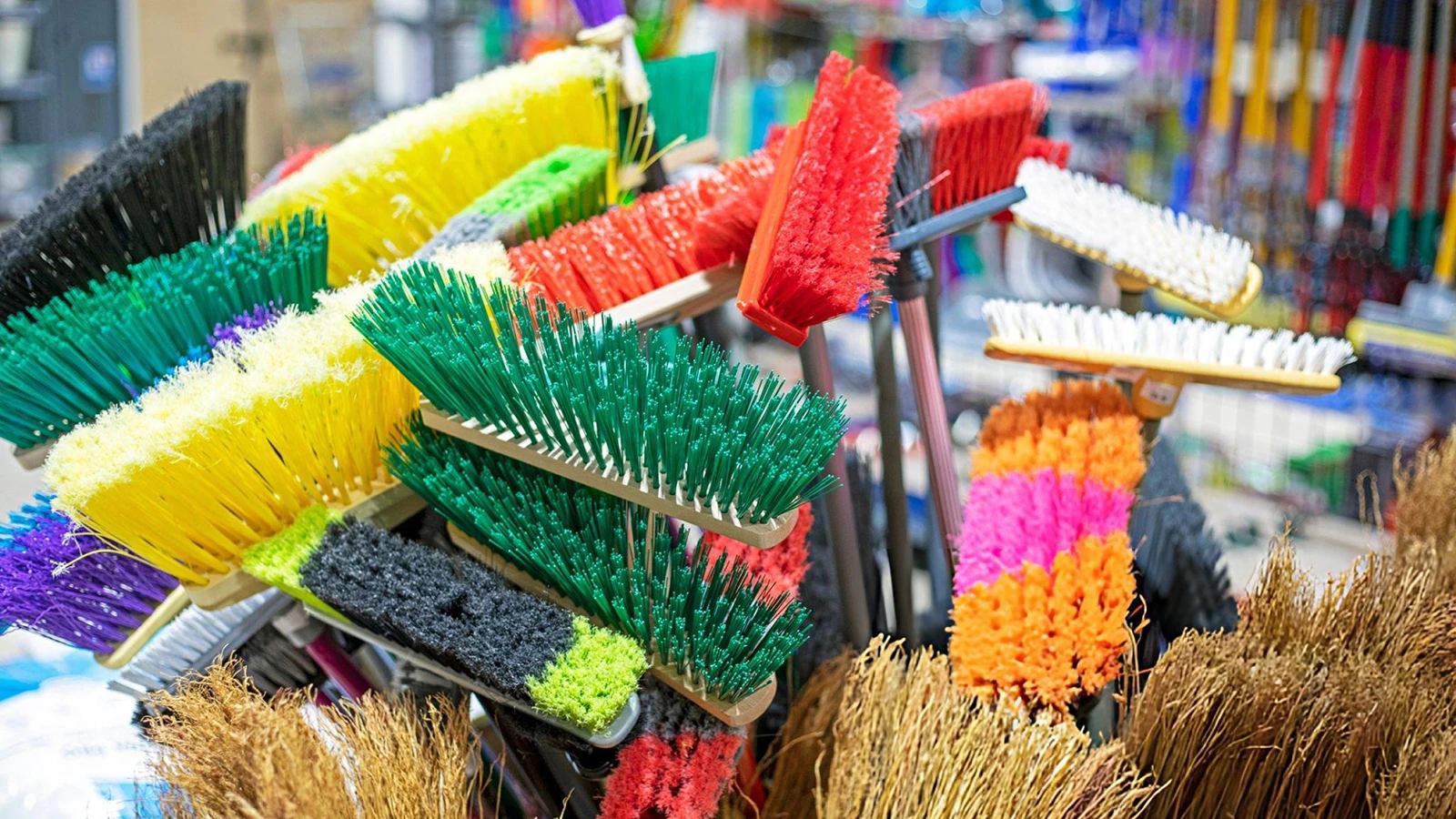
Bristle Materials Compared
Material decides how long a scrub brush lasts and how easily it rinses clean, so it is worth choosing deliberately rather than accepting whatever comes fitted. The table below covers the five common options and the surfaces each one suits.
| مادة | Stiffness | Drying | Chemical resistance | Best scrub use |
|---|---|---|---|---|
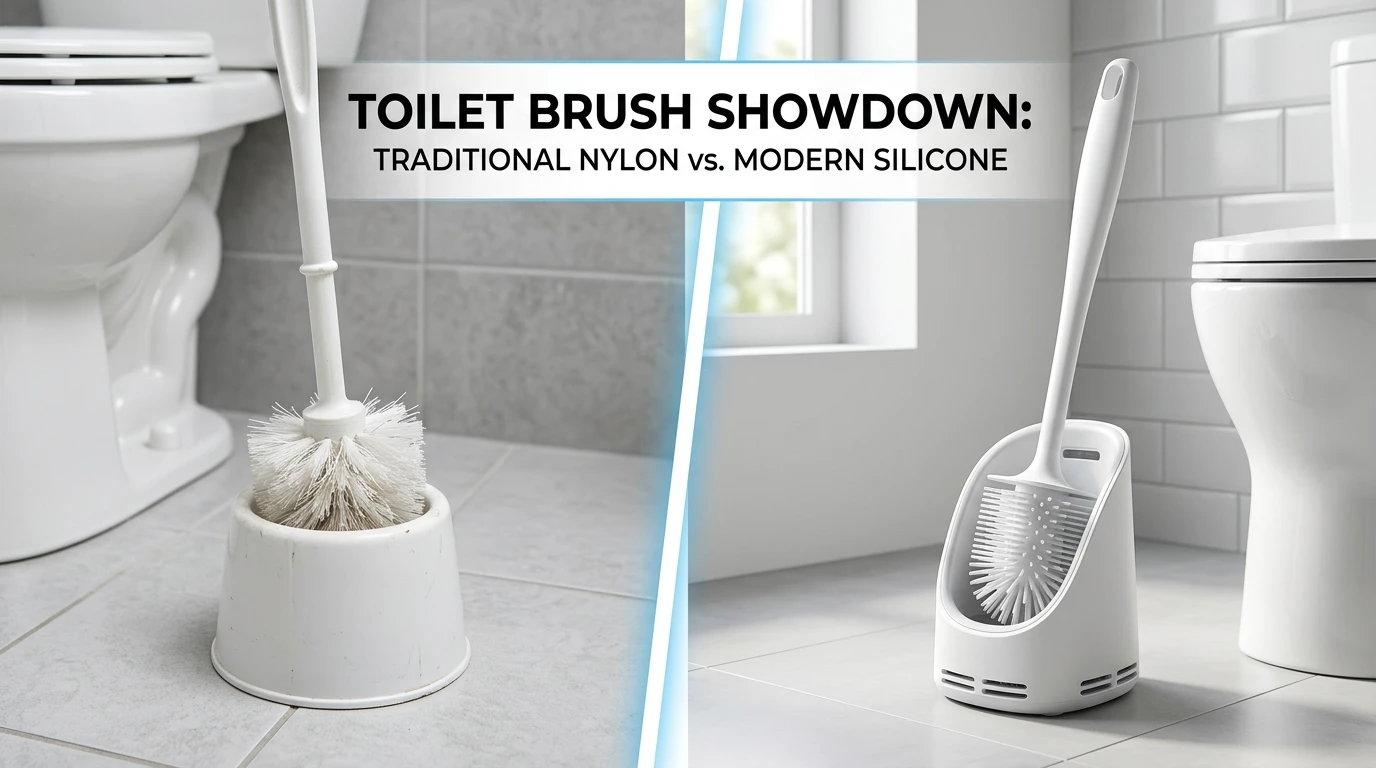
| نايلون | Highest | بطيئ | Fair; degrades with bleach | Grout, pans, decks, heavy staining |
| Polypropylene | واسطة | بطيئ | جيد | Everyday bathroom and kitchen scrubbing |
| TPR rubber | Medium to high | Fast | Very good | Bathroom surfaces, tiles, splash-free scrubbing |
| Silicone | Soft to medium | Fastest | ممتاز | Wet areas, bleach and acid cleaners |
| Natural fibre | واسطة | Slowest | Poor with bleach | Light outdoor and eco ranges |
In our experience, a household gets the best value from two materials rather than one: nylon for the stiff jobs such as grout and pans, and TPR or silicone for everything that gets wet and needs to rinse clean. That combination covers the whole range without buying five separate brushes, and it keeps the nylon heads away from the bleach that would shorten their life.
Matching Stiffness to the Surface
Stiffness is a matching problem rather than a quality ranking, so there is no single best answer. The list below covers the common surfaces and the head that suits each one.
- Unglazed tile and grout: very stiff short tufts, narrow head, light pressure with a descaler first.
- Glazed ceramic tile: medium to stiff, wide enough to cover the field quickly without scratching the glaze.
- Acrylic baths and shower trays: medium at most, used with a cream cleaner rather than an abrasive powder.
- Stainless steel and enamel: stiff bristles with a scraper edge, no steel wool.
- Non-stick cookware: softest head that shifts the residue, after soaking, with light pressure.
- Concrete, stone and decking: very stiff wide head on a long handle, matched to the finish.
- Sealed or polished stone: soft brush only, plus a clean squeegee for water.
If you buy only three scrub brushes, buy a narrow stiff grout brush, a medium tub brush with a long handle, and a stiff pot scrubber. Those cover the three jobs that a general-purpose brush does badly. Then add a deck brush if you have outdoor paving, because outdoor soil is the one thing a household brush genuinely cannot handle. However, a stiff deck brush should never be used on sealed indoor stone, where it leaves scratches that no polish will hide.
Cleaning and Replacing Scrub Brushes
Scrub brushes collect more residue than any other hand tool, because they work on the surfaces where soil accumulates. Rinse the bristles thoroughly after every use, shake out the water and hang the brush head-up so air reaches the backing as well as the tips. Once a week, wash the head in hot soapy water and let it dry completely before it goes back into service. Public health guidance is that cleaning with soap and water removes most germs in ordinary household settings, and disinfection is reserved for when someone is sick or a surface has been contaminated (CDC, 2025). Following that order keeps the routine short.
Replacement is driven by contact rather than appearance. A scrub brush is finished when the bristle tips shorten enough that the head no longer sits flat on the surface, or when the tufts splay so far that pressure no longer reaches it. In practice that is six to twelve months for a household brush and considerably less for one used daily with bleach-based cleaners. In addition, replace any brush used on a bathroom or bin after an illness, and keep bathroom and kitchen brushes separate. An NSF International study reported by Consumer Reports found coliform bacteria on 75% of sampled household sponges and rags, and extension services make the same point about brushes that are not washed and dried between uses (Consumer Reports, 2025).
الأسئلة الشائعة
What are the main types of scrub brushes?
Six types cover most cleaning: tile and grout brushes, tub and bathroom brushes, kitchen and pot scrubbers, deck and patio brushes, upholstery and detail brushes, and powered electric scrub brushes. Each is defined by the surface it was shaped for.
What is the stiffest scrub brush material?
Nylon is the stiffest common material and the best choice for grout, burnt pans and concrete. Polypropylene is softer, TPR rubber sits in the middle with better rinsing, and silicone is the softest but the most hygienic and the most resistant to bleach and acid descalers.
Can I use one scrub brush for everything?
Not without compromising somewhere. A stiff brush that cleans grout will scratch a vinyl floor or dull a non-stick pan, while a soft brush will not touch a grout line. Most homes get better results from three brushes: a narrow stiff head, a medium long-handled head and a stiff pot scrubber.
How often should a scrub brush be replaced?
Every six to twelve months for household use, and sooner if it is used daily with bleach or acid cleaners. The signal is contact rather than appearance: once the bristle tips shorten or splay enough that the head no longer sits flat on the surface, the brush has stopped scrubbing properly.
Are electric scrub brushes worth it?
They are worth it for long or repetitive jobs and for anyone who finds manual scrubbing painful, since the motor removes most of the effort. They are heavier than a manual brush, need charging, and their heads wear on the same cycle, so they suit specific situations rather than replacing a manual brush entirely.
Sourcing scrub brushes for your range?
We manufacture tile, tub, kitchen, deck and powered scrub brushes in nylon, PP, TPR and silicone, with threaded and telescopic handles, and OEM or ODM support from low MOQs.
Request Wholesale Pricing →خاتمة
Scrub brushes divide by task, and that is why one brush is never enough. A narrow stiff head cleans grout and mineral staining, a medium long-handled head handles baths and basins, a stiff pot scrubber lifts burnt food, and a wide deck brush covers concrete and paving. Materials then decide how long each one lasts and how easily it rinses clean, with nylon leading on abrasion and TPR and silicone leading on hygiene. That said, the specification that causes the most damage is stiffness, because the wrong head scratches a finish that no amount of cleaning will restore. Match stiffness to the surface, rinse and dry after every use, and replace on contact rather than appearance.
We build scrub brushes across all six categories in a range of bristle materials and handle lengths, and we are happy to help you assemble the right set for your market.
مراجع
- US Centers for Disease Control and Prevention — "When and How to Clean and Disinfect Your Home." cdc.gov/hygiene/about/when-and-how-to-clean-and-disinfect-your-home.html
- Consumer Reports — "Household Cleaning Tools: How to Clean and When to Replace." consumerreports.org/home-garden/cleaning/how-to-clean-and-when-to-replace-household-cleaning-tools
- University of Illinois Extension — "A guide to keeping your sponges, dish rags and scrub brushes clean." extension.illinois.edu/blogs/simply-nutritious-quick-and-delicious
- Clemson University Home & Garden Information Center — "Kitchen Hygiene: Let's Talk About That Sponge!" hgic.clemson.edu/factsheet/kitchen-hygiene-lets-talk-about-that-sponge
This guide was written by the JESUN Cleaning Tools Team and reviewed by our product engineering group. You can read more about us أو contact our team with questions about scrub brush specifications.
Continue Learning
- Top 10 Tools to Clean Shower Grout — the grout-specific tool list in more depth.
- How to Clean a Mop — the drying rules that apply to every wet cleaning tool.
- Electric scrub brush catalog — powered heads for long or repetitive jobs.
- Brush catalog — scrub, detail, kitchen and floor brushes in one place.



 Arabic
 English
 Spanish
 Russian