
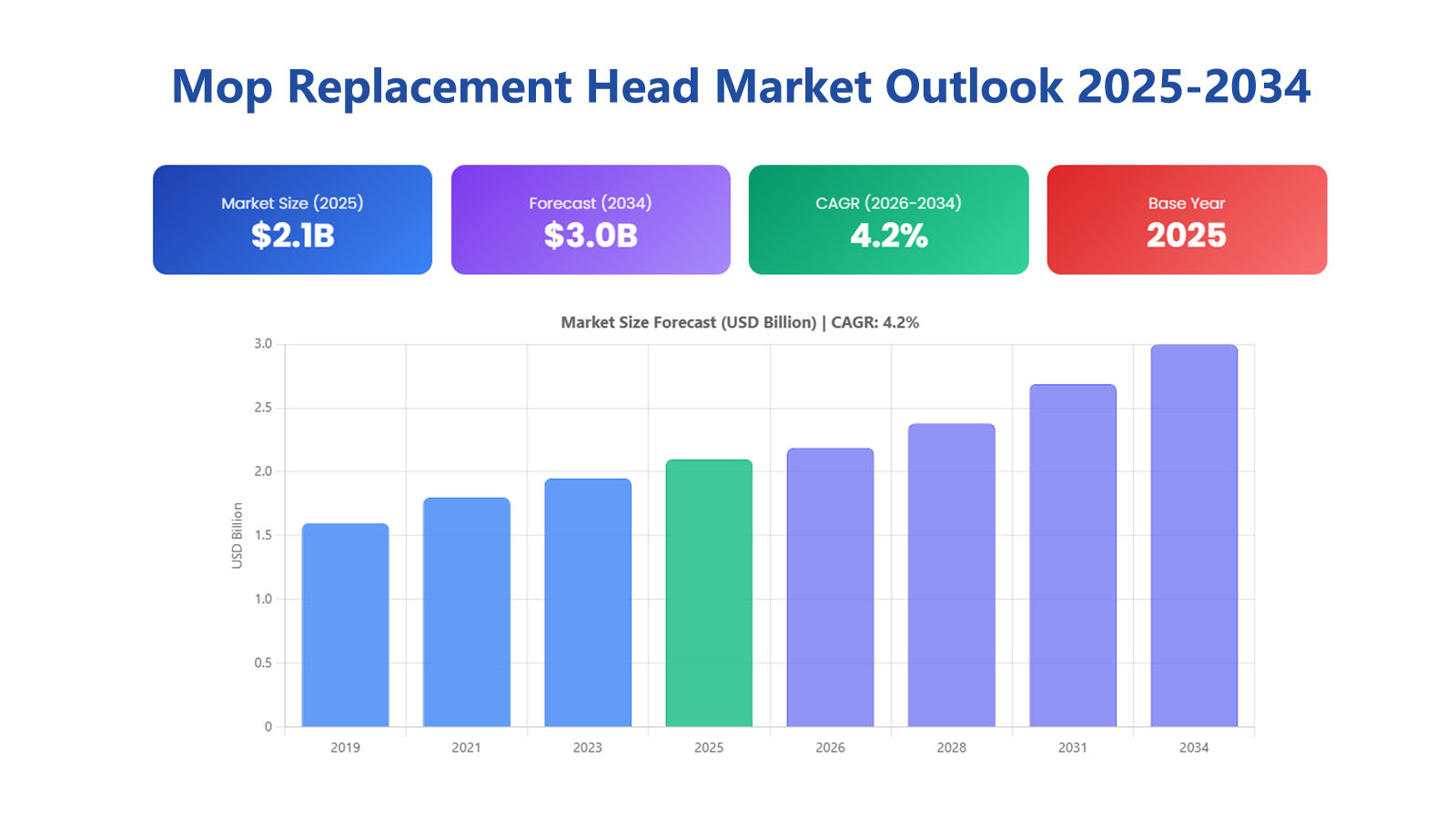
وصل حجم سوق رؤوس الممسحات البديلة العالمية إلى $2.1 مليار في عام 2025 ومن المتوقع أن ينمو إلى 1 تريليون تريليون تريليون بحلول عام 2034 بمعدل نمو سنوي مركب قدره 4.21 تريليون تريليون (ماركت إنتيلو، 2025تُشكّل المرافق التجارية وحدها النسبة المتبقية. 42.3% من هذا الإنفاق — ما يقارب 1.89 مليون دولار سنوياً. ومع ذلك، فإن غالبية مديري المرافق يستبدلون رؤوس المماسح بناءً على الحدس بدلاً من البيانات، مما يؤدي إلى ضياع المال والتأثير سلباً على النظافة.
الفرضية بسيطة: الاستبدال المتأخر يؤدي إلى انتشار البكتيريا، والاستبدال المبكر يؤدي إلى إهدار المال. يقع معظم مديري المرافق في أحد هذين الخطأين. يغطي هذا الدليل البيانات وإطار اتخاذ القرار اللازمين لتحقيق كلا الأمرين على النحو الأمثل، بما في ذلك الجداول الزمنية الخاصة بكل منشأة، ونماذج التكلفة الإجمالية للملكية، والمتطلبات التنظيمية، وتخطيط المخزون.
ثلاثة أرقام تحدد القرار: تدوم الألياف الدقيقة من 300 إلى 500 دورة غسيل مقابل 15 إلى 30 دورة غسيل للقطن العادي (المقطع/الخيط).غرين سيل، 2025تُشكّل تكاليف العمالة ما بين 85% و90% من إجمالي تكاليف التنظيف، لذا يُعدّ أداء رؤوس الممسحة نفقة تشغيلية، وليس مجرد بند من بنود التوريد. ويعتمد جدول الاستبدال الأمثل كلياً على نوع المنشأة: ففي مرافق الرعاية الصحية، تُقاس التكاليف بالساعات، بينما في المكاتب، تُقاس بالأشهر.
جدول المحتويات
تبديلكم مرة يجب استبدال رؤوس المماسح التجارية؟ (حسب نوع المنشأة)
رؤوس الممسحة المصنوعة من الألياف الدقيقة تتحمل الاستخدام 300-500 دورة غسيل في الاستخدام التجاري، بينما تتدهور رؤوس القطن الأساسية بعد فترة قصيرة 15-30 غسلة (تقرير وكالة حماية البيئة عن مسح الأرضيات بألياف دقيقة; غرين سيل، 2025القطن ذو النهايات الحلقية عبارة عن نسيج منفصل يدوم من 50 إلى 75 غسلة. يُعدّ هذا الفارق في العمر الافتراضي العامل الأهم في تخطيط الاستبدال، ولكن الجدول الزمني الأمثل يعتمد بشكل أقل على نوع المادة وحدها، وأكثر على نوع المنشأة وحجم حركة المرور وحمل التربة.
مرجع سريع: معدل استبدال الممسحة حسب نوعها
| نوع رأس الممسحة | العمر المتوقع (بالدورات) | العمر التجاري (المدة) | الأفضل لـ |
|---|---|---|---|
| وسادة مسطحة من الألياف الدقيقة | 300-500 غسلة | 3-6 أشهر (استخدام معتدل) | الرعاية الصحية، الضيافة، المكاتب |
| رأس ممسحة دوارة من الألياف الدقيقة | 300-500 غسلة | شهرين إلى ثلاثة أشهر (استخدام يومي في الردهة) | الفنادق، الصالات الرياضية |
| قطن ذو طرف حلقي | 50-75 غسلة | من شهر إلى شهرين | المدارس، للأغراض العامة |
| قطن مقطوع الطرف | 7-9 أيام | للاستخدام مرة واحدة / التخلص منه أسبوعياً | تربة ثقيلة، ميزانية منخفضة |
| رأس ممسحة إسفنجية | غير متوفر (أسبوعياً) | أسبوع إلى أسبوعين | تنظيف المناطق الصغيرة، تنظيف موضعي |
مصادر: تقرير وكالة حماية البيئة عن مسح الأرضيات بألياف دقيقة; لجنة خبراء CleanLink، 2026; إجراءات التنظيف البيئي الصادرة عن مراكز السيطرة على الأمراض والوقاية منها، 2024.
حسب نوع المنشأة
الرعاية الصحية: يجب استبدالها بعد كل غرفة عزل وكل ساعة إلى ساعتين أثناء التنظيف الروتيني (وفقًا لتوجيهات مراكز السيطرة على الأمراض والوقاية منها). تُعدّ الفوط المسطحة المصنوعة من الألياف الدقيقة هي المعيار.
ضيافة: تدوم وسادات الممسحة المسطحة المصنوعة من الألياف الدقيقة من 300 إلى 500 دورة غسيل - أي ما يقرب من 3 إلى 6 أشهر اعتمادًا على معدلات الإشغال (دليل إجراءات التشغيل القياسية لفندق NBDongsu، 2026).
تعليم: تدوم مماسح القطن ذات الحلقات الطرفية في ممرات المدارس عادةً 50-75 غسلة (حوالي شهر إلى شهرين)، مع العلم أن المباني ذات الحركة المرورية العالية قد تكون في الحد الأدنى من هذا النطاق. استبدلها في وقت أبكر إذا تَلِفت الألياف أو انخفضت قدرتها على الامتصاص.
خدمات الطعام: قد تحتاج رؤوس الممسحة المصنوعة من القطن أو الألياف الصناعية شديدة التحمل والمخصصة للمناطق المعرضة للدهون إلى الاستبدال كل 7-14 يومًا بسبب تراكم الزيت الذي يؤدي إلى تدهور أداء الألياف الدقيقة.
مباني المكاتب: تعتبر المماسح المسطحة المصنوعة من الألياف الدقيقة والتي يتراوح عمرها الافتراضي بين 300 و 500 دورة مثالية للصيانة اليومية مع أحمال أقل من الأوساخ.
حديث أنظمة المسح التجارية تُصمَّم أنواع المماسح، بدءًا من المماسح المسطحة المصنوعة من الألياف الدقيقة وصولًا إلى المماسح القطنية شديدة التحمل، لتناسب استخدامات محددة. تُناسب المماسح المسطحة المصنوعة من الألياف الدقيقة التنظيف اليومي المتكرر في المكاتب ومتاجر البيع بالتجزئة والفنادق، بينما تُوفر المماسح القطنية شديدة التحمل حلاً اقتصاديًا للمناطق ذات الاتساخ الشديد والتي تتطلب استبدالًا متكررًا.
إذن كيف تعرف متى يحين الوقت؟ ابدأ باختبار الرائحة.
ما هي العلامات الخمس التي تدل على أن رأس الممسحة بحاجة إلى استبدال؟
الرائحة المستمرة بعد الغسيل هي لافتة #1 تم تجاهلها أن رأس الممسحة أصبح يشكل خطراً على النظافة. وفقاً لـ إرشادات مركز السيطرة على الأمراض والوقاية منها بشأن التنظيف البيئيإن رأس الممسحة الذي يحتفظ بالرائحة بعد غسله يؤوي البكتيريا وينشر الملوثات بدلاً من إزالتها.
| لافتة | ما يعنيه ذلك عملياً | فعل |
|---|---|---|
| رائحة كريهة مستمرة بعد الغسيل | البكتيريا المتغلغلة بعمق في الألياف؛ الرأس يمثل مشكلة صحية | استبدل فوراً |
| ألياف مهترئة أو مشوهة | أصبحت التغطية والتقاط التربة غير متسقين. | استبدل المنتج خلال أسبوع واحد |
| ضعف تصريف المياه أو ظهور خطوط | سيعوض الموظفون ذلك بتذاكر إضافية، مما يهدر الجهد. | استبدل؛ درّب الموظفين على العصر الصحيح |
| التربة المحتجزة المرئية | لم يعد رأس المحرك ينظف بشكل كامل. | استبدل؛ راجع بروتوكول الغسيل |
| انخفاض القدرة على الامتصاص | زيادة وقت التجفيف، وزيادة مخاطر الانزلاق | استبدل؛ تحقق من جودة المياه |
المصادر: دليل رؤوس المماسح التجارية WipesBlog.com، 2026؛ سجاد داكوتا التجاري، 2025.
قد يؤدي تركيب رأس ممسحة مهترئ بشكل غير صحيح إلى تقليل العمر التشغيلي لنظام الممسحة من خلال 30-40% (دليل منتجات ليبمان، 2026). وهذا أمر بالغ الأهمية بشكل خاص في المنشآت التي تستخدم أنظمة رأس قابلة للفصلحيث يُعدّ التثبيت الصحيح والربط الآمن أساسيين للأداء. القاعدة بسيطة: استبدل المنتج عندما ينخفض الأداء، وليس عندما يتلف رأس الجهاز.
هل الألياف الدقيقة أرخص من القطن حقاً؟
تكلفة رؤوس ممسحة المايكروفايبر 25% المزيد مقدماً إنها تدوم لفترة أطول من مثيلاتها القطنية الأساسية، لكنها تدوم لفترة أطول. 300-500 غسلة مقارنة بالقطن الأساسي 15-30 غسلة، ليصل إجمالي تكلفة الملكية إلى نقطة التعادل بعد فترة وجيزة 150 دورة غسيل في البيئات ذات الحجم الكبير (غرين سيل، 2025; تقرير وكالة حماية البيئة عن مسح الأرضيات بألياف دقيقة).
مقارنة مباشرة
| متري | ألياف دقيقة | قطن (أساسي) |
|---|---|---|
| التكلفة الأولية | أعلى (+25%) | أقل (الخط الأساسي) |
| دورات الغسيل | 300-500 | 15-30 |
| تقليل البكتيريا | 96% | 68% |
| استهلاك المياه | -90% مقابل القطن | خط الأساس |
| نفايات مكب النفايات | -80% مقابل القطن | خط الأساس |
| نقطة التعادل في التكلفة الإجمالية للملكية | حوالي 150 دورة | غير متوفر |
| أفضل حالة استخدام | الصيانة اليومية، الرعاية الصحية، الضيافة | عمليات منخفضة التكلفة في التربة الثقيلة |
كما أن الألياف الدقيقة تقلل استهلاك المياه بما يصل إلى 90% و نفايات مكب النفايات بواسطة 80% مقارنة بالقطن (غرين سيل، 2025). بالنسبة للمنشآت التي لديها أهداف للاستدامة، فإن هذا الأمر يعتبر اعتباراً جوهرياً.
لا تتحقق وفورات التكلفة لكل دورة غسيل إلا عند اتباع بروتوكولات الغسيل. فغسل رؤوس المايكروفايبر عند درجة حرارة أعلى من 60 درجة مئوية أو تجفيفها باستخدام منعم الأقمشة، يُفقدها ميزة التكلفة في جهاز 40-60%. قد يغفل البعض عن هذه التفاصيل في منشأة مزدحمة، لكنها تُحدث فرقًا جوهريًا بين جدوى الاستثمار أو خسارته.
ملاحظة هامة: الألياف الدقيقة غير مناسب لبيئات تقديم الطعام التي تحتوي على زيوت. تتسبب الزيوت في تلبد الألياف وتجعلها غير فعالة. في مطابخ المطاعم، يظل القطن أو الخلطات الصناعية الخيار العملي (لجنة خبراء CleanLink، 2026ومع ذلك، بالنسبة لمعظم التطبيقات التجارية، فإن حسابات التكلفة الإجمالية للملكية واضحة: تصل الألياف الدقيقة إلى نقطة التعادل عند حوالي 150 دورة غسيل، وفي المستشفيات أظهرت توفيرًا في التكاليف على مدى العمر الافتراضي يصل إلى 60% (أرشيف وكالة حماية البيئة). يستحق قطاع الرعاية الصحية نظرة خاصة، لأن القواعد فيه مختلفة.
ما هي متطلبات مراكز السيطرة على الأمراض والوقاية منها لاستبدال ممسحة الأرضيات في مجال الرعاية الصحية؟
يشترط مركز السيطرة على الأمراض والوقاية منها أن تقوم مرافق الرعاية الصحية قم بتغيير رؤوس الممسحة بعد كل غرفة عزل وعلى الأقل كل ساعة إلى ساعتين أثناء التنظيف الروتيني، مع توفير المماسح الجديدة ومحاليل التنظيف اللازمة لكل جلسة تنظيف (إجراءات التنظيف البيئي الصادرة عن مراكز السيطرة على الأمراض والوقاية منها، 2024في غرف العمليات، لا يجوز إعادة استخدام رؤوس الألياف الدقيقة لكل حالة.
يُثير هذا الأمر توتراً حقيقياً. تنصّ إجراءات مكافحة العدوى على استخدام رأس واحد لكل غرفة، بينما تُلزم الميزانية بجعلها تدوم طويلاً. عملياً، تجتاز المرافق التي تعتمد على ضمادات الألياف الدقيقة أحادية الاستخدام لكل غرفة - بدلاً من توزيع الرؤوس على غرف متعددة - عمليات تدقيق اللجنة المشتركة بنسب أعلى. التكلفة حقيقية، وكذلك عواقب التهاون في هذا الجانب.
متطلبات تنظيف مرافق الرعاية الصحية حسب منطقة الخطر
| منطقة | تردد التنظيف | متطلبات رأس الممسحة |
|---|---|---|
| المرضى الداخليين/الخارجيين بشكل عام | مرة واحدة على الأقل يومياً | رأس جديد في كل جلسة |
| غرف العزل | بعد كل مريض | رأس جديد، للاستخدام مرة واحدة |
| غرف العمليات | لكل إجراء + تنظيف نهائي يومياً | رأس لكل علبة، غير معاد استخدامه |
| وحدة العناية المركزة | مرتين يومياً على الأقل | عدد الأفراد في كل وردية |
| قسم الطوارئ | بعد كل حالة + مُجدولة | رأس طازج لكل منطقة |
مصدر: إجراءات التنظيف البيئي لمراكز السيطرة على الأمراض والوقاية منهاإرشادات APSIC للنظافة البيئية، تحديث 2025.
ال دراسة حالة مؤرشفة لوكالة حماية البيئة تم توثيق استخدام ممسحة الألياف الدقيقة في المركز الطبي بجامعة كاليفورنيا في ديفيس توفير في التكاليف على مدى العمر الافتراضي 60% بعد التحول من المماسح الحلقية التقليدية إلى أنظمة الألياف الدقيقة، مع ضمان البائعين لرؤوس المماسح المصنوعة من الألياف الدقيقة لـ 500 غسلة.
بالنسبة لفرق المشتريات في مجال الرعاية الصحية، فإن النهج الأكثر فعالية من حيث التكلفة يجمع بين ما يلي:
- أنظمة الممسحة المسطحة المصنوعة من الألياف الدقيقة (مُرمّزة بالألوان حسب المنطقة)
- رؤوس قابلة للاستخدام مرة واحدة للعزل والمناطق عالية الخطورة
- بروتوكولات غسيل الملابس الموثقة مع سجلات درجة الحرارة وفقًا لمعايير مراكز السيطرة على الأمراض والوقاية منها/الجمعية الأمريكية لعلوم وتكنولوجيا المنتجات الصحية
أنظمة مسح مسطحة من الألياف الدقيقة ذات جودة طبية بفضل الرؤوس القابلة للفصل، تدعم هذه الأجهزة ترميز الألوان القائم على المناطق والتغيير السريع بين الغرف - وكلاهما أمر بالغ الأهمية لسير عمل مكافحة العدوى.
في المركز الطبي بجامعة كاليفورنيا في ديفيس، أدى التحول إلى استخدام الألياف الدقيقة إلى خفض التكاليف الإجمالية بنسبة 60% مقارنة بالمماسح الحلقية التقليدية، مع ضمان عمر افتراضي يصل إلى 500 غسلة (أرشيف وكالة حماية البيئةهذا هو نوع المعيار الذي يستحق الأخذ به في قرار الشراء.
كم مرة ينبغي على الفنادق استبدال رؤوس المماسح؟
قطاع الضيافة يسير وفق جدول زمني مختلف. يحتاج فندق مكون من 200 غرفة إلى مخزون متجدد من 800 ضمادة من الألياف الدقيقة الزرقاء و800 ضمادة من الألياف الدقيقة الحمراء على الأقل للحفاظ على الفصل المناسب بين المناطق وسرعة إنجاز الغسيل (دليل إجراءات التشغيل القياسية لفندق إن بي دونغسو، 2026). هذا ليس تقديرًا، بل هو حساب يعتمد على عدد الغرف، ومساحة تغطية الوسادة (250-300 قدم مربع لكل وسادة)، ومدة دورة الغسيل.
جدول استبدال ممسحات الفنادق
| عنصر | تواتر الفحص | زناد للاستبدال | العمر المتوقع |
|---|---|---|---|
| وسادات ممسحة مسطحة من الألياف الدقيقة | غسيل الملابس يومياً | تآكل الألياف، ألياف خشنة، تلف شريط الفيلكرو | 300-500 دورة (3-6 أشهر) |
| رؤوس ممسحة دوارة ذات أهداب | أسبوعي | أطراف رقيقة، بلاستيك متصدع | 2-3 أشهر (استخدام مكثف في الردهة) |
| مقابض ممسحة من الألومنيوم | شهريا | انحنى، وانزلقت آلية القفل | 1-2 سنوات |
| إطارات / قواعد الممسحة | ربع سنوي | تم تقشير شريط الفيلكرو، والمفاصل متصلبة | 1-2 سنوات |
| دلاء المسح / عصارات | مرتين سنوياً | بلاستيك متصدع، فقدان قوة شد الزنبرك | سنتان إلى ثلاث سنوات |
المصدر: معايير AHLA؛ دليل إجراءات التشغيل القياسية لفنادق NBDongsu، 2026.
ال جمعية الفنادق والإقامة الأمريكية (AHLA) يتطلب معيار الترميز اللوني ما يلي:
- أزرق — غرف الضيوف
- أحمر — دورات المياه
- أخضر — مناطق المطبخ / الطعام
- أصفر — المناطق العامة / المشتركة
يحقق الفندق الذي يطبق نظام الممسحة المسطحة القابلة للفصل ميزة كبيرة: تغيير الفوط الملونة دون لمس المواد المتسخة، مما يقلل من خطر انتقال العدوى ويسرع من وتيرة تجهيز الغرف. والرقم الأساسي الذي يجب تذكره: يحتاج فندق يضم 200 غرفة إلى ما يقارب 1600 فوطة للتناوب لضمان سير العمل بسلاسة (دليل إجراءات التشغيل القياسية للفنادق، 2026).
كيفية حساب احتياجاتك من مخزون رؤوس الممسحة
صيغة حساب مخزون رؤوس الممسحة التجارية بسيطة:
الاستهلاك اليومي × أيام دورة الغسيل × (1 + مخزون الأمان %) = الحد الأدنى للمخزون المتاح
حاسبة جرد رؤوس الممسحة
أدخل أرقام منشأتك لحساب نقطة إعادة الطلب وكمية الشراء المقترحة.
إن مخزون الأمان 20% ليس عشوائياً، فهو يغطي رؤوس الحيوانات الأليفة أثناء النقل، والمنتجات المعيبة، والزيادات المفاجئة في الطلب. المنشآت التي ينخفض مخزونها عن هذا الحد تنفد تقريباً مرة كل ثلاثة أشهر، ونفاد المخزون في المستشفيات أو الفنادق يعني إعادة استخدام رؤوس الحيوانات الأليفة في غير محلها.
حسابات نموذجية حسب نوع المنشأة
| نوع المنشأة | الاستخدام اليومي | دورة الغسيل | مخزون الأمان | الحد الأدنى من المخزون |
|---|---|---|---|---|
| فندق مكون من 200 غرفة | 160 فوطة صحية | يومين | 20% | 384 فوطة صحية |
| مستشفى بسعة 500 سرير | 300 فوطة صحية | يوم ونصف | 25% | 563 ضمادة |
| مكتب بمساحة 100,000 قدم مربع | 30 فوطة صحية | 3 أيام | 15% | 104 ضمادات |
| المنطقة التعليمية (10 مواقع) | 80 فوطة صحية | يومين | 20% | 192 ضمادة |
يمكن أن يؤدي الشراء بالجملة إلى خفض تكاليف الوحدة عن طريق حتى 50% (محطة التنظيف، 2026ومع ذلك، فإن التخزين بالجملة لا يكون منطقياً إلا عند اقترانه بنموذج دقيق للمخزون - فالتخزين الزائد يؤدي إلى مشاكل في التخزين، وتدهور المواد، وتجميد رأس المال.
هل يُعدّ الاستعانة بمصادر خارجية لغسل المماسح أرخص من القيام بذلك داخلياً؟
إليكم سؤالًا جديرًا بالطرح: ما هي التكلفة الحقيقية لغسيل الملابس داخل المنشأة؟ تحسب معظم المنشآت فاتورة المنظفات فقط. أما التكلفة الحقيقية فتشمل استهلاك الغسالات، والماء الساخن، ووقت الموظفين، ومساحة التخزين، وحتى رؤوس الملابس التي تُرمى قبل أوانها (خدمة سوان داست موب، 2026).
مقارنة التكاليف: داخلي مقابل خارجي
| عامل التكلفة | غسيل الملابس داخل الشركة | خدمة خارجية |
|---|---|---|
| الاستثمار الرأسمالي | $5,000-15,000 (غسالة) | $0 |
| العمالة لكل دورة | 15-30 دقيقة لكل 100 رأس | $0 (مضمن) |
| الماء/الكهرباء | $0.15-0.30 لكل دورة | مشمول |
| المنظفات/المواد الكيميائية | $0.05-0.10 لكل دورة | مشمول |
| تتبع الاستبدال | يدوي، غير متسق | تتم إدارتها تلقائياً |
| وثائق الامتثال | إدارة ذاتية | إدارة مقدم الخدمة |
| متطلبات التخزين | مناطق نظيفة + مناطق متسخة | خدمة تبديل بسيطة |
المصدر: تقديرات القطاع؛ مجموعة ليندستروم، 2026خدمات سينتاس للممسحة.
يمكن لخدمات تأجير المماسح الصناعية أن تحقق عائد استثمار إيجابي خلال السنة الأولى من خلال إلغاء التكاليف الرأسمالية وتقليل عبء العمل الداخلي (مجموعة ليندستروم، 2026يعمل هذا النموذج بشكل أفضل مع المنشآت التي تستخدم أكثر من 50 رأسًا يوميًا، حيث تفوق الجدوى الاقتصادية لعمليات غسل الأموال على نطاق احترافي تكاليف الوحدة الواحدة.
يُعدّ هذا الحدّ مهماً. فإذا كان عدد الموظفين أقل من 50 موظفاً يومياً، تميل الحسابات لصالح التوظيف الداخلي. أما إذا تجاوز هذا الحد، فإنّ مبررات الاستعانة بمصادر خارجية تزداد قوة عاماً بعد عام.
لماذا يمنع الترميز اللوني انتقال التلوث؟
تعمل أنظمة المسح المرمزة بالألوان على تقليل خطر التلوث المتبادل من خلال ضمان عدم دخول رؤوس المسح المستخدمة في دورات المياه إلى مناطق المطبخ أو غرف المرضى. معايير التنظيف الخاصة بـ ISSA وتوصي إرشادات مراكز السيطرة على الأمراض والوقاية منها بحد أدنى من أربعة ألوان للمنشآت التجارية.
رمز اللون القياسي
| لون | منطقة | طلب |
|---|---|---|
| أزرق | عام / منخفض الخطورة | المكاتب، الفصول الدراسية، الردهات |
| أحمر | دورات المياه / عالية الخطورة | المراحيض، والمباول، ومناطق الخطر البيولوجي |
| أخضر | مناطق الطعام | المطابخ، والكافيتريات، وغرف الاستراحة |
| أصفر | سريري / عزل | غرف المرضى في مجال الرعاية الصحية |
أكثر أنماط الفشل شيوعًا في البرامج المرمزة بالألوان هو عدم وجود عدد كافٍ من الرؤوس في كل لون يستخدم الموظفون أي شيء متاح، مما يُفقد العملية جدواها. وكثيراً ما تشير عمليات تدقيق غرف العمليات إلى "عدم تطبيق برنامج الألياف الدقيقة المرمزة بالألوان" كأحد أبرز نقاط الضعف (دليل معايير تنظيف الرعاية الصحية، 2026).
تتيح أنظمة المماسح المسطحة القابلة للفصل والمزودة بآليات فك سريعة للموظفين تبديل رؤوس المماسح بين المناطق دون لمس المواد المتسخة. ويراعي هذا التصميم معايير النظافة والامتثال في آن واحد. وتفشل عمليات تدقيق غرف العمليات في هذا الجانب أكثر مما تتوقع - إذ يُعدّ عدم تطبيق برنامج المناديل المصنوعة من الألياف الدقيقة المرمزة بالألوان من النتائج المتكررة (دليل معايير تنظيف الرعاية الصحية، 2026).
الأسئلة الشائعة
كم مرة يجب استبدال رؤوس الممسحة التجارية؟
في مجال الرعاية الصحية، بعد كل غرفة عزل، وعلى الأقل كل ساعة إلى ساعتين (مركز السيطرة على الأمراض والوقاية منها، 2024في الفنادق، تُستبدل فوط المايكروفايبر كل 3-6 أشهر في ظل الإشغال العادي. أما في المدارس والمكاتب، فيُستبدل القطن العادي كل 15-30 غسلة؛ بينما يدوم القطن ذو الأطراف الحلقية من 50 إلى 75 غسلة. والخطأ الشائع هو استخدام نفس الجدول الزمني لجميع أنواع المرافق.
كم عدد مرات غسل رؤوس ممسحة الألياف الدقيقة التي تدوم؟
يتراوح عمر الممسحة بين 300 و500 دورة في الاستخدام التجاري، بينما يصل عمر أنظمة المسح المسطحة إلى ما بين 500 و900 دورة حسب العناية. يُغسل في درجة حرارة 60 درجة مئوية أو أقل. لا يُستخدم منعم الأقمشة. يُجفف في الهواء أو على حرارة منخفضة. تجاهل هذه التعليمات سيؤدي إلى انخفاض حاد في عمرها الافتراضي.
ما هي التكلفة الإجمالية لامتلاك ممسحة من الألياف الدقيقة مقابل ممسحة قطنية؟
تكلفة المايكروفايبر أعلى بمقدار 25% في البداية. ويتحقق التعادل بعد حوالي 150 دورة غسيل. بعد ذلك، يتفوق المايكروفايبر: حيث يوفر 60% على مدار العمر في المستشفيات وحدها. تمثل تكاليف العمالة من 85 إلى 90% من إجمالي تكاليف التنظيف، لذا فإن كفاءة الممسحة مسألة تشغيلية وليست مسألة تتعلق بمخازن المستلزمات.
ما هي متطلبات مراكز السيطرة على الأمراض والوقاية منها (CDC) لاستبدال رؤوس الممسحات في مجال الرعاية الصحية؟
رأس جديد لكل جلسة. رأس جديد بعد كل غرفة عزل. يُغيّر كل ساعة إلى ساعتين على الأقل أثناء التنظيف الروتيني. لا تترك الرؤوس منقوعة في الدلاء. محلول جديد لكل جلسة. المعيار واضح لا لبس فيه.
هل يمكن غسل رؤوس الممسحة التجارية وإعادة استخدامها؟
نعم، معظم رؤوس الممسحة المصنوعة من الألياف الدقيقة مصممة لتحمل 300-500 غسلة. اغسلها منفصلة، وتجنب استخدام منعم الأقمشة والمبيض، وجففها تمامًا. أما المماسح القطنية ذات الأطراف المقطوعة، فهي غير مخصصة للغسيل ويجب التعامل معها على أنها للاستخدام لمرة واحدة.
هل الاستعانة بمصادر خارجية لغسل المماسح أرخص من القيام بذلك داخلياً؟
بمعدل يزيد عن 50 رأسًا يوميًا، غالبًا ما يكون الأمر كذلك. تتراكم التكاليف الخفية للغسيل الداخلي - المعدات، والعمالة، والمياه، وتتبع الاستبدال. يمكن لخدمات التأجير أن تحقق عائدًا إيجابيًا على الاستثمار خلال السنة الأولى عند هذا الحجم (مجموعة ليندستروم، 2026).
خاتمة
لا يتعلق استبدال رؤوس الممسحة التجارية الفعالة بتغييرها بشكل متكرر أو أقل، بل بتغييرها في الوقت المناسب. الوقت المناسب مع المنتج المناسب مرتكز على بيانات خاصة بالمنشأة.
أهم النقاط المستفادة:
• المادة أهم من السعر. يوفر عمر الألياف الدقيقة الذي يتراوح بين 300 و 500 غسلة تكلفة أقل لكل دورة غسيل تتراوح بين 40 و 60% مقارنة بالقطن الأساسي، على الرغم من ارتفاع سعرها المبدئي بمقدار 25%.
• اتبع الجداول الزمنية الخاصة بكل قطاع. تختلف متطلبات مراكز السيطرة على الأمراض والوقاية منها في مجال الرعاية الصحية اختلافاً جوهرياً عن معايير جمعية الفنادق والإقامة الأمريكية.
• احسب، لا تخمن. إن صيغة المخزون - الاستهلاك اليومي × دورة الغسيل × مخزون الأمان - تقضي على كل من النقص والفائض في المخزون.
• لا يُجدي استخدام الترميز اللوني إلا عند فرضه. تساهم مستويات المخزون المناسبة لكل منطقة لونية في منع التلوث المتبادل واجتياز عمليات التدقيق التنظيمي.
• ضع في اعتبارك التكلفة الإجمالية، وليس سعر الوحدة. تُشكل تكاليف العمالة بنسبة 85-90% من تكاليف التنظيف ما يعني أن أداء رأس الممسحة يؤثر بشكل مباشر على الكفاءة التشغيلية.
تقوم شركة جيسون، بصفتها أكبر شركة مصنعة لأدوات التنظيف في العالم منذ عام 1986، بتصميم أنظمة المسح التجارية التي تستوفي معايير المتانة والامتثال والكفاءة الموضحة في هذا الدليل. سواء كنت تقوم بتوحيد معايير منشأة واحدة أو مجموعة مواقع متعددة، فإن برنامج استبدال رؤوس الممسحة المناسب يبدأ بفهم بياناتك واختيار المعدات المصممة خصيصًا لهذه الدورة.


 Arabic
  English
  Spanish
  Russian