
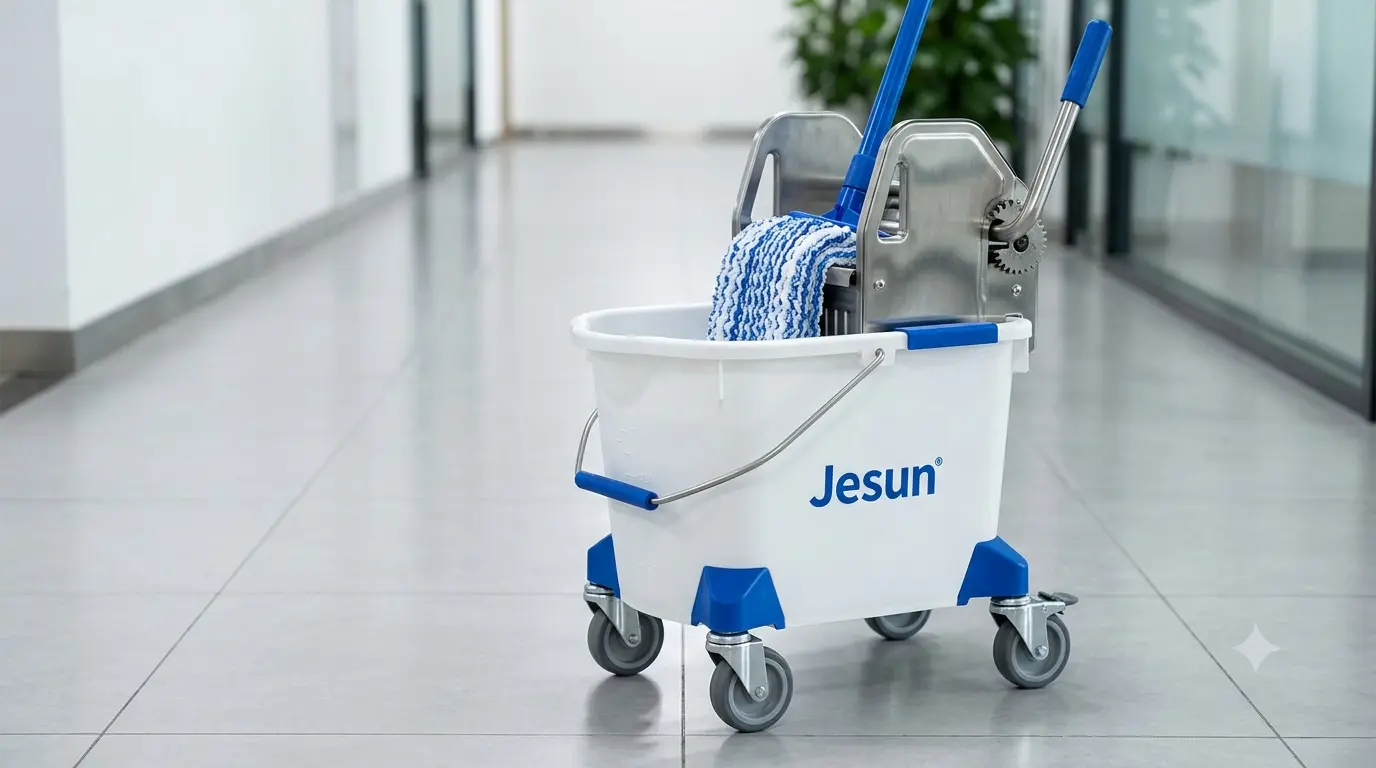
عند اختيار دلو مسح تجاري لمشروعك الصغير، فإن الاختيار الخاطئ يكلف أكثر من سعر الشراء. فهو يُهدر ساعات العمل، ويُتلف الأرضيات، ويجعل الموظفين يكرهون استخدامه ويتجاهلون التفاصيل نتيجة لذلك. دلو المسح أداة أساسية في العمل، وليس مجرد إضافة ثانوية للمنزل.
إن استخدام دلو مسح يُجبر الموظف على إعادة ملئه بالماء ثلاث مرات في كل جلسة تنظيف يُضيف حوالي 15 دقيقة إلى كل وردية تنظيف. على مدار شهر، يُعادل ذلك خمس ساعات مدفوعة الأجر تُهدر في الذهاب والإياب إلى المغسلة. وعلى مدار عام، تتجاوز تكلفة العمالة الناتجة عن استخدام الدلو غير المناسب سعر شرائه بعشرة أضعاف. لكن معظم نصائح الشراء تُعامل أدوات المسح كشراء استهلاكي، وليس كنفقة تجارية.
هذا ليس عرضًا للمنتجات. لا توجد أسماء علامات تجارية هنا، ولا روابط تابعة، ولا "أفضل ما في"القوائم". فيما يلي إطار عمل لاتخاذ القرارات ونظرة مدعومة بالأبحاث حول ما تعلمه مجتمع التنظيف من خلال التجربة والخطأ، حتى تتمكن من تخطي الجزء المكلف من منحنى التعلم.
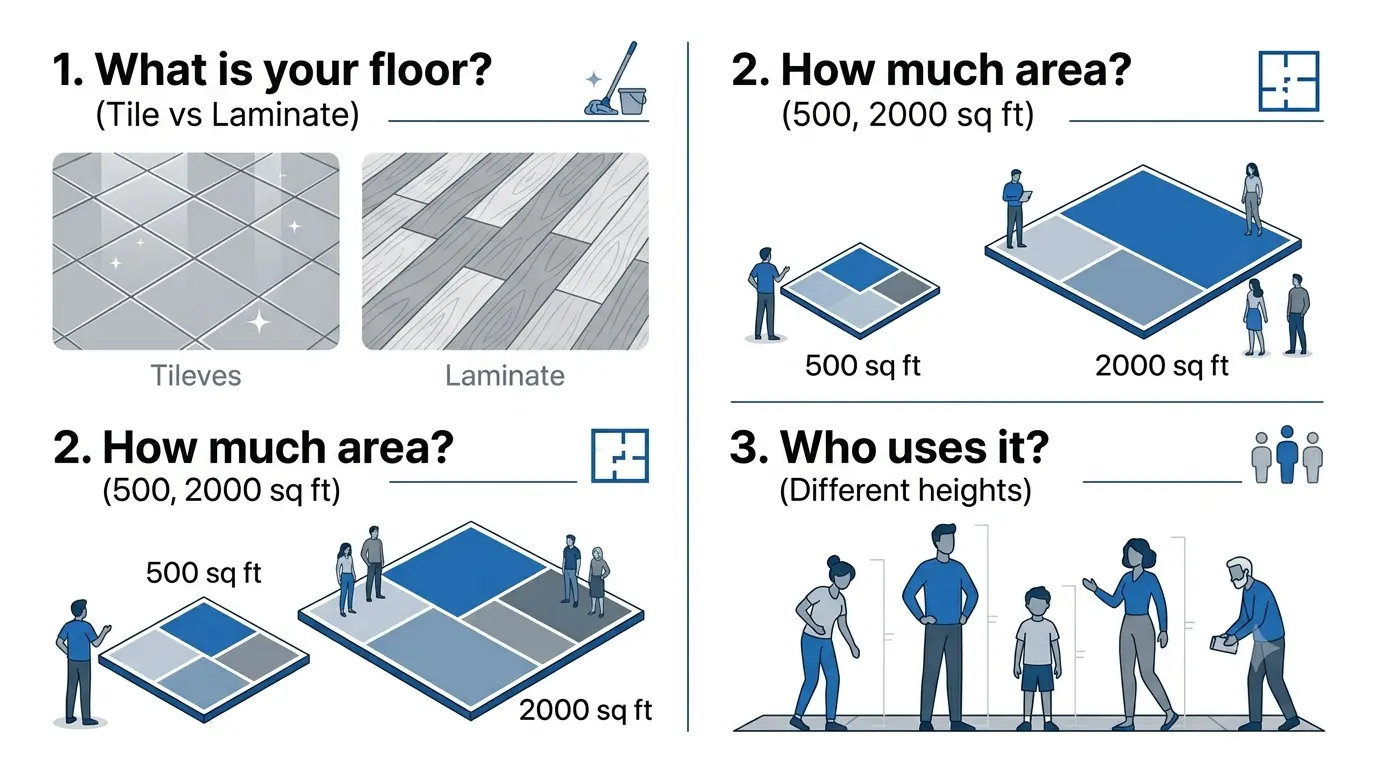
ابدأ بثلاثة أسئلة
تبدأ معظم أدلة اختيار دلو الممسحة التجارية بالميزات: الدوران مقابل السطح المستوي، الحجرة الواحدة مقابل الحجرتين، البلاستيك مقابل الفولاذ المقاوم للصدأ. هذه الميزات مهمة، لكنها تأتي بعد مجموعة أبسط من الأسئلة. أجب عن هذه الأسئلة الثلاثة أولاً، وسيزول معظم الالتباس حول المنتج.
1. ما هو طابقك؟
يتحمل البلاط والخرسانة المعالجة التنظيف بالمسح الرطب ومحاليل التنظيف القوية. أما ألواح الفينيل الفاخرة (LVP) والأرضيات الخشبية (الباركيه) فلا تتحمل ذلك. إذا كانت مساحتك مغطاة في الغالب بالبلاط أو الخرسانة، فلديك خيارات واسعة. أما إذا كانت مغطاة بألواح الفينيل الفاخرة أو الأرضيات الخشبية، فأنت بحاجة إلى نظام يسمح لك بالتحكم الدقيق في الرطوبة. فكثرة الماء تتسرب إلى الفواصل وتسبب التواء الأرضيات مع مرور الوقت.
إجماع المجتمع على تقنية المسح الأمر واضح لا لبس فيه: دلو واحد ينشر الماء المتسخ بغض النظر عن نوع الأرضية. فبمجرد غمس ممسحة متسخة في الماء النظيف، فإنك تخفف المحلول بدلاً من تنظيفه. يتبع عمال النظافة المحترفون طريقة الدلوين: أحدهما لمحلول التنظيف، والآخر لماء الشطف. بعض المماسح الدوارة تحاكي هذه الطريقة بتصميم ذي حجرتين، ولكن كما سنرى لاحقاً، فإن هذا التصميم له عيوبه. بالنسبة للأرضيات الحساسة للماء، فإن الممسحة الدوارة التي تعصر جيداً ليست خياراً، بل هي الأداة الأساسية اللازمة.
2. ما هي المساحة التي تغطيها في كل جلسة؟
هذا هو السؤال الذي يخطئ فيه معظم أصحاب المشاريع الصغيرة. فمتجر بيع بالتجزئة بمساحة 800 قدم مربع من البلاط ومركز رعاية نهارية بمساحة 2400 قدم مربع من أرضيات الفينيل الفاخرة يحتاجان إلى تجهيزات مختلفة تمامًا، ومع ذلك غالبًا ما يُباع لهما نفس الحل. بالنسبة للمساحات الأقل من 500 قدم مربع، يُناسب أي نظام تقريبًا. أما بين 500 و2000 قدم مربع، فتبدأ ممسحة الدوران ذات الحجرتين في إظهار حدودها. أما عند تجاوز 2000 قدم مربع، فأنت بحاجة إلى ممسحة مسطحة متعددة الفوط، وتصبح سعة دلو الماء هي العامل المحدد.
عديد مناقشات حول تنظيف المساحات الكبيرة هذا النمط واضح لا لبس فيه: أصحاب المنازل الذين يجربون المماسح الدوارة المنزلية في مساحات تزيد عن 600 متر مربع، ينتهي بهم الأمر بإعادة ملء دلو الممسحة ثلاث أو أربع مرات في كل جلسة. يلقون باللوم على الممسحة، لكن المشكلة الحقيقية تكمن في أن أنظمة المماسح المنزلية مصممة للمطابخ والحمامات المنزلية، وليست للمساحات التجارية. وصف أحد المستخدمين الأمر في أحد المنتديات قائلاً: "بالكاد أستطيع تنظيف عدة غرف دون الحاجة إلى إعادة ملء الدلو". هذه ليست مشكلة في عملية التنظيف نفسها، بل هي مشكلة إنتاجية لها ثمنها.
تشاركنا إحدى عاملات النظافة الخبيرات، التي نشأت وهي تعمل في تنظيف الأرضيات في المطاعم، طريقةً فعّالة هنا: تُمرّر الصابون سريعًا على كامل الأرضية أولًا، ثم تتركه لبعض الوقت، ثم تعود بالماء النظيف لشطفها، مع تغيير الماء بين كل تمريرة وأخرى. تُناسب هذه الطريقة، التي تعتمد على تمريرتين، المساحات التجارية الكبيرة لأنها تفصل بين عملية التنظيف العميق والشطف. لكنها تتطلب كمية كافية من الماء لإتمام كل تمريرة دون توقف. فإذا نفد الماء من دلو الماء في منتصف العملية، ستفقد العملية إيقاعها وفعاليتها.
3. من يستخدمه؟
أكثر الشكاوى شيوعًا في منتديات التنظيف هي ارتفاع مقبض الممسحة. لا يستطيع عاملان، أحدهما بطول 157 سم والآخر بطول 185 سم، استخدام الممسحة نفسها براحة. إذا كان لديك أكثر من عامل، فإن المقبض القابل للتعديل ليس مجرد ميزة إضافية، بل هو ضرورة أساسية من الناحية المريحة. يُعد ألم الظهر الناتج عن استخدام ممسحة غير مناسبة أحد التكاليف التي لا تظهر في الفواتير، ولكنها تتراكم في أيام الإجازات المرضية ومعدل دوران الموظفين.
معظم أنظمة الممسحة الدوارة مزودة بمقابض قابلة للتمديد، ولكن ليست جميع آليات التمديد متساوية. بعض الأنظمة مزودة بمفصلين تلسكوبيين، وبعضها بمفصل واحد، وقليل منها بدون مفاصل. مناقشة تضم 1200 صوت كشفت دراسة أجريت على أحد الأنظمة الشائعة أن عددًا كبيرًا من المستخدمين لم يكتشفوا نقطة التمديد الثانية. بدا المقبض قصيرًا بشكلٍ مُضحك حتى أشار أحدهم إلى المفصل السفلي. يُعدّ هذا عيبًا في التصميم، ولكنه أيضًا مؤشرٌ هام عند الشراء: إذا كان طول موظفيك مُتفاوتًا، فاختر نظامًا بنطاق تعديل واسع واختبر أقصى مدى للتمديد قبل الشراء. الممسحة التي تتطلب تعليمات من المستخدم للوصول إلى ارتفاع مناسب ليست قابلة للتعديل، بل هي طويلة بالصدفة.
إذا كان لديك عاملة نظافة واحدة مخصصة، فاشترِ ما يناسب طولها تحديداً. قد يفضل الشخص الأقصر نظاماً قد يجده الشخص الأطول غير مناسب، والعكس صحيح. موضوع أدوات عمال النظافة المحترفين وقد عزز هذا الأمر: يختار عمال النظافة ذوو الخبرة أدواتهم بناءً على بنية أجسامهم، وليس على ما هو شائع.
مستويات أسعار دلاء الممسحة التجارية: ما تشتريه ميزانيتك فعلياً
تتفاوت أسعار أنظمة دلو المسح التجارية بشكل كبير، لكن قيمتها تنقسم إلى ثلاث فئات. هذه فئات وظيفية، وليست فئات علامات تجارية.
المستوى المبتدئ ($20-40). دلو بلاستيكي بسيط مزود بعصارة يدوية أو سلة دوارة. البلاستيك رقيق، وستتعطل آلية العصر خلال 6 إلى 12 شهرًا من الاستخدام التجاري اليومي. هذا النوع مناسب للمساحات الصغيرة جدًا حيث يتم التنظيف مرة واحدة أسبوعيًا. لا تشترِ هذا المنتج للاستخدام التجاري اليومي، لأن تكلفة ساعات العمل الناتجة عن عدم الكفاءة ستتجاوز سعر الشراء خلال شهر واحد.
متوسط المدى ($40-70). هذا هو الخيار الأمثل للاستخدام التجاري الخفيف. ستحصل على نقاط ضغط مُعززة في الجرافة، وعجلات دوارة (مع أنها غالبًا ما تكون بلاستيكية وقد تتعطل)، وآلية دوران بأجزاء قابلة للاستبدال، ومقبض مُحسّن. معظم أنظمة الحجرتين تندرج ضمن هذا المستوى. التحسن مقارنةً بالمستوى الأساسي كبير، ولكن آراء المجتمع تتسم هذه المشكلة بالاتساق: فالتروس مصنوعة من البلاستيك، وسعة الماء صغيرة جدًا بالنسبة للمناطق التي يزيد ارتفاعها عن 1500 قدم، كما أن الدلو يميل عند رفعه بسبب عدم توزيع الوزن بشكل متساوٍ في سلة العصر. وصف أحد المستخدمين مشكلة الميلان قائلاً: "تجعل سلة العصر أحد الجانبين أثقل قليلاً، مما يؤدي إلى ميل الدلو بأكمله إلى جانب واحد عند رفعه". هذا عيب تصميمي بالغ الأهمية، خاصةً عند حمل دلو ممتلئ في صالة عرض.
درجة تجارية ($70+). أنت تدفع مقابل متانة المواد: آليات عصر من الفولاذ المقاوم للصدأ أو النايلون المقوى، وجدران دلو أكثر سمكًا لا تتشقق عند الصدمات، وسعة مياه أكبر (أكثر من 3 جالونات مقابل 1.5 جالون في المتوسط)، وعجلات تدور بسلاسة. لا تحتاج جميع الشركات الصغيرة إلى هذه الفئة. الحد الأدنى هو الاستخدام اليومي لمساحة تزيد عن 1500 قدم مربع. أما إذا كانت المساحة أقل من ذلك، فإن الفئة المتوسطة مع الصيانة الدورية ستفي بالغرض. أما إذا كانت المساحة أكبر من ذلك، فستصبح الفئة المتوسطة سلعة استهلاكية يتم استبدالها سنويًا، بينما تكون الفئة التجارية أقل تكلفة على مدى ثلاث سنوات لأنك تشتريها مرة واحدة.
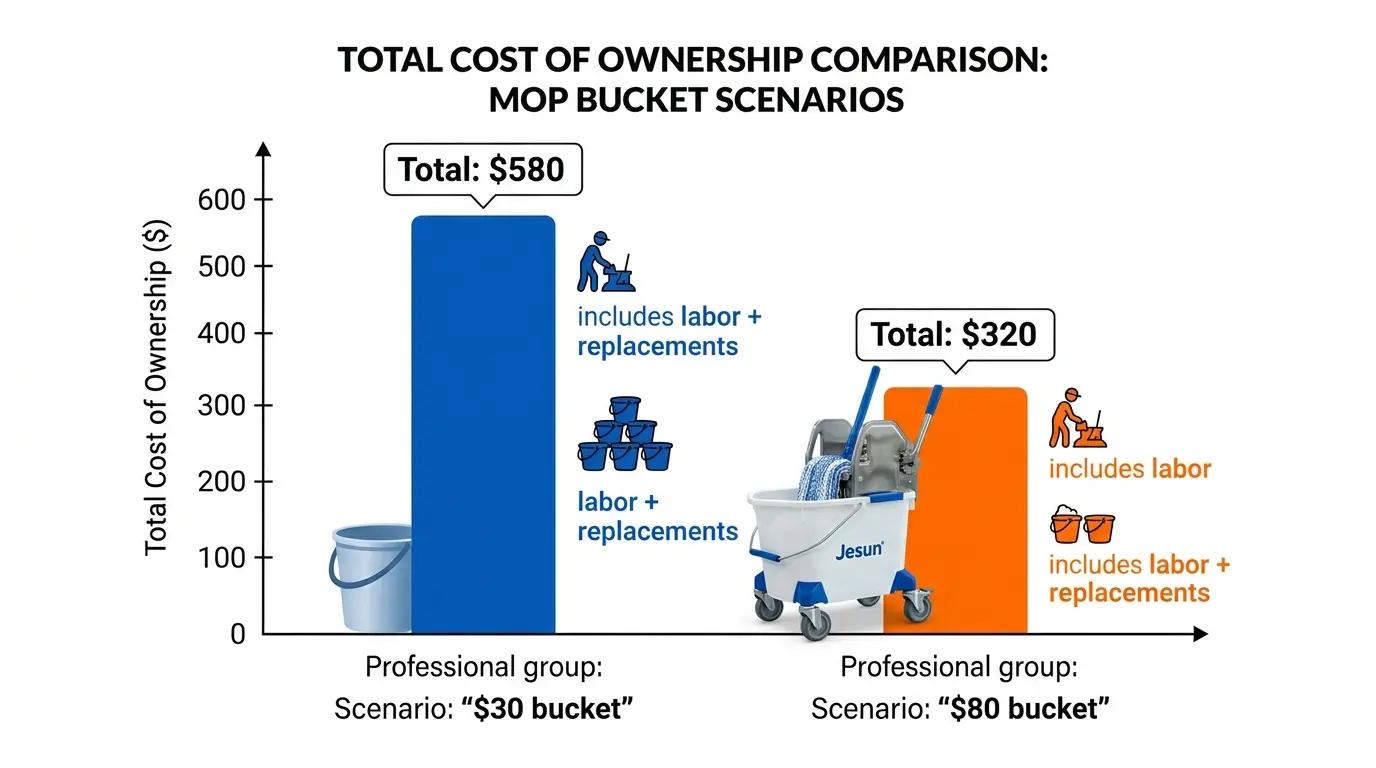
أمرٌ آخر بخصوص التسعير: الخيار الأغلى ليس النظام التجاري عالي الجودة، بل دلو الممسحة الأساسي الذي يُستبدل سنويًا، مع رؤوس ممسحة رخيصة تحتاج إلى استبدال كل شهرين، مما يُضيف عشر دقائق إلى كل وردية تنظيف. التكلفة الإجمالية لامتلاك دلو ممسحة تجاري $30 يُستخدم يوميًا في مساحة 2000 قدم مربع: حوالي $180 تكلفة استبدال، وأكثر من $400 تكلفة عمالة إضافية على مدار 24 شهرًا. أما دلو $80 الذي يدوم أربع سنوات مع استبدال الرؤوس كل ثلاثة أشهر: حوالي $320 إجماليًا. تتضح الفروقات بسرعة.
ما تعلمه المجتمع
أكثر من 60 موضوعًا في منتديات التنظيف والصيانة تكشف أنماطًا لا يذكرها أي وصف للمنتج. إليكم ما توصلت إليه الخبرة الجماعية لآلاف الساعات من التنظيف.
فخ ارتفاع المقبض حقيقي
في العديد من المنتديات، أبلغ مستخدمون تتراوح أطوالهم بين 168 سم و183 سم عن المشكلة نفسها. ممسحة دوارة شائعة الاستخدام، حتى عند فردها بالكامل، تجبرهم على الانحناء. المستخدمون الأقصر قامة يُحبونها، بينما المستخدمون الأطول قامة لا يُحبونها. وصفها مستخدم طوله 170 سم بأنها "كأنها مسح بفرشاة طلاء". أعادها مستخدم طوله 183 سم بعد استخدام واحد فقط. تم إنشاء 328 تعليقًا في هذا الموضوعكثير من المستخدمين الذين كرهوا الممسحة في البداية قبل اكتشاف وصلة تمديد مخفية. حتى أن أحد المستخدمين نهض من سريره في الساعة 12:30 صباحًا للتحقق من ذلك.
"لقد نهضت من السرير حرفياً في الساعة 12:30 صباحاً لأتحقق من الأمر لأنني كنت في حيرة من أمري: هل قمت بتمديد كلا جزئي مقبض الممسحة؟ هناك نقطتان للتمديد."
إذا اشتريتَ نظام ممسحة تلسكوبية، فجرب نطاق التمديد الكامل في المتجر. إذا طلبتَ عبر الإنترنت، فتأكد من أقصى طول للعمود بالبوصة. لا تثق بالعبارات التسويقية حول "قابلية التعديل". فالنظام الذي يمتد إلى 43 بوصة والنظام الذي يمتد إلى 52 بوصة كلاهما "قابل للتعديل"، لكنهما يناسبان أنواعًا مختلفة من الأجسام.
حجرة مزدوجة: فكرة رائعة ذات فتيل قصير
الفكرة أنيقة: ماء نظيف في جانب، وماء متسخ في الجانب الآخر. لكن عمليًا، يُدخل تصميم الحجرتين عيوبًا حقيقية. فسعة حجرة الماء النظيف أقل بكثير من سعة دلو عادي. ويشكو العديد من المستخدمين من نفاد الماء قبل الانتهاء من تنظيف مساحة متوسطة الحجم. كما أن رؤوس الممسحة في أنظمة الحجرتين عادةً ما تكون أرق من نظيراتها في أنظمة الحجرة الواحدة، مما يجعل القاعدة البلاستيكية تلامس الأرض عند زوايا معينة.
يُعدّ صوت الاحتكاك الشكوى الرئيسية، يليه انزلاق التروس البلاستيكية لدواسة القدم. وقد ذكر أحد المستخدمين... موضوع إزالة التأثير بصراحة تامة:
النسخة الأصلية رائعة، أحبها كثيراً. أحببتها لدرجة أنني اشتريت أيضاً النسخة ذات الحجرتين، ولكني أكرهها تماماً! رؤوس الممسحة في النسخة ذات الحجرتين سيئة للغاية، فهي أقل امتلاءً بكثير من الأصلية، مما يؤدي إلى احتكاك الجزء البلاستيكي بالأرضية.
أكد العديد من المستخدمين نفس التجربة. وأشار أحدهم إلى أن نظام الحجرتين "يستحيل تنظيف الجزء الداخلي من خزان الماء النظيف". ويتفق رأي المستخدمين على أن النسخة ذات الحجرة الواحدة تتفوق على النسخة ذات الحجرتين بالنسبة لمعظم المستخدمين، على الرغم من صعوبة إدارة المياه فيها. إذا كنت بحاجة إلى فصل الماء النظيف عن المتسخ، فإن نظام الدلوين الحقيقي، مع دلو منفصل للعصارة، يوفر لك سعة مياه أكبر وتنظيفًا أسهل.
ليس الكشط خطأك
إذا احتك الإطار البلاستيكي لرأس الممسحة بالأرضية، فقد تظن أنك تستخدمها بطريقة خاطئة. لكن هذا ليس صحيحًا، بل هو عيب في التصميم. يحتاج رأس الممسحة إلى كثافة ألياف كافية لإبقاء القاعدة البلاستيكية بعيدة عن الأرض حتى عند استخدامها بزاوية. العديد من رؤوس الممسحات المتوفرة في الأسواق لا تفي بهذا المعيار. وتزداد المشكلة سوءًا على الأرضيات الخشنة أو غير المطلية، حيث يعلق السطح غير المستوي بالحافة البلاستيكية.
أفاد المستخدمون الذين استخدموا رؤوس ممسحة أكثر سمكاً من جهات خارجية أن عملية الكشط توقفت تماماً. موضوع نقاش حول رؤوس الممسحة يضم الموقع عشرات المستخدمين الذين يشاركون روابط لرؤوس طباعة متوافقة، تكلفتها جزء بسيط من تكلفة رؤوس الطباعة الأصلية، وتؤدي أداءً أفضل. بالنسبة للشركات الصغيرة، يُعد شراء نظام طباعة يتمتع بسوق قطع غيار موثوقة أهم من العلامة التجارية للنظام نفسه. فهذا يعني تكاليف أقل على المدى الطويل، والقدرة على إيجاد قطع الغيار بسرعة عند تلف رأس الطباعة خلال الأسبوع.
العجلات تغير كل شيء
تفتقر معظم أنظمة دلو المسح متوسطة الجودة إلى العجلات، أو تأتي مزودة بعجلات بلاستيكية رخيصة تتعطل في غضون أسابيع. دلو الماء الممتلئ ثقيل، ونقله من غرفة إلى أخرى مضيعة للوقت، كما أنه يُسكب الماء المتسخ على الأرضيات النظيفة. تجدر الإشارة إلى الحلول الإبداعية التي قدمها المستخدمون: فبعضهم يفعل ذلك. وضعوا دلوهم على كرسي متحركقام آخرون بتركيب عجلات بديلة من متاجر الأدوات. إذا كنت بصدد تقييم نظام بدون عجلات، فضع في اعتبارك تكلفة ووقت إضافة العجلات.
تُفاقم مشكلة عدم توازن الوزن من حدة المشكلة. لاحظ العديد من المستخدمين أن آلية العصر تجعل أحد جانبي الدلو أثقل، مما يتسبب في انقلابه عند رفعه. يحدث الشيء نفسه مع دلو الممسحة الصناعي المزود بعصارة، كما أشار أحد المستخدمين: "حتى أنه يميل إلى الجانب بسبب آلية العصر التي تزن 2.3 كيلوغرام المعلقة به". الفرق هو أن الدلاء الصناعية مصممة ليتم تركيبها على عربات، وليس حملها. إذا احتاج موظفوك إلى نقل الدلو بين الغرف، فإن العجلات ضرورية.
رؤوس الممسحة هي المادة الاستهلاكية الحقيقية، وليس الدلو.
يُلاحظ في جميع الأبحاث أن المشترين الجدد يركزون بشدة على الدلو ويتجاهلون رأس الممسحة. يدوم الدلو لسنوات، بينما يحتاج رأس الممسحة إلى الاستبدال كل 3-4 أشهر مع الاستخدام اليومي. تبدأ رؤوس الممسحة الأصلية في العديد من الأنظمة رقيقة ثم تصبح أرق. وتختلف جودة رؤوس الممسحة البديلة اختلافًا كبيرًا. ينصح المستخدمون بغسل رؤوس الممسحة في الغسالة على دورة غسيل لطيفة بدون منعم أقمشة، ثم تجفيفها في الهواء. فالتجفيف الحراري يُتلف ألياف المايكروفايبر. خيط المتانة وصفت هذه الطريقة استبدال رؤوس الغسل "عندما تتوقف عن انتفاش الوبر بعد الغسيل" بدلاً من اتباع جدول زمني محدد. هذه الطريقة العملية تمنع التخلص من رؤوس الغسل الصالحة للاستخدام، كما تمنع استخدام الرؤوس البالية.
صيانة لا تشعر معها بأنها صيانة
يكمن الفرق في المتانة بين نظام مسح يدوم ثلاث سنوات وآخر يتعطل خلال ستة أشهر في آلية العصر. الدلو نفسه مصنوع من البلاستيك أو المعدن. أما تروس العصر والدواسات فهي الأجزاء الأكثر عرضة للتلف. اضغط على الدواسة بثبات، ولكن تجنب الدوس عليها بقوة. فالارتداد عليها يُحدث ضغطًا جانبيًا يُتلف التروس البلاستيكية. علّم موظفيك هذه النصيحة.
رؤوس الممسحة: اغسلها في الغسالة على دورة غسيل لطيفة بدون استخدام منعم الأقمشة. يُغطي منعم الأقمشة ألياف المايكروفايبر ويقلل من قدرتها على الامتصاص بشكل دائم. جففها في الهواء فقط. التجفيف الحراري يُقلص الألياف ويُقلل من مساحة رأس الممسحة الفعالة. خصص ميزانية لاستبدال الرؤوس كل ثلاثة أشهر في حالة الاستخدام اليومي. رأس الممسحة هو الجزء الذي يلامس الأرض فعليًا. الرؤوس البالية تنشر الأوساخ بدلًا من احتجازها.
أ موضوع "اشترِها مدى الحياة" أكدت نصائح خبراء التنظيف بشأن متانة الممسحة على المدى الطويل: يدوم الدلو نفسه لسنوات إذا تعاملت مع آلية العصر برفق. أما رؤوس الممسحة فهي الأجزاء الاستهلاكية. إذا خصصت مبلغًا يتراوح بين 30 و40 دولارًا سنويًا لاستبدال الرؤوس، فسيدوم الدلو لفترة أطول من رغبتك في التفكير في استبداله.
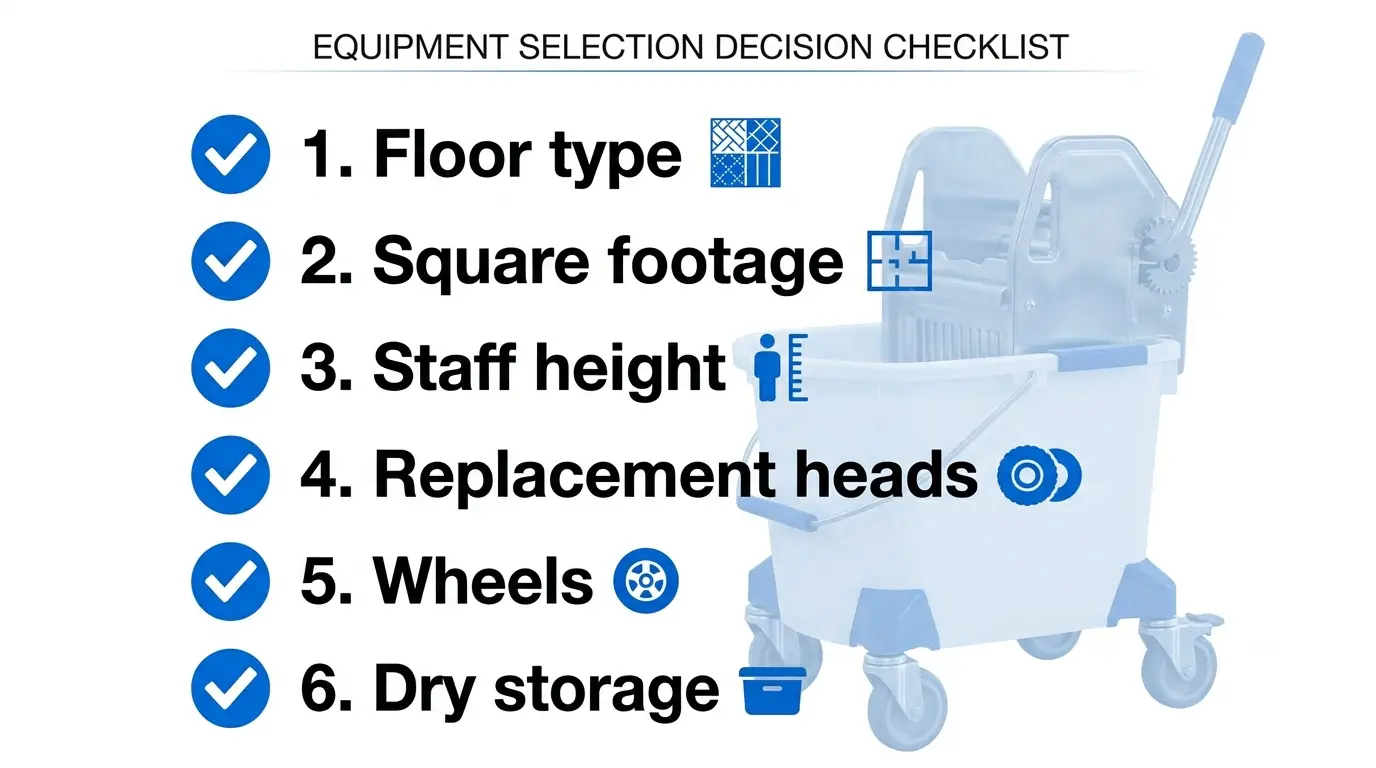
قائمة التحقق من اختيار دلو الممسحة التجارية
قبل الشراء، اطلع على هذا. يستغرق قراءته وقتاً أطول من تطبيقه.
- ما نوع الأرضية؟ إذا كانت الأرضية من الفينيل الفاخر أو اللامينيت، فاستخدم ممسحة دوارة ذات قدرة عصر قصوى. أما إذا كانت من البلاط أو الخرسانة، فالممسحة المسطحة ذات الوسادات المتعددة أفضل للمساحات الكبيرة.
- كم تبلغ مساحتها بالقدم المربع؟ أقل من 500، أي نظام. من 500 إلى 2000، ممسحة دوارة متوسطة المدى. أكثر من 2000، نظام ممسحة مسطحة بأربع وسادات قابلة للتبديل على الأقل وسعة دلو تزيد عن 2 جالون.
- كم عدد الموظفين الذين يستخدمونه؟ عند وجود أكثر من شخص، يصبح تعديل ارتفاع المقبض أمراً بالغ الأهمية. تأكد من أقصى امتداد بالبوصة قبل الشراء.
- هل يمكنك العثور على رؤوس بديلة بسهولة؟ ابحث عن مقاس رأس الممسحة قبل شراء النظام. إذا كانت رؤوس الممسحة البديلة متوفرة لدى عدة متاجر، فستكون قد حصلت على ما يناسبك. أما إذا كانت رؤوس الممسحة الأصلية فقط هي المتوفرة، فتوقع تكلفة أعلى على المدى الطويل.
- هل عجلاتها ذات جودة عالية؟ وإلا، فضع في اعتبارك تكلفة $10-15 لمنصة متحركة أو عجلات بديلة. إن تكلفة تركيب جرافة غير قابلة للتحريك ستكون أعلى في تكاليف العمالة من التوفير الذي توفره جرافة أفضل في سعر الشراء.
- هل يمكن تخزينه في مكان جاف؟ تتكاثر البكتيريا في غضون 24 ساعة إذا تُرك رأس الممسحة مبللاً في دلو مغلق. تحتوي بعض الدلاء على فتحات تصريف في سلة العصر، بينما لا تحتوي أخرى. إذا لم يكن دلوك مزودًا بفتحات تصريف، فقم بإزالة رأس الممسحة وتجفيفه بعد كل استخدام.
- هل قرأت التقييمات السلبية؟ رتب النتائج حسب الأحدث، وابحث عن أعطال في التروس، وانهيار المقابض، والخدوش. تمثل هذه الأعطال الثلاثة غالبية حالات الإرجاع في جميع فئات الأسعار.
شيء أخير
أنت أدرى بشؤون عملك منا. نظام دلو المسح الأمثل هو الذي لا يشغل بال موظفيك. إذا كانوا يفكرون في الممسحة، فهي ليست مناسبة. صُمم هذا الإطار لمساعدتك على استبعاد الخيارات الخاطئة بسرعة، لتتمكن من التركيز على نظامين أو ثلاثة أنظمة تستحق المقارنة. لقد أنجز خبراء التنظيف الجزء الأصعب، فالأنماط واضحة. ما عليك سوى اختيار النظام الأنسب لأرضيتك ومساحتك وفريقك.



 Arabic
  English
  Spanish
  Russian