
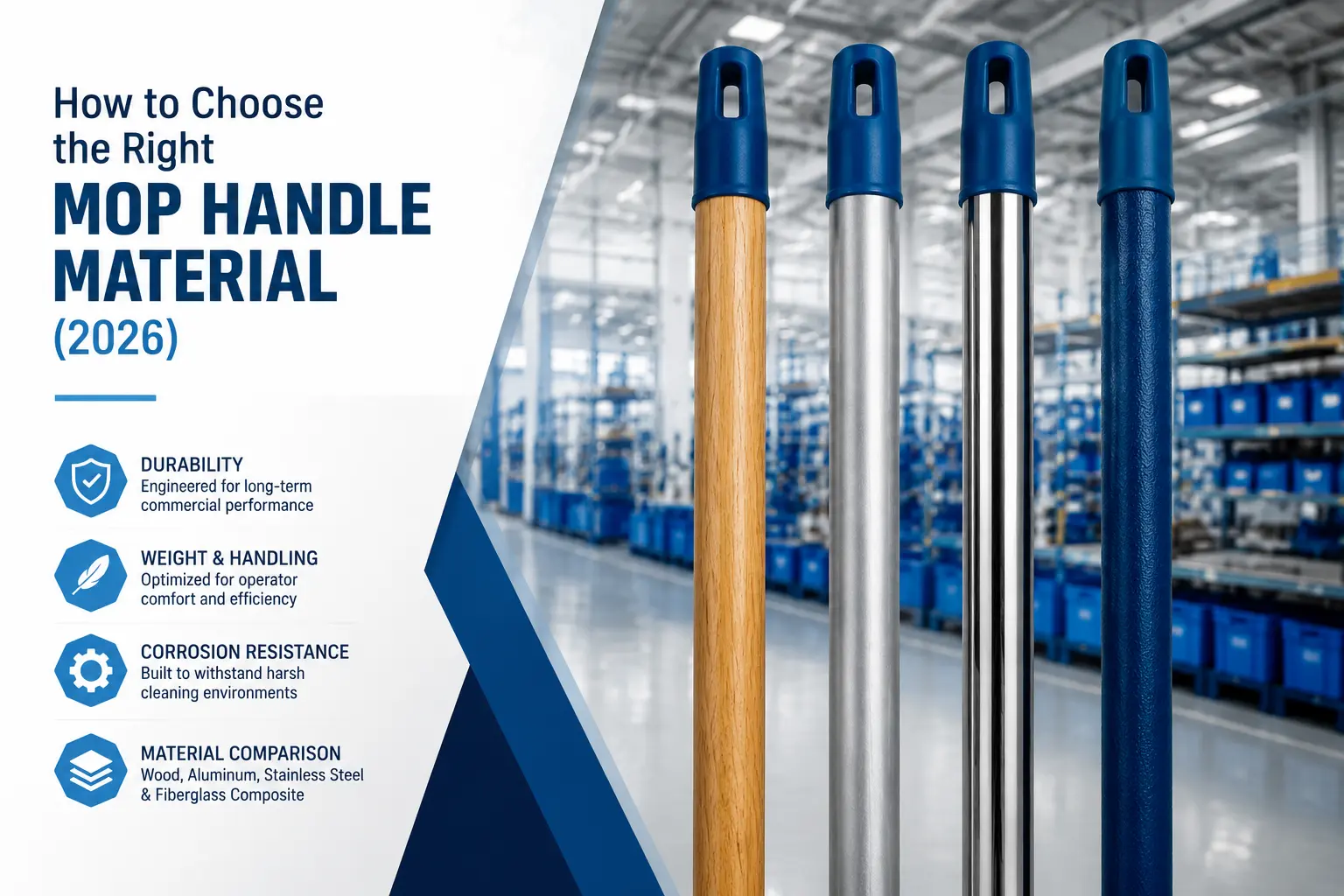
El mercado mundial de mangos para fregonas se valoró en aproximadamente $1.2 mil millones en 2025, creciendo a una tasa de crecimiento anual compuesta constante de 3,81 TP3T (Informe de mercado de mangos para fregonas Intelo, 2025Los mangos de madera siguen representando la mayor parte del mercado, con un 31,21%, pero el aluminio es el segmento de mayor crecimiento, con una tasa de crecimiento anual compuesta (CAGR) del 4,91%, pero la mayoría de las decisiones de compra aún se basan en la costumbre o en el precio inicial, en lugar de considerar el costo total de propiedad o la seguridad de los trabajadores.
Los administradores de instalaciones necesitan más que una lista de materiales. Necesitan un marco de decisión que relacione el material de las manijas con la zona de limpieza, la duración del turno y el presupuesto. Esta guía compara manijas de aluminio, acero inoxidable, madera, plástico y fibra de vidrio en durabilidad, peso, coste, higiene y ergonomía para que pueda justificar la elección tanto ante el personal como ante las partes interesadas. Para el análisis complementario de los tipos de cabezales de fregona, consulte nuestra Comparación entre fregonas de esponja, planas y de tiras..
Conclusiones clave
- Aluminio Ofrece la mejor relación resistencia-peso para la mayoría de las zonas comerciales: 1-2 libras, vida útil de 5-7 años, cuota de mercado de 28,41 TP3T y CAGR de 4,91 TP3T.
- Acero inoxidable Tiene una duración de 5 a 10 años o más, pero pesa entre 1,4 y 2,3 kg; resérvelo para el sector sanitario, la industria alimentaria y las salas blancas donde la resistencia química es importante.
- Madera Es la opción más económica inicialmente ($5-15), pero necesita ser reemplazada cada 2-3 años y no se puede desinfectar eficazmente.
- Longitud del mango Afecta directamente al riesgo de lesiones: elija una altura de entre 54 y 60 pulgadas (del suelo a la barbilla) con ajuste telescópico siempre que sea posible.
- Selección basada en zonas Es mejor que un modelo único para todos: hay que adaptar el material al tipo de instalación, no solo al precio de la etiqueta.
Tabla de contenido
Palanca¿Qué materiales están disponibles para los mangos de las fregonas comerciales?
Cinco materiales dominan el mercado de mangos de fregonas comerciales: aluminio, acero inoxidable, madera, plástico y compuestos de fibra de vidrioCada uno ocupa una posición distinta en el mercado $1.2B, impulsada por diferentes compensaciones en peso, durabilidad, resistencia química y costo (Mercado Intelo, 2025).
Madera Posee la mayor cuota de mercado debido a los hábitos de compra arraigados y al precio de entrada más bajo. Es cálido al tacto y está ampliamente disponible, pero absorbe la humedad y no resiste desinfectantes agresivos. Aluminio Está ganando terreno rápidamente porque los administradores de instalaciones priorizan cada vez más el peso y la resistencia a la corrosión por encima del menor coste inicial. Acero inoxidable Domina el segmento premium de los sectores de salud y servicios de alimentación. Plástico y fibra de vidrio rellenar los nichos ligeros y resistentes a los productos químicos.
¿Es el aluminio el mejor material para los mangos de las fregonas?
Los mangos de aluminio para fregonas ofrecen la mejor relación resistencia-peso. de cualquier material de mango común, con un peso de 1 a 2 libras, a la vez que resisten la corrosión y la flexión. Controlan el 28,41 TP3T del mercado y son el segmento de más rápido crecimiento con una CAGR del 4,91 TP3T (Mercado Intelo, 2025).
Para un mango comercial típico de 54 a 66 pulgadas, el aluminio equilibra las propiedades que más importan a la mayoría de las instalaciones. El mango ergonómico de aluminio de 54 a 66 pulgadas de Rubbermaid, por ejemplo, pesa aproximadamente 1,75 libras mientras soporta cabezales de tipo abrazadera y de cambio rápido (Anuncio de Rubbermaid, 2026Ese peso es importante durante una jornada laboral de 8 horas. Un mango más ligero reduce la torsión de la muñeca y permite a los trabajadores cambiar de movimientos verticales a horizontales sin luchar contra la inercia.
El aluminio también resiste mejor la humedad y la mayoría de los desinfectantes comerciales que la madera, aunque no es tan químicamente inerte como el acero inoxidable. Se puede anodizar para obtener una mayor dureza superficial y viene en acabados codificados por colores que ayudan a los programas de separación de zonas. El costo inicial suele estar entre $15 y $40, situándose por encima de la madera y el plástico, pero muy por debajo del acero inoxidable de primera calidad. Calendario de reemplazo de cabezas Su diseño, combinado con un mango de aluminio duradero, mantiene los costos a lo largo de su vida útil predecibles.
Ideal para: oficinas, hoteles, escuelas, universidades, comercios y zonas sanitarias de uso ligero a moderado donde el peso y la ergonomía importan más que la esterilización constante en autoclave.
¿Cuándo justifica el acero inoxidable su mayor coste?
Los mangos de acero inoxidable para fregonas pesan entre 3 y 5 libras. — aproximadamente 2-3 veces más que el aluminio — pero ofrecen una resistencia superior a la corrosión, tolerancia química y propiedades de desinfección que justifican el precio superior en entornos sanitarios y de servicios alimentarios (Foamtec WCC, 2025).
El argumento a favor del acero inoxidable es más sólido cuando un mango debe soportar una exposición repetida a desinfectantes cáusticos, esterilización en autoclave o lavados a alta temperatura. En salas blancas GMP, Foamtec recomienda mangos de acero inoxidable para zonas ISO 5-7 porque se pueden electropulir y pasivar, dejando menos grietas para el alojamiento microbiano (Foamtec WCC, 2025Las cocinas de los servicios de alimentación se enfrentan a una química similar: la grasa, los limpiadores alcalinos y la rotación de desinfectantes atacan los acabados de aluminio y destruyen las fibras de la madera.
El costo suele ser de $25-60 o más por mango, y el peso adicional es considerable. En turnos largos, un mango de 1,8 kg puede provocar una fatiga notable. La regla es simple: si el protocolo de limpieza incluye autoclave, esterilizantes o grasa espesa, el acero se amortiza. De lo contrario, el aluminio suele ser la mejor opción en términos de costo total de propiedad.
¿Sigue siendo la madera un material viable para los mangos de las fregonas?
Los mangos de fregona de madera siguen teniendo la mayor cuota de mercado, con un 31,21% (3TPT)., reflejando las preferencias tradicionales y el menor coste inicial. Sin embargo, requieren ser reemplazados cada 2-3 años, absorben la humedad y no se pueden desinfectar eficazmente (Mercado Intelo, 2025).
Un mango de madera $5-15 es económico de almacenar, cálido al tacto y familiar para los equipos de mantenimiento. Sin embargo, estas ventajas desaparecen rápidamente con el uso comercial. El agua y los productos químicos de limpieza penetran en la veta, provocando hinchazón, decoloración y, finalmente, astillamiento. Una vez que el acabado se deteriora, la madera se convierte en un foco de microorganismos, razón por la cual las normas sanitarias y de servicios de alimentación la excluyen cada vez más.
Los cálculos a lo largo de una década no son alentadores. Un mango de madera que se reemplaza cada 2 o 3 años cuesta entre $20 y 45 en 10 años, mientras que un solo mango de aluminio, que cuesta $25, suele durar entre 5 y 7 años. La madera solo tiene sentido en entornos de bajo uso y poca higiene, donde el costo inicial es el único criterio.
Ideal para: Uso residencial ligero, operaciones con presupuesto ajustado y ciclos de reemplazo cortos, o limpieza en seco con mopa donde la exposición a la humedad es mínima.
¿Qué ocurre con los mangos de plástico y de materiales compuestos de fibra de vidrio?
Los mangos de plástico dominan el mercado general de mangos para fregonas con una cuota del 45,21 %. debido a su rentabilidad y resistencia a la humedad (Informe de mercado sobre el mango del trapeador Intelo, 2025Los compuestos de fibra de vidrio ofrecen resistencia química y a la humedad con un peso menor que el acero.
Los mangos de plástico son la opción más ligera y económica, con un peso inferior a medio kilo y un precio de $3-10. Se pueden codificar por colores y son resistentes a la corrosión, lo que los hace atractivos para la separación básica de zonas. La desventaja es su resistencia mecánica. Bajo cargas pesadas de tierra o al aplicar fuerza repetidamente, el plástico se flexiona, se deforma y, finalmente, se agrieta en las roscas o en la fijación del cabezal. Es mejor tratarlos como consumibles en lugar de herramientas de larga duración.
La fibra de vidrio se sitúa entre el aluminio y el acero en la mayoría de los parámetros. El mango ajustable de la fregona de fibra de vidrio de Integrity Cleanroom pesa 16 oz (0,45 kg), es autoclavable y resiste una amplia gama de productos químicos (Ficha técnica de productos para salas blancas Integrity, 2024Además, es no conductor, lo que lo hace más seguro que el aluminio o el acero en zonas de mantenimiento eléctrico. La desventaja es que las asas de fibra de vidrio pueden deshilacharse o astillarse si la capa exterior de resina se daña.
Ideal para: Plástico = uso ligero y residencial económico. Fibra de vidrio = entornos industriales con alto contenido químico, salas blancas y áreas de trabajo eléctrico.
¿Cómo influyen la longitud del mango y la ergonomía en la seguridad del trabajador?
El programa SHARP del estado de Washington reporta 182 reclamaciones de compensación laboral por lesiones relacionadas con fregonas desde 2019., con 30% clasificado como trastornos musculoesqueléticos relacionados con el trabajo. Una revisión de 2022 de estudios sobre fregado de suelos encontró evidencia moderada de que los mangos ajustables de las fregonas reducen la exposición física en hombros y muñecas (Allread y Vossenas, IJERPH, 2022(citando a Wallius et al.).
La mecánica es sencilla. Un mango demasiado corto obliga al trabajador a inclinarse hacia adelante, sobrecargando la zona lumbar. Un mango demasiado largo fuerza la extensión de los hombros y reduce el control. El panel de expertos de CleanLink recomienda un mínimo de 54 pulgadas, comúnmente 60 pulgadas — aproximadamente a la altura del suelo a la barbilla — porque permite un buen alcance sin redondear la columna (CleanLink, 2020).
Un estudio de MDPI sobre hoteles añade otra dimensión: las asas extensibles redujeron significativamente el riesgo de lesiones en la zona lumbar en comparación con las asas de longitud fija (P<0,05) (Allread y Vossenas, IJERPH, 2022). Los mangos telescópicos permiten que equipos con diferentes estaturas compartan herramientas sin obligar a nadie a adoptar una postura incómoda. Características como empuñaduras acolchadas, articulaciones giratorias y diseños de mangos curvados reducen aún más la desviación de la muñeca. Estas ventajas ergonómicas combinan especialmente bien con sistemas de fregonas planas de microfibra, que son más ligeras y rápidas que las fregonas de hilo.
Los datos de SHARP también muestran que Las reclamaciones de limpieza de suelos del formulario 40% implicaban la sustitución salarial o la incapacidad. (Departamento de Trabajo e Industrias del Estado de Washington, 2025Eso significa que una manija incorrecta no es solo una cuestión de comodidad, sino que representa un costo directo en reclamaciones, tiempo perdido y rotación de personal.
¿Qué material de mango de fregona debo elegir según la zona?
Ningún material de asa único sirve para todas las zonas. El enfoque óptimo consiste en combinar el material con el tipo de instalación: aluminio para la mayoría de las áreas comerciales, acero inoxidable para el sector sanitario y de servicios de alimentación, fibra de vidrio para entornos con alto contenido químico y madera solo para instalaciones ligeras de bajo presupuesto.
| Zona | Recomendado | Por qué | Vida útil esperada |
|---|---|---|---|
| Atención sanitaria / sala limpia | Acero inoxidable o aluminio anodizado | Resistencia química, esterilizable en autoclave, baja liberación de partículas. | 5-10+ años |
| Hotel / oficina | Aluminio | Ligero, resistente a la corrosión, ergonómico | 5-7 años |
| Cocina de restaurante | Acero inoxidable o fibra de vidrio | Resistencia a la grasa y a los productos químicos, lavado frecuente | 5-10+ años |
| Escuela/universidad | Aluminio | Económico, duradero y codificable por colores. | 5-7 años |
| Industrial/servicios públicos | Fibra de vidrio o acero | Resistencia química, alta resistencia, no conductor | 5-10+ años |
| Uso ligero / residencial | Plástico o madera | El precio más bajo, aceptable para uso ocasional. | 1-3 años |
Para una programación de reemplazo más detallada y la coincidencia del tipo de cabeza, consulte nuestra Guía de reemplazo de cabezales de fregona comerciales.
Preguntas frecuentes
¿Cuál es el material más duradero para el mango de una fregona?
Acero inoxidable es el más duradero, con una vida útil de 5 a 10 años o más, incluso con uso comercial diario y exposición química repetida. Pesa entre 3 y 5 libras, aproximadamente 2 o 3 veces más que el aluminio, por lo que este último suele ser la mejor opción en cuanto a durabilidad y peso para zonas comerciales generales.Foamtec WCC, 2025).
¿Son mejores los mangos de aluminio para fregonas que los de madera?
Para uso comercial, sí. Los mangos de aluminio duran más de 5 años, frente a los 2-3 años de los de madera., resisten la humedad y los productos químicos, y pesan entre 1 y 2 libras. La madera cuesta menos inicialmente ($5-15 frente a $15-40) pero absorbe agua, se astilla y no se puede desinfectar eficazmente. En términos de costo por año, el aluminio suele ganar (Mercado Intelo, 2025).
¿Cuánto tiempo debería durar el mango de una fregona comercial?
La vida útil comercial típica es: aluminio 5-7 años, acero inoxidable 5-10+ años, fibra de vidrio 5-10 años, madera 2-3 años y plástico 1-3 años dependiendo de la intensidad de uso. Un mango de aluminio de 60 pulgadas usado 8 horas diarias en una escuela normalmente alcanza los 6-7 años antes de ser reemplazado (Mercado Intelo, 2025).
¿Qué longitud de mango de fregona es la más adecuada para uso comercial?
A mínimo de 54 pulgadas, idealmente 60 pulgadas — aproximadamente a la altura del suelo a la barbilla para el usuario promedio. El panel de expertos de CleanLink (2020) recomienda este rango porque proporciona un buen alcance sin forzar los hombros hacia adelante ni requerir una flexión excesiva. Los mangos telescópicos se adaptan a diferentes alturas del personal (CleanLink, 2020).
¿Influyen los materiales del mango de la fregona en la eficacia de la limpieza?
Sí. Los mangos más pesados provocan fatiga más rápidamente. y reducen la velocidad de limpieza durante turnos largos. El Departamento de Trabajo e Industrias del Estado de Washington informa de 182 reclamaciones de indemnización laboral por lesiones relacionadas con fregonas desde 2019, con 30% clasificadas como trastornos musculoesqueléticos. Los mangos ergonómicos con empuñaduras acolchadas, articulaciones giratorias y longitud ajustable reducen el riesgo de lesiones (Departamento de Trabajo e Industrias del Estado de Washington, 2025; Factores humanos, 2019).
Conclusión
Elegir el material adecuado para el mango de la fregona es una decisión operativa, no una preferencia del departamento de suministros. Los datos apuntan a una jerarquía clara: aluminio para la mayoría de las zonas comerciales, acero inoxidable para entornos críticos en materia de higiene, fibra de vidrio para áreas de trabajo con alto contenido químico o eléctrico, y madera o plástico solo cuando el costo inicial importa más que la durabilidad.
Tres números deberían guiar la decisión final:
- El mercado $1.2B se está desplazando hacia el aluminio en 4,9% CAGR Y con razón: equilibra el peso, la durabilidad y el coste.
- 182 reclamaciones de indemnización laboral Los estudios realizados en el estado de Washington desde 2019 demuestran que la ergonomía de los mangos es un verdadero inconveniente.
- Coste por año A menudo se prefiere el mango más caro porque la frecuencia de reemplazo importa más que el precio de venta.
JESUN, el mayor fabricante mundial de herramientas de limpieza desde 1986, produce mangos para fregonas industriales en aluminio, acero inoxidable, fibra de vidrio y madera para todo tipo de instalaciones. Descubra nuestros sistemas de fregado comerciales. para que el material del mango coincida con sus zonas de limpieza, o consulte nuestra comparación de cabezales de fregona para obtener el panorama completo.
Referencias
- Market Intelo. “Informe de investigación de mercado sobre mangos de fregonas”. 2025. https://marketintelo.com/report/dust-mop-handle-market
- Market Intelo. “Informe de investigación de mercado sobre mangos de fregona”. 2025. https://marketintelo.com/report/mop-handle-market
- Departamento de Trabajo e Industrias del Estado de Washington / SHARP. “Boletín de invierno 2025: datos sobre lesiones relacionadas con el uso de fregonas”. 2025. https://www.lni.wa.gov/safety-health/safety-research/files/2025/102_201_2025_Winter_Newsletter_English.pdf
- Engström, T. et al. “Riesgo de trastornos musculoesqueléticos al realizar tareas de fregado con mangos de diferentes alturas: una revisión sistemática.” Factores humanos, 2019. DOI: 10.1177/0018720818816261. https://journals.sagepub.com/doi/10.1177/0018720818816261
- Allread, WG y Vossenas, P. “Efecto de la altura del mango en el riesgo de lesiones lumbares durante el fregado”. Revista Internacional de Investigación Ambiental y Salud Pública, 19, 14907, 2022. https://mdpi-res.com/d_attachment/ijerph/ijerph-19-14907/article_deploy/ijerph-19-14907-v3.pdf
- Panel de expertos de CleanLink. “Los expertos analizan las opciones de fregado”. CleanLink, 2020. https://www.cleanlink.com/hs/article/Experts-Analyze-Mopping-Options–26045
- Foamtec WCC. “Cómo elegir los mejores mangos para fregonas en salas blancas GMP”. 2025. https://www.foamtecintlwcc.com/how-to-choose-the-best-mopping-handles-for-gmp-cleanrooms-key-factors-for-compliance/
- Productos comerciales Rubbermaid. “Mango ergonómico para fregona húmeda de 54-66 pulgadas con cabezal tipo abrazadera”. 2026. https://www.rubbermaidcommercial.com/cleaning/wet-mops-handles/54-66-ergonomic-wet-mop-handle-with-clamp-style-head/
- Integrity Cleanroom / WIDACO. “Ficha técnica del mango ajustable para fregona”. 2024. https://widaco.net/wp-content/uploads/2024/05/600-1008-adjustable-mop-handle.pdf


 Spanish
  English
  Russian
  Arabic