
目录
ToggleKey Takeaways
- Microfibre mops cover more floor area per stroke, helping staff complete cleaning tasks faster and boosting operational efficiency.
- Minimal water and fewer cleaning products are needed, reducing supply costs and supporting sustainable cleaning practices.
- Reusable pads last through 200–300 wash cycles, cutting long-term procurement costs compared to disposable alternatives.
- A single microfibre mop can handle both dry dusting and wet cleaning, simplifying equipment management and staff training.
- The fine fibres trap bacteria, dust, and allergens more effectively than traditional mops, supporting hygiene in healthcare, hospitality, and food service settings.
This guide is written for facility managers, commercial cleaning professionals, and business owners evaluating floor cleaning equipment. It covers the key benefits of microfibre mops, selection criteria, and maintenance best practices to help you make informed procurement decisions for offices, hotels, schools, healthcare facilities, and retail environments.
6 Reasons to Use Microfibre Mop
Microfibre mops improve efficiency and hygiene in commercial spaces more than traditional cotton mops. Here are the six key reasons why they have become a favourite for homes and workplaces.
1. Delivers Good Cleaning Results
A microfibre mop cleans the surface better than traditional mops. It picks up dust, dirt, and crumbs instead of moving them around. Every swipe leaves the floor visibly cleaner. The unique micro-fibres have a positive charge that effectively attracts dust and debris.
The fibres also capture bacteria, which helps maintain hygienic environments in offices, hotels, or healthcare facilities.
2. Requires Less Water and Fewer Chemicals
Microfibre mops require up to 95% less water than traditional mops, microfibre requires very little water. Sometimes, you don’t need any cleaning solution. This makes it safer for pets, children, and delicate floors.
Less water and fewer chemicals also mean reduced supply costs and minimised residue on floors. Businesses benefit from safer, more sustainable cleaning processes.
3. Cleans Faster and Saves Time
Microfibre mops can reduce cleaning time by 20-30% compared to cotton mops. They pick up spills and dust quickly.
Floors dry more quickly, which reduces downtime in busy commercial areas. Staff can clean efficiently, improving overall operational productivity.
4. Works for Both Wet and Dry Cleaning
You can use microfibre mops for dry as well as wet cleaning. Use it dry to remove dust, crumbs, and pet hair. It acts like a dust mop and collects fine particles.
On the other hand, when you use it wet for sticky spots or spills, the mop lifts dirt without scrubbing or buckets of water.
One tool handles both jobs. You don’t need a separate mop for dusting and mopping.
5. Durable and Cost-Effective
Microfibre mop pads last much longer than cotton or disposable heads. They are reusable and simple to clean. Reusable pads withstand 200-300 wash cycles, significantly reducing long-term procurement costs compared to disposable alternatives. You don’t need replacements often. They can handle hundreds of washes without losing cleaning power.
Even if the mop costs more upfront, over time, businesses save on disposable pads and cleaning solutions, making microfibre mops a smart investment.
6. Lightweight and Easy to Use
Microfibre mops are light and easy to push across floors. So, cleaning doesn’t put a strain on your back. The mop head reaches corners and under furniture smoothly. Cleaning is easier and faster.
Adjustable handles and flexible heads allow efficient access to corners, under furniture, and high-traffic areas.
How to Choose the Right Microfibre Mop
Picking the right microfibre mop makes cleaning easier and faster. Different mops work better for different jobs, so it helps to know what to look for.
Types of microfibre mops
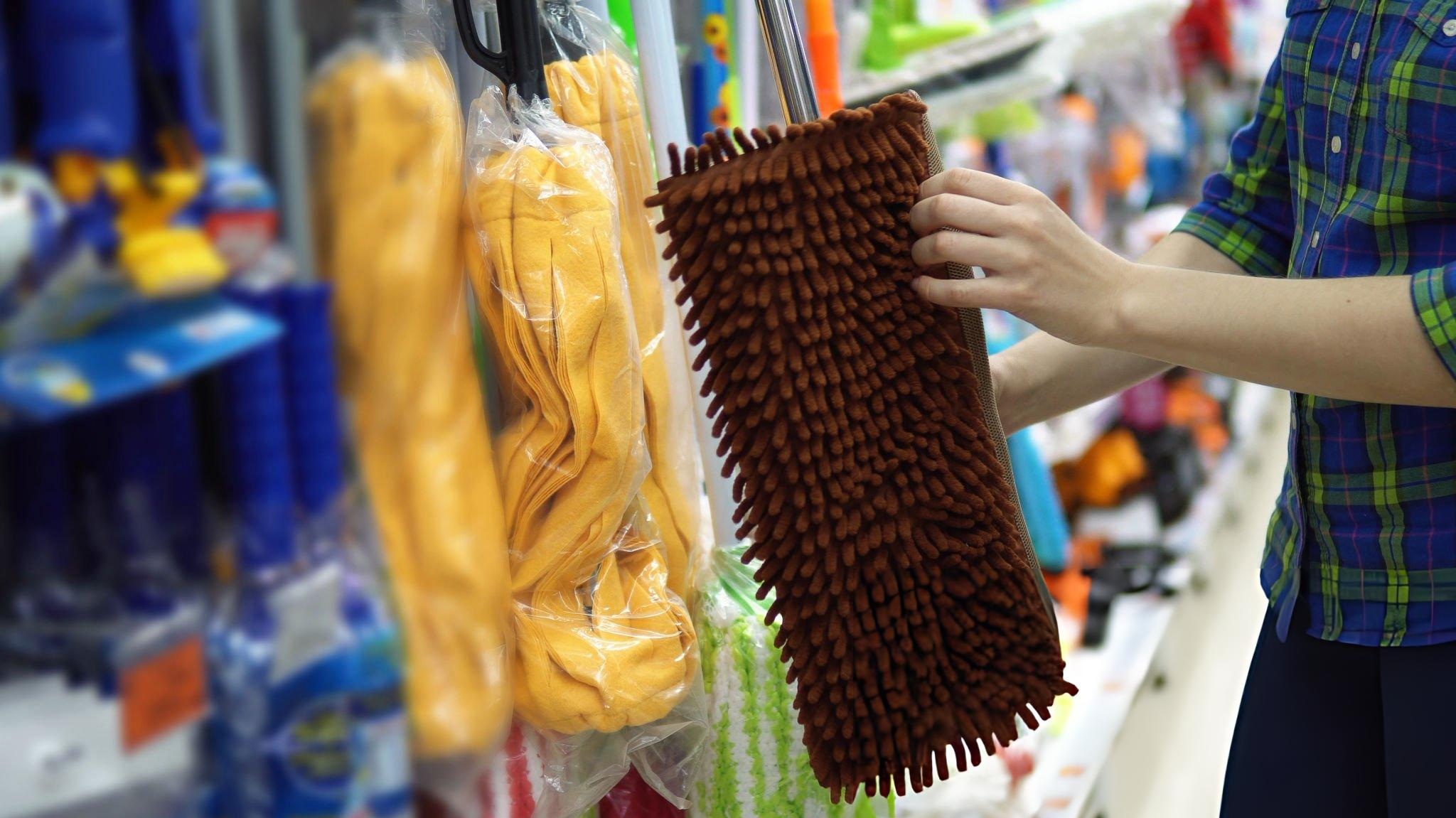
There are several types of microfibre mops. Flat-head mops are good for smooth floors and light dusting. String mops soak up spills and handle uneven surfaces well. Spray mops come with a built-in solution, which is handy for quick cleaning.
Pad thickness and quality
Thicker pads hold more dirt and liquid. Dense fibres grab dust better and clean in fewer passes. Thinner pads are fine for small tasks but may need extra work for bigger messes.
Handle design and adjustability
A comfortable handle makes cleaning less tiring. Telescopic handles let you adjust the length to your height. Moreover, comfortable handles and telescopic designs reduce staff fatigue and improve ergonomics.
Surface compatibility
Not all pads work on every floor. Some are best for hardwood and laminate, while others suit tiles, vinyl, or stone. Using the wrong pad can leave streaks or marks.
Buying tips
Check how easy it is to wash the pads and how long they last. Consider durability and ease of washing. Reusable pads save money over time. Also, check for replacement pad availability. Investing in a quality mop ensures better results and less frequent replacement.
How to Clean and Maintain Microfibre Mop Pads
If you want your microfibre mop pads to last longer, then clean them soon after use. Once you finish mopping, rinse the pad quickly under running water. This washes away loose dust before it settles into the fibres.
For a deeper clean, you can also wash the pads in the washing machine with warm water and a small amount of detergent. Some people prefer to wash it by hand instead, especially if the pad is only lightly soiled. Both methods work fine.
Avoid using products like fabric softener or bleach, as they leave a coating on the fibres, and after a while, the pad stops picking up dirt properly.
Floor type also matters. Smooth surfaces, such as hardwood or laminate, are easier to clean with flat pads. Cleaning tile floors, on the other hand, often responds better to thicker or string-style pads that can reach into grout lines.
Drying the pad in open air usually works well. You can hang it on a rack or lay it somewhere flat until it dries. After that, keep it somewhere dry so it’s ready for the next round of cleaning.
Signs It’s Time to Replace Pads
Even with good care, pads wear out over time. If the fibres look frayed, the pad no longer picks up dust effectively, or it develops a persistent odour, it’s time for a new one. Replacing worn pads ensures your mop continues to clean efficiently.
Conclusion
Microfibre mops make commercial floor cleaning faster, easier, and more cost-effective. They trap dirt and moisture, dry quickly, and reduce chemical use while maintaining hygiene standards.
For businesses seeking reliable solutions, Yocada offers ergonomic and durable microfibre mops designed for offices, hotels, schools, and industrial environments. Their products combine long-lasting performance with user-friendly design, helping teams achieve spotless floors efficiently.
FAQ
Are microfibre mops safe for hardwood floors?
Yes. Microfibre mops are safe for hardwood and laminate floors. The soft fibres clean without scratching, and the low-moisture cleaning method protects wood from water damage.
How long do microfibre mop pads last?
A quality microfibre pad typically lasts 200-300 wash cycles. With average use (2-3 washes per week), one pad can last 6-12 months. Avoid bleach and fabric softener to maximise lifespan.
Are microfibre mops better than cotton mops?
Yes. Microfibre removes up to 99% of bacteria with water alone, while cotton often spreads contaminants. Microfibre pads last 200-300 washes versus 15-30 for cotton, significantly reducing long-term costs. Cotton mops are only preferable for heavy liquid spills in industrial settings.
How often should you wash microfibre mop pads?
Wash pads after every use. In high-traffic commercial spaces, replace pads every 2-3 rooms to prevent cross-contamination. Use warm water with mild detergent and avoid fabric softener or bleach, as these reduce the fibres’ dirt-trapping ability.
Do microfibre mops kill bacteria?
No, but they remove bacteria more effectively than traditional mops. The ultra-fine fibres physically trap and lift up to 99% of microorganisms from surfaces. For actual disinfection in healthcare settings, combine microfibre mopping with an approved disinfectant.


 English
  Spanish
  Russian
  Arabic