
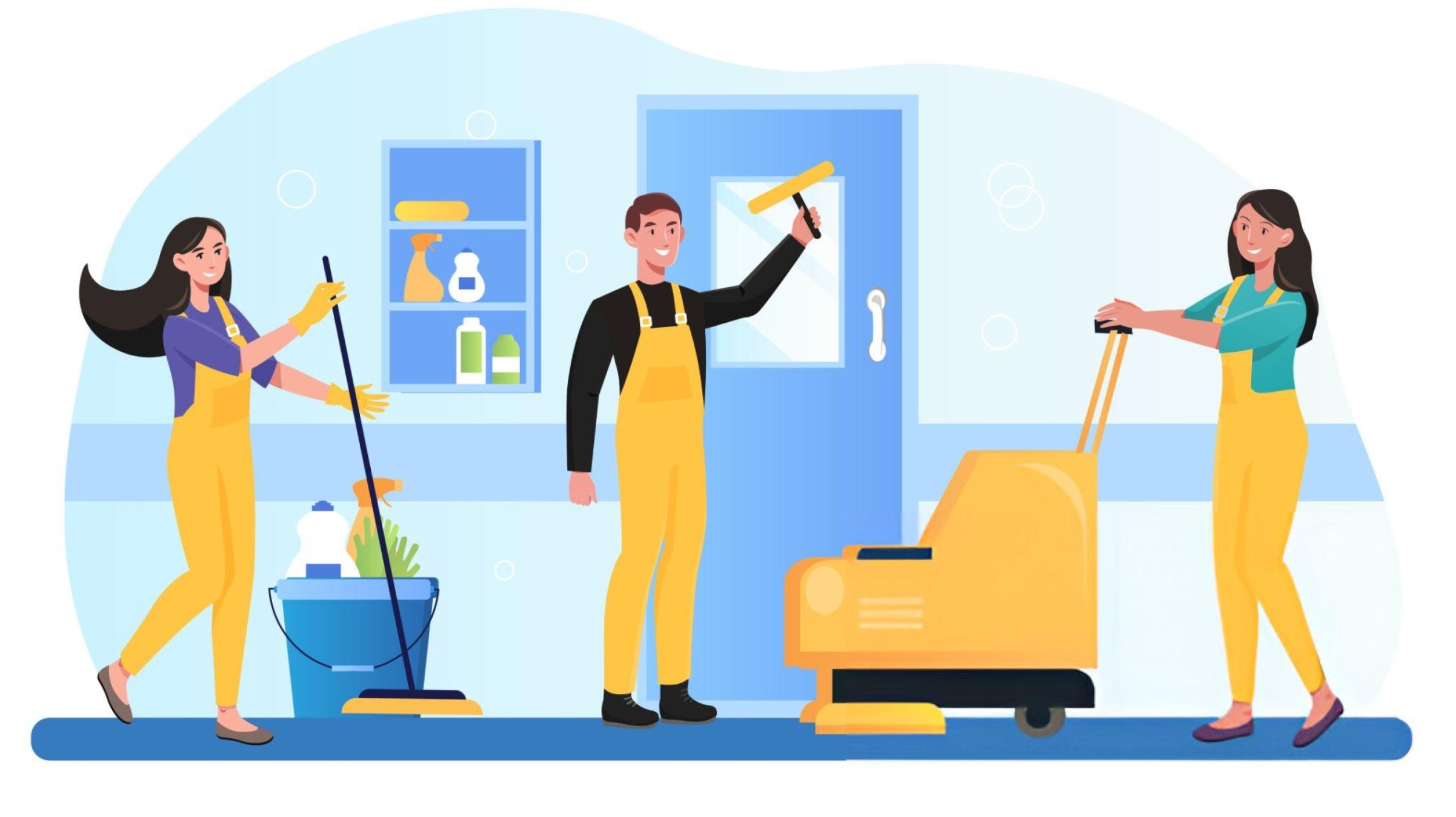
لا تقتصر عملية تدريب عمال النظافة على التعليم فقط. كيفية تنظيف الارضيات أو كيفية تعقيم الأسطح المختلفة. يتضمن ذلك بناء فريق عمل موثوق ومنتج وواعٍ أمنيًا، يلتزم بمعايير شركتك، بغض النظر عن موقعها أو أماكن عمل عملائها. لتدريب الموظفين الجدد أو صقل مهارات موظفيك الحاليين، يمكن لبرنامج تدريب تنظيف منظم بشكل صحيح أن يُحدث فرقًا كبيرًا في تحديد مستوى رضا العملاء، والاحتفاظ بالموظفين، والأداء العام.
سيتناول هذا الدليل طرق تدريب موظفي النظافة، وسينظر في مختلف أساليب التدريب حسب طبيعة مواقع العمل، وسيقدم موارد عملية لرفع مستوى مهارات موظفيك.
أهمية تدريب عمال النظافة
ينبغي أن ترتكز عملية التنظيف الناجحة على التدريب. فالعاملون في مجال التنظيف الذين لا يتلقون تدريباً متخصصاً أكثر عرضة لارتكاب الأخطاء، واستخدام معدات غير مناسبة، وإهمال إجراءات التنظيف والسلامة، وتقديم أداء متدنٍ. ويمكن للشركات تجنب هذه الأخطاء من خلال الاستثمار في برنامج تدريبي منظم.
- تحسين جودة الخدمةسيؤدي تدريب الموظفين بشكل صحيح إلى أداء أفضل، وتقليل خيبات أمل العملاء، ومستوى عالٍ من رضا العملاء.
- تعزيز السلامةأثناء عمليات التنظيف، يتعامل العمال مع مواد كيميائية وأجهزة كهربائية ومنتجات خطرة بيولوجيًا. لذا، ينبغي تدريب الموظفين على ممارسات السلامة لتجنب الحوادث والامتثال للمتطلبات القانونية.
- تعزيز الكفاءة: سيعمل الموظفون الذين تم تدريبهم على الممارسات والآليات والنظام الصحيح بكفاءة دون المساس بالسرعة أو الجودة.
- تقليل معدل دوران الموظفينعندما يشعر الموظفون الجدد بالدعم والتدريب الجيد، تقل احتمالية مغادرتهم، ولا تنفق المنظمة أموالاً على توظيف موظفين جدد وتكاليف التدريب.
كما يعكس برنامج التدريب الجيد الاحترافية والتوجه نحو التميز، مما سيجعل عملك يبرز في سوق تنافسية.
دليل خطوة بخطوة: كيفية تدريب عمال النظافة بفعالية
1. إنشاء برنامج تدريبي منظم لشركات التنظيف
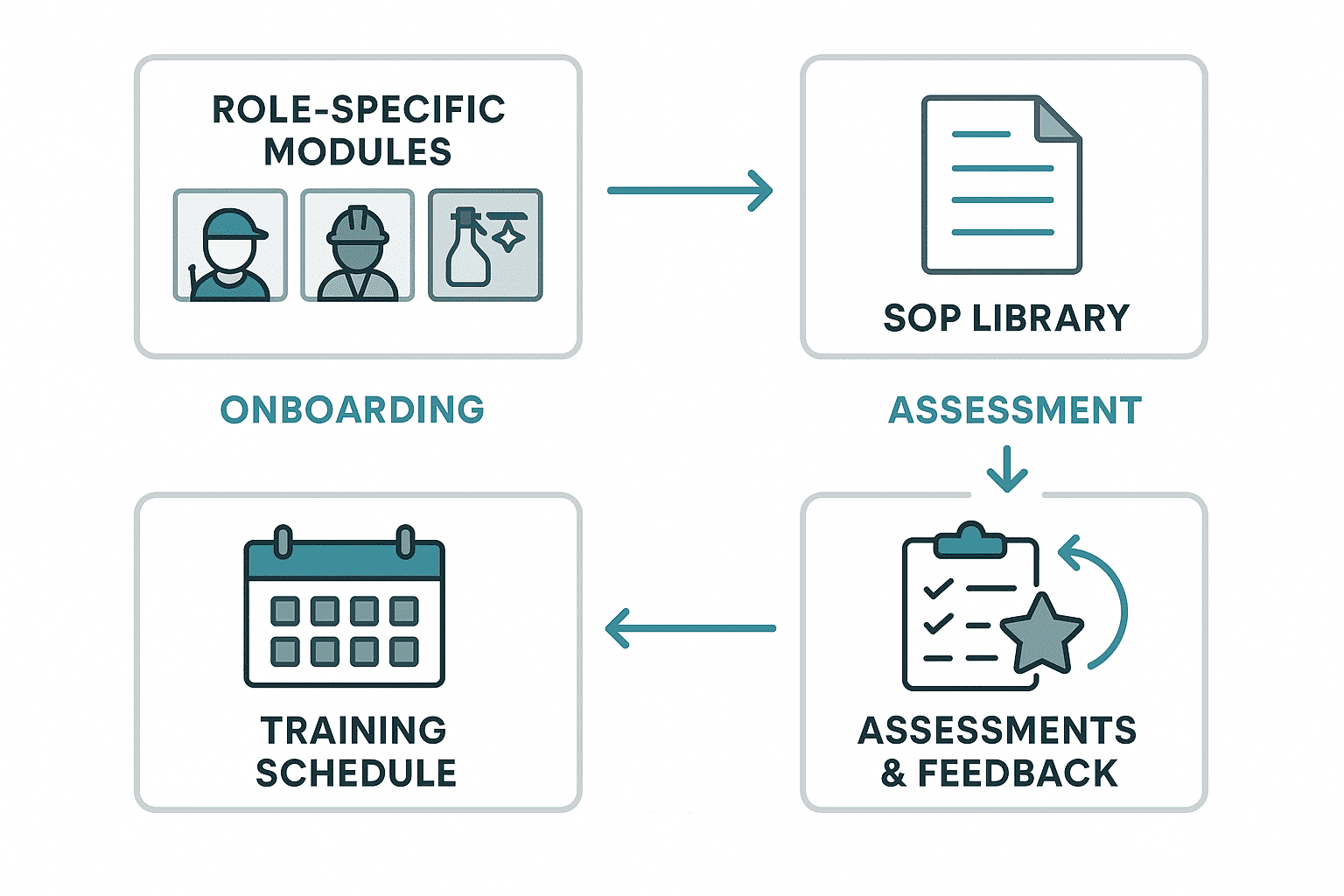
يبدأ التدريب الناجح ببرنامج مُحدد بوضوح. يجب أن تتضمن هذه البرامج أهدافًا محددة، وجداول زمنية، وموارد تعليمية، ومعايير تقييم. ينبغي أن يتضمن برنامج التدريب الجيد العناصر التالية:
- وحدات تدريبية خاصة بالوظيفة: قم بتخصيص وحدات التدريب وفقًا للملف الوظيفي، على سبيل المثال، عمال النظافة، أو المشرفين، أو عمال النظافة المتخصصين.
- أدوات التعلم التفاعليينبغي استخدام مقاطع الفيديو والكتيبات والاختبارات والعروض التوضيحية المباشرة لدعم أنماط التعلم المختلفة.
- جدول التدريب: تحديد الجداول الزمنية لعمليات التوظيف والتقييمات والدورات التنشيطية.
- إجراءات التشغيل القياسية (SOPs): تطوير سجلات للمعلومات العملية حول كيفية القيام بالمهام المختلفة، وماذا، وأين.
يمكنك التعاون مع شركات مثل Cleanstop Cleaning & Training Solutions من أجل استخدام هياكل التدريب والاعتماد القائمة بالفعل.
2. إعطاء الأولوية لشهادات التنظيف وبروتوكولات السلامة
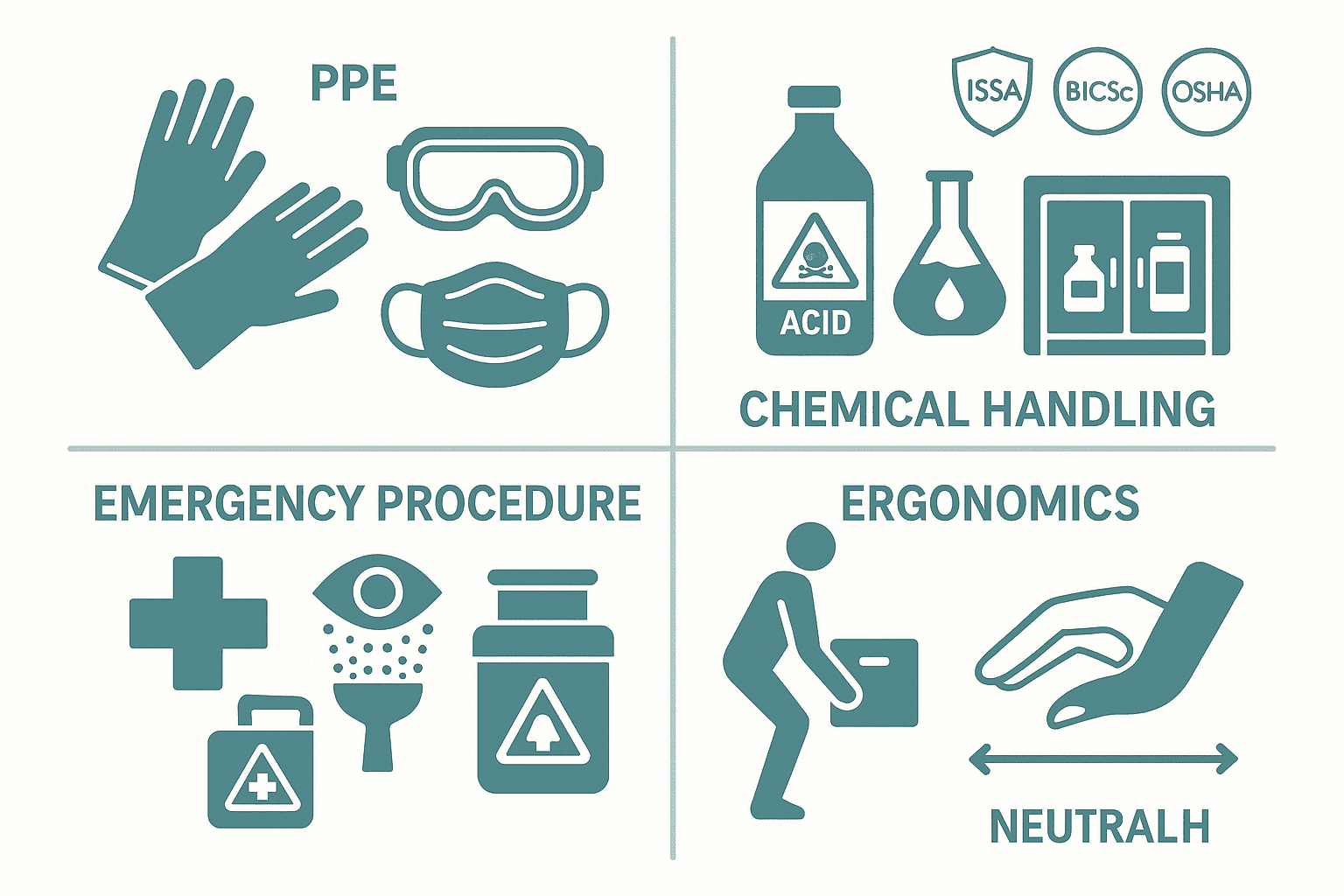
يتطلب هذا العمل جهدًا بدنيًا كبيرًا، وينطوي بشكل منتظم على التعامل مع مواد كيميائية خطرة. لذا، لا مجال للتساهل في التدريب على السلامة والحصول على الشهادات اللازمة. تشمل أبرز مجالات التدريب على السلامة ما يلي:
- الاستخدام السليم لمعدات الوقاية الشخصيةينبغي استخدام معدات الوقاية الشخصية، بما في ذلك القفازات والنظارات الواقية والأقنعة، بشكل صحيح لمنع الإصابة والتلوث.
- التعامل مع المواد الكيميائية: تدريب الموظفين على قراءة الملصقات، وإضافة المواد المخففة، وتخزينها بشكل آمن.
- إجراءات الطوارئناقش ما يجب فعله أثناء الانفجار الكيميائي أو التعرض للكهرباء أو الإصابة.
- بيئة العمل: إظهار ممارسات وأساليب جيدة لرفع أو تحريك الأشياء لتجنب الإجهاد أو الإصابات.
إن الحصول على هذا التقدير من هيئات رائدة مثل ISSA وBICSc يساعد في بناء مصداقيتك ويسمح للعملاء بمعرفة أن موظفيك يلبون معايير الصناعة.
3. الجمع بين التدريب العملي والمراقبة تحت الإشراف
يُسهم التدريب العملي في سد الفجوة بين النظرية والتطبيق. لذا، يُنصح بتكليف الموظفين الجدد بمرافقة مديري تنظيف ذوي خبرة يمكنهم تقديم نموذج لأفضل الممارسات. هذا النهج:
- يبني الثقةإن مراقبة سلوك الخبراء وتقليده يزيل صعوبات التعلم.
- إجراءات معززةينبغي تثقيف الموظفين الجدد حول متى وكيف ينبغي عليهم استخدام إجراءات التشغيل القياسية في المواقف الحياتية الواقعية.
- يشجع على تكامل الفريق: إن المراقبة تجعل الموظف الجديد يشعر بأنه جزء من الفريق وتزيد من الروح المعنوية والتواصل.
تابع تطور كل موظف جديد من خلال قوائم المراجعة وملاحظات المشرفين. يُمكّنك جمع هذه المعلومات من تحديد الموظفين الجاهزين للعمل بشكل مستقل والذين لا يزالون بحاجة إلى مزيد من التدريب.
4. تقييم الأداء وتقديم ملاحظات مستمرة
لا ينتهي التدريب بعد التوجيه. من الضروري مراقبة وتوجيه الموظفين بشكل مستمر للحفاظ على الجودة. قم بإجراء تقييمات أداء دورية تشمل ما يلي:
- تقييم المهارات: وفقًا لمعهد AIPD، يمكن قياس الكفاءة من خلال استخدام المهام التجريبية أو ملاحظات العملاء.
- مراجعات الأقراناطلب من الموظفين تقديم ملاحظات إيجابية لبعضهم البعض.
- خطط التحسين: تحديد نقاط الضعف وتوفير التدريب أو الإرشاد المناسب.
إن تسليط الضوء على أصحاب الأداء المتميز في المجال العام يمكن أن يحفز زملاءهم ويخلق جواً من المساءلة.
5. تشجيع التعلم المستمر
تتغير أساليب التنظيف والمعدات ومعايير الصحة بمرور الوقت. ويُسهم التعلم المستمر في إبقاء الموظفين على اطلاع دائم، وتحسين جودة الخدمة، ودفعهم قُدماً في مسيرتهم المهنية. شجع على:
- ورش عمل أو ندوات عبر الإنترنت ربع سنوية
- الوصول إلى الدورات التدريبية والشهادات عبر الإنترنت
- جلسات تدريبية يقدمها خبراء في المجال
- التدريب المتعدد: تدريب الموظفين على أدوار متعددة لتحسين المرونة والتغطية
إن الالتزام بالتعلم المستمر يعزز قدرة شركتك على التكيف وتحقيق نتائج متميزة استجابةً لمتطلبات العملاء المتنوعة.
التدريب على بيئات التنظيف المختلفة
لا توجد مهمة تنظيف متطابقة تماماً. يجب أن يعكس التدريب المتطلبات المحددة للبيئة ليكون فعالاً.
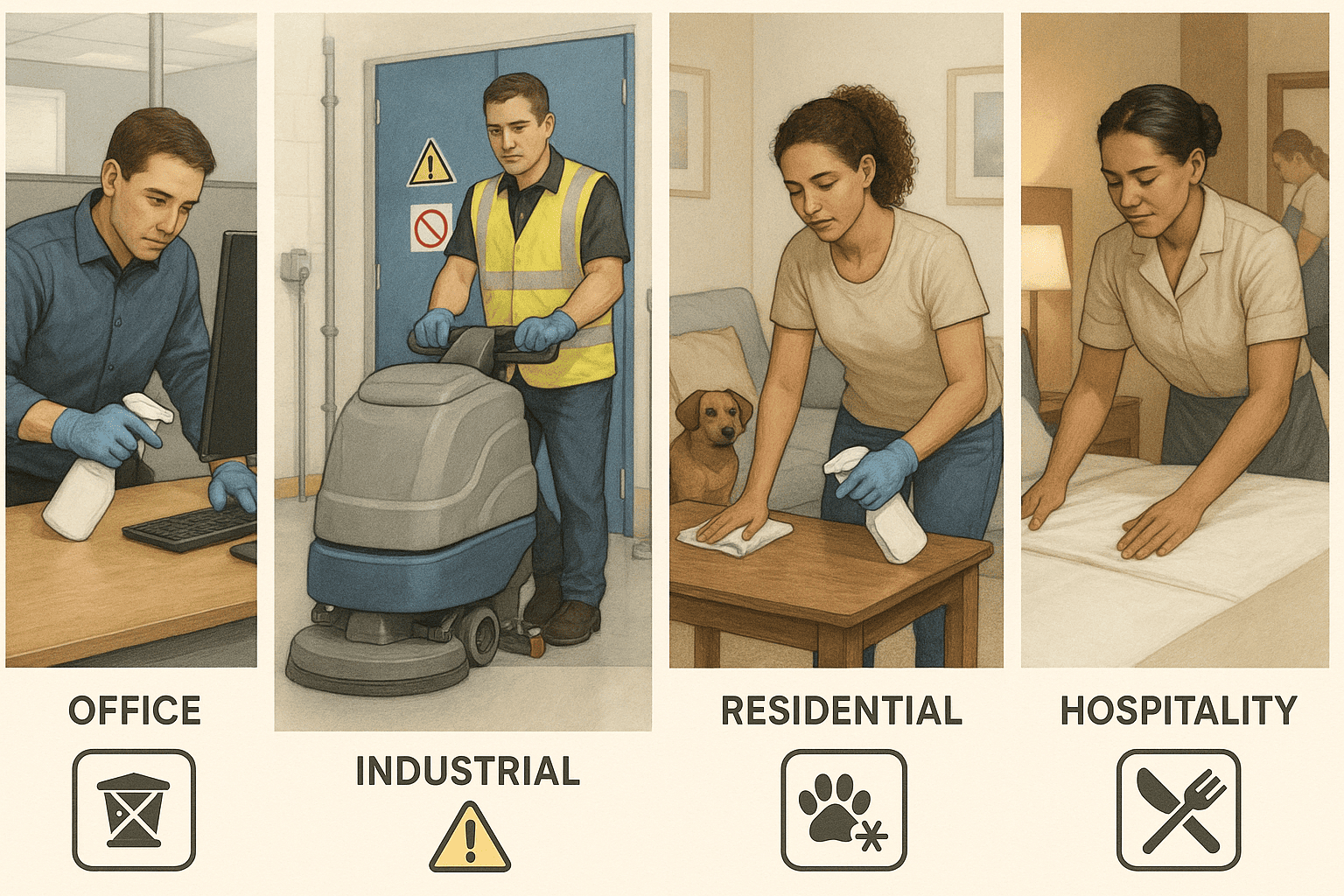
مساحات مكتبية
يجب إعطاء الأولوية لتنظيف الأسطح، والعناية السليمة بالأجهزة الإلكترونية، والحفاظ على سلوك مهني. ينبغي تدريب الموظفين تدريباً شاملاً على ما يلي:
- تنظيف وتعقيم المكاتب والهواتف وشاشات العرض
- التعامل الآمن مع نفايات المكاتب.
- التعامل مع الملفات الحساسة أو السرية باحترام تام.
المنشآت الصناعية
نظراً لأن هذه المناطق تنطوي على مخاطر أكبر، ينبغي أن يركز البرنامج التدريبي بشكل أساسي على ما يلي:
- تشغيل المعدات الثقيلة (مثل آلات تنظيف الأرضيات، والمكانس الكهربائية)
- الالتزام بمعايير السلامة والصحة المهنية (OSHA) والمعايير المماثلة
- إدارة المنتجات الخطرة والتخلص من النفايات.
المنازل السكنية
تُعدّ خدمة العملاء، إلى جانب الحفاظ على السرية التامة، أمراً بالغ الأهمية. وينبغي أن يتناول التدريب ما يلي:
- خدمات تنظيف مخصصة حسب تفضيلات العملاء
- سلامة الحيوانات الأليفة، إلى جانب الاهتمام بالحساسية.
- من خلال احترام الملكية الخاصة ومراعاة آداب التعامل المناسبة مع أصحاب المنازل.
أماكن الضيافة (الفنادق والمطاعم)
بيئات عمل ذات ضغط عالٍ تتطلب التركيز والنظافة. يجب تدريب الموظفين على ما يلي:
- إجراءات وخطوات ترتيب الأسرة، وممارسات التعامل مع البياضات
- تنظيف الأماكن الأكثر استخداماً ودورات المياه
- منع التلوث المتبادل في مناطق تقديم الطعام
للحصول على دليل كامل، اقرأ: كيفية تنظيف غرفة الفندق - دليل خطوة بخطوة.
اعتبارات خاصة للفرق العاملة عن بُعد أو الموزعة
توجد تحديات لوجستية في إدارة فرق العمل بين مواقع مختلفة أو حتى دول متعددة. إليك كيفية تدريب عمال النظافة لضمان اتساق التدريب والجودة:
- منصات التوظيف الرقمية: تقديم تعليمات الفيديو وقوائم المراجعة وغيرها من أوراق السلامة والمراجع مع التطبيقات أو البوابات الإلكترونية.
- قادة الفرق المعينون: تعيين موظفين أكثر خبرة مسؤولين عن المجموعات الإقليمية لتقديم الملاحظات وتوفير إعادة التدريب.
- تسجيلات دخول افتراضية منتظمةتتيح عمليات المتابعة عبر الفيديو الأسبوعية أو الشهرية الحفاظ على التواصل مفتوحاً والنظر في المشاكل قبل ظهورها.
- مستودع مركزي لإجراءات التشغيل القياسيةينبغي تخزين جميع مواد التدريب والتحديثات في نظام قائم على الحوسبة السحابية وأن تكون متاحة لجميع العاملين.
من خلال التوحيد الرقمي للتدريب، يمكنك تقليل الاختلافات بين الفرق وتحسين تقديم الخدمات بشكل عام.
أفضل 10 أدوات وموارد لتدريب عمال النظافة
- جيسون: يقدم قوالب ومواد تدريبية وأدوات داخلية لمساعدة الشركات على بناء بروتوكولات تنظيف متسقة وفعالة.
- حلول التنظيف والتدريب من كلين ستوب: متخصص في برامج تدريب إدارة موظفي التنظيف في الموقع وعن بعد للمهنيين في مجال التنظيف.
- برامج شهادات ISSAشركة عالمية رائدة في مجال شهادات النظافة والصرف الصحي.
- المعهد البريطاني لعلوم التنظيف (BICSc): يوفر التدريب والشهادات المعترف بها دوليًا.
- إرشادات التنظيف الصادرة عن إدارة السلامة والصحة المهنية (OSHA): يوفر موارد السلامة في مكان العمل ومعايير الامتثال.
- تدريبي: منصة سهلة الاستخدام لإنشاء أنظمة تدريب مخصصة.
- تم كنسها: برنامج خاص بخدمات النظافة مزود بميزات لتدريب الموظفين وتتبع أدائهم.
- كلين جوروبرنامج إدارة عمال النظافة الذي يتضمن مواد تدريب الموظفين وإجراءات التشغيل القياسية.
- يوتيوب (خبراء الصناعة): الوصول المجاني إلى آلاف العروض التوضيحية والنصائح المتعلقة بالتنظيف.
- جوجل كلاس روم أو منصات إدارة التعلم: المساعدة في تنظيم الدروس، وتحديد الاختبارات القصيرة، وتتبع التقدم في التعلم.
أخطاء شائعة يجب تجنبها أثناء تدريب موظفي النظافة
هذه بعض الأخطاء التي يجب تجنبها للحصول على تدريب فعال:
- غياب برنامج منظم: يؤدي ذلك إلى تفاوت جودة التنظيف وارتباك الموظفين.
- عدد هائل من الموظفين الجدد: يؤدي تقديم معلومات مفرطة في فترة زمنية قصيرة إلى إجهاد الموظفين الجدد، وانخفاض معدل الاحتفاظ بهم.
- تجاهل مخاطر السلامةيؤدي ذلك إلى إصابات ودعاوى قضائية قد تكون ضارة.
- تدريب لمرة واحدة فقط: هناك فقدان للمهارات، حيث لا توجد دورات تنشيطية.
- تدريب الموظفين عن بعد: ستؤدي هذه النسخة من التدريب إلى خدمات غير مترابطة بين الفرق.
يساعد اتباع نهج استباقي تجاه هذه المخاوف في تكوين قوة عاملة تنظيف متوازنة ومستقرة وكفؤة.
كيف تدعم شركة جيسون تدريب موظفي التنظيف لديكم
تقدم جيسون للشركات أدوات مرنة ومريحة تساعد على رفع مستوى تدريب موظفي النظافة. وسواءً أكان الأمر يتعلق بموقع واحد أو مؤسسة متعددة المواقع، فإن الحلول التي تقدمها جيسون تتضمن ما يلي:
- نماذج التدريب: ساعد في توفير الوقت من خلال إنشاء إجراءاتك وأدلتك الخاصة بناءً على القوالب.
- قوائم التحقق من الأداء: تتبع أداء الموظفين وتوحيد الخدمة.
- المشاركة عبر السحابة: يمكن مشاركة إجراءات التشغيل القياسية والتحديثات مع جميع الموظفين على الفور.
بفضل Jesun، يمكن لأصحاب الأعمال تبسيط عملية التوظيف، ومعالجة قضايا السلامة، وتعزيز إنتاجية جميع الموظفين.
خاتمة
إن تدريب فريق التنظيف ليس مجرد إجراء شكلي، بل هو خطوة استراتيجية لتوسيع نطاق أعمال التنظيف بثقة. فبفضل برنامج تدريبي منظم، يركز على السلامة، ويراعي البيئة المحيطة، يُمكن ضمان الاتساق والاحترافية لدى فريق العمل.
استثمر في موظفيك الآن وستحصل على أخطاء أقل، وعملاء راضين، وعمل أسهل في المستقبل. وذلك بمساعدة أدوات شركاء موثوقين، مثل... جيسونلم يكن نشر وتوسيع عملية التدريب الخاصة بك أسهل من أي وقت مضى.
اطلع على المزيد من المصادر على مدونتنا أو اتصل بنا للبدء.
الأسئلة الشائعة حول تدريب موظفي النظافة
س1: ما هي المدة التي يجب أن تستغرقها دورة تدريب عمال النظافة؟
يعتمد ذلك على مدى تعقيد الوظيفة. قد تتطلب الوظائف السكنية الأساسية من 3 إلى 5 أيام، بينما قد تتطلب الوظائف في البيئات الصناعية أسابيع من التدريب المكثف.
س2: هل أحتاج إلى تقديم شهادات لموظفي التنظيف لدي؟
على الرغم من أن تقديم الشهادات ليس شرطاً دائماً، إلا أنه يعزز الثقة بين الموظفين ويجعل خدماتك جديرة بالثقة.
س3: كم مرة ينبغي إجراء التدريب التنشيطي؟
يُفضّل إجراء دورة تنشيطية مرتين في السنة (كل 6-12 شهرًا). ومن المهم أيضًا إجراء دورة تنشيطية عند استخدام معدات أو إجراءات جديدة.
س4: ما هي أفضل طريقة لإدارة التدريب في مواقع متعددة؟
استخدم الأنظمة السحابية لمركزة المواد وتعيين مشرفين إقليميين لإجراء التقييمات ودعم الموظفين المحليين.
س5: هل يمكنني الاستعانة بمصادر خارجية لتدريب موظفي شركة التنظيف الخاصة بي؟
نعم. يمكن لخدمات الطرف الثالث مثل Cleanstop Cleaning & Training Solutions أو البرامج المعتمدة من ISSA أن توفر جلسات تدريبية بقيادة خبراء.








 Arabic
  English
  Spanish
  Russian