
Основные выводы
- Five head types cover almost every bathroom: silicone, nylon or PP bristle, TPR rubber, disposable, and electric rotating heads.
- Silicone wins on hygiene and chemical resistance. Stiff nylon bristles win on scrubbing power against hard-water scale and rust rings.
- The holder matters as much as the head. An enclosed, unventilated cup keeps bristles wet and turns the brush into a bacterial reservoir.
- Most household toilet brushes should be replaced every 3 to 6 months, or sooner once the bristles splay and stop reaching the water line.
- Match the brush to the bowl rather than to the shelf: rimless and square bowls need a flexible head, deep bowls need a longer handle.
Введение
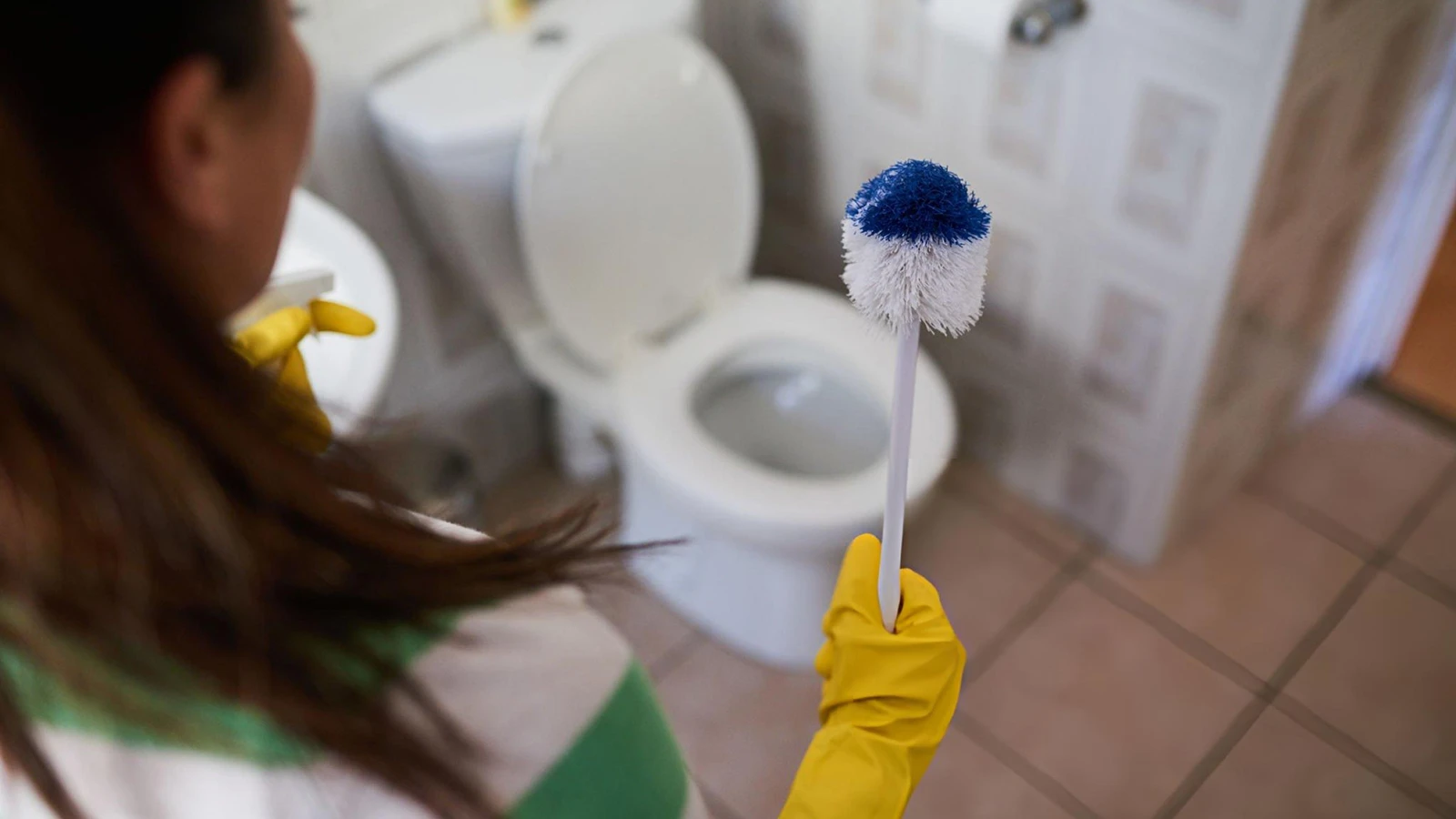
The main types of toilet brushes divide along one axis, and that axis is the material of the head. Silicone, nylon, polypropylene, TPR rubber, disposable non-woven pads and powered rotating heads each solve a slightly different problem, and the differences show up in three places. Specifically, they differ in how hard the head scrubs, how quickly it dries, and how long it survives contact with acidic descalers and chlorine bleach. Choosing badly is not a cosmetic problem either. A brush that cannot reach the water line leaves behind a ring that you will fight for months, while a brush that never dries becomes a reservoir that re-inoculates the bowl every time you use it. Two brushes that look identical on a shelf can therefore behave very differently after a month of real use. The head-to-head comparison between the two most common materials is in traditional vs silicone toilet brushes, and the narrow-gap tools that share the same bathroom in how to clean crevices.
That last point is the one most buyers miss, and it is the reason hygiene deserves more attention than scrubbing power. In a classic study of household toilets, researchers found that bacteria and viruses seeded into a bowl persisted after flushing and kept eluting from the porcelain over subsequent flushes (Gerba et al., 1975). Consequently, a wet brush sitting in a closed cup is exactly the kind of damp, nutrient-rich surface where that residual load accumulates. In our experience, the single biggest hygiene upgrade in a bathroom is not a more expensive brush but a holder that lets the head dry between uses. That is a design decision, and it costs nothing to get right. In other words, hygiene here is a function of airflow, material porosity and replacement timing rather than of how much you paid for the brush.
This guide walks through every common brush type, the holders they ship with, and the trade-offs that actually matter in daily use. In addition, it covers replacement intervals and the cleaning routine that keeps a brush usable between replacements. Notably, we manufacture toilet brushes across all of these categories, so the comparisons below come from our own product testing and from published hygiene research rather than from a shopping list. Where a claim depends on your bowl rather than on the product, we say so plainly instead of hedging.
The Five Main Types of Toilet Brushes at a Glance
Before the detail, here is the whole category on one page. Notably, the “best for” column is deliberately conditional, because a stiff nylon head is the right answer for a mineral-stained bowl and the wrong answer for a soft close-coupled suite with a delicate glaze. Use the table to narrow the field, then read the section that matches your situation.
| Тип | Материал головы | Scrubbing power | Hygiene and drying | Лучше всего подходит для | Typical life |
|---|---|---|---|---|---|
| Silicone | Moulded silicone fins or teeth | Умеренный | Excellent — non-porous, dries fast | Daily upkeep, hard water, bleach and acid cleaners | 12–24 months |
| Nylon bristle | Stiff extruded nylon tufts | Highest | Fair — traps debris between tufts | Scale, rust rings, neglected bowls | 3–6 months |
| PP bristle | Polypropylene tufts, softer | Умеренный | Fair to good | Everyday cleaning, budget sets | 3–6 months |
| TPR rubber | Thermoplastic rubber blades | от умеренного до высокого | Very good — rinses clean | Rimless and square bowls, splash-free scrubbing | 6–12 months |
| Disposable | Non-woven pad or foam, pre-loaded | Low to moderate | Excellent — used once, discarded | Guests, shared bathrooms, low-mobility users | One use |
| Electric rotating | Powered silicone or bristle head | High, with less effort | Good, depends on head | Large households, accessible cleaning | Head: 3–6 months |
The replacement intervals in the table are not guesses. Cleaning professionals quoted by ABC News put nylon and plastic toilet brushes at three to six months and silicone brushes at up to two years, which matches what we see in our own testing (ABC News, 2026). Use those figures as the calendar, and the signs in the next sections as the confirmation.
Three variations cut across those materials and are worth knowing by name. A brush-and-plunger combo pairs the two tools on one base, which suits a small bathroom where floor space is the real constraint. A wooden or bamboo handle replaces the plastic shaft for buyers who want a natural finish, and it needs to be kept clear of standing water because the wood swells at the joint. A mop-style brush replaces the hand-held head with a long-handled swivel head, which is the version to choose when bending over the bowl is the problem rather than the scrubbing itself. None of the three changes the hygiene rules above; they change who can use the tool comfortably and how much space it takes up.

JESUN Eco-friendly Wooden Handle Toilet Brush (AML09)
Wooden handle with a PP and PVC bristle head, 13.8×39.5 cm, 0.49 kg. The natural-finish option, best kept out of standing water so the handle joint stays tight.
Silicone Toilet Brushes: The Hygiene-First Option
A silicone toilet brush replaces bristle tufts with moulded fins, teeth or a flexible paddle. Because silicone is non-porous, there is nowhere for waste and moisture to hide between strands, so the head rinses under the tap and dries within minutes. That single property explains most of the category’s recent growth, and it is not a marketing invention. Microbiologists quoted in independent consumer testing make the same point: silicone heads tend to be more sanitary than plastic-bristled ones precisely because they dry quickly and trap less moisture and bacteria (BHG, 2026). For a tool that lives inches from a toilet bowl and is stored in a humid room, fast drying is a genuine functional advantage rather than a styling preference. It also means the brush is ready to use again immediately after rinsing.
Silicone also shrugs off chemistry that destroys nylon. Concentrated bleach, hydrochloric-acid descalers and enzymatic cleaners degrade nylon fibres over time, causing brittleness and shedding, whereas silicone is largely inert to them. As a result, a silicone head keeps its shape and flexibility far longer than a bristle head used with the same products. However, that durability comes with a trade-off, because soft fins do not bite into mineral scale the way stiff nylon tufts do. Consequently, a heavily stained bowl may need a separate descaler cycle before the silicone brush can do its work. For bathrooms already on a weekly routine, that limitation rarely matters in practice. Similarly, silicone does not absorb the smell of the cleaners used with it, so a head that is rinsed and dried stays neutral between cleans instead of carrying the last product into the next one.

JESUN Silicone Toilet Brush and Holder Set (B8)
PP and TPR head in a matching holder, 36.5×9.8×4.3 cm, 0.25 kg. OEM and ODM packaging available, 48 sets per carton.
Traditional Bristle Brushes: Nylon, Polypropylene and TPR
Bristle brushes remain the default because bristles scrub hardest. Stiff nylon tufts bite into hard-water rings, rust staining and dried residue the way a scrub pad does, and they flex into the curves of a bowl that a rigid paddle cannot follow. For a bowl that has been neglected for a season, nothing else in the category removes scale as quickly. Consequently, cleaning contractors and hotel housekeeping teams still buy bristle heads in volume, and the format is not going away despite the rise of silicone. For example, a commercial housekeeping cart typically carries one stiff head per floor rather than a single shared brush, because splaying happens fast under daily use. Importantly, the tufts on many commercial designs are replaceable, which stretches the value of the handle across several heads and reduces the cost of keeping a cart stocked.
The costs are maintenance and lifespan. Bristles splay with use, and once they splay they stop reaching the water line, so the ring you were fighting returns. In addition, the gaps between tufts hold debris and moisture, which is why a bristle brush needs rinsing after every use and open air to dry. We tested a nylon head twice a week in a hard-water bathroom and found visible splaying and discolouration within three to six months, while the same head used with bleach-based cleaners degraded faster still. TPR rubber sits between the two camps, with soft blades that rinse clean and resist splaying but only moderate scrubbing power.

JESUN Hard Bristle Double-sided Toilet Brush (KLB02)
Stiff double-sided head in PP and TPR, holder 12×21 cm and brush 37.5×8 cm, 0.26 kg. The stiff-bristle option for scale, rust rings and neglected bowls.
Disposable Toilet Brushes: The Single-Use Option
A disposable toilet brush pairs a reusable handle with a head you clip on, use once and drop into the bin. Usually the pad carries a cleaning solution, so the whole job takes one pass with no rinsing, no storage and no damp object left behind. For guest bathrooms, shared facilities and anyone with limited grip strength, that is a real improvement in hygiene, because the contaminated part of the tool leaves the building with the waste instead of sitting in a cup for three months. In addition, there is no cross-contamination between bowls when one handle serves several bathrooms, which matters in offices and rental properties. The handle stays clean throughout, so the next user picks up nothing unpleasant.
Two caveats matter before you switch. First, the running cost is higher than a reusable brush, because every clean consumes a head and heavy households will get through a pack quickly. Second, the pads are softer than bristles and scrub less aggressively, so a bowl with established scale still needs a manual scrub or a descaler soak. That said, disposables are not competing with a nylon brush for the same job. Consider them a hygiene and convenience product for light, frequent cleaning rather than a restoration tool for a neglected bowl. In practice, many homes keep one disposable set for the guest bathroom and a reusable brush everywhere else.
Electric and Rotating Toilet Brushes
Electric toilet brushes put a battery and a motor in the handle and spin the head, so the bristles do the scrubbing while you steer. Two groups benefit most. The first is anyone who finds the repetitive wrist motion of scrubbing painful, including people with arthritis, carpal tunnel syndrome or a recent injury. The second is households with several bathrooms, where a powered head shortens each clean and makes a routine easier to keep. Rotation also reaches under the rim more consistently than a hand-held brush, because the head keeps spinning while you hold it in one place. Notably, that consistency is what reduces the number of passes needed on a curved bowl. Consequently, a powered brush is best understood as a time-saving tool for routine upkeep rather than as a shortcut to removing years of scale.
Practical limits are worth knowing before you buy. Powered heads are heavier and bulkier than a standard brush, so they need a wider holder or a wall mount, and the charging routine is one more thing to remember each week. In addition, the motor does not remove the need for chemistry, since rotating bristles still cannot dissolve limescale. Therefore, a descaler remains part of the workflow on mineral-stained bowls. Heads wear out on the same three-to-six-month cycle as manual bristle heads, which means the replacement cost continues after the initial purchase.
Toilet Brush Holders: Open, Enclosed, Wall-Mounted and Self-Cleaning
The holder decides whether your brush dries, and drying decides how hygienic it stays. An open, ventilated holder lets air move around the head so moisture leaves between uses. An enclosed cup with no vents does the opposite, because it traps a warm, damp microclimate and keeps the bristles wet for hours after every clean. Therefore, when you compare brush sets, look at the holder before you look at the head. In fact, a ventilated cup with drainage slots at the bottom will do more for hygiene than any upgrade in bristle material, and it costs less than switching from nylon to silicone. Ventilation is the cheapest hygiene feature in the entire category.
Beyond airflow, the choice comes down to floor space and cleaning access. Floor-standing holders are stable and easy to empty, but they leave a ring of grime on the tile beneath them. Wall-mounted holders clear the floor and lift the brush out of splash range, which suits small bathrooms and rimless toilets. Self-cleaning and enclosed sets add a rinse or spin mechanism that washes the head in the cup, which is convenient, though the mechanism itself needs periodic descaling. Notably, whichever style you pick, the holder needs washing on the same schedule as the bowl rather than once a year. Skipping that step undoes the benefit of the design.
Traditional vs Silicone Toilet Brushes: The Real Differences
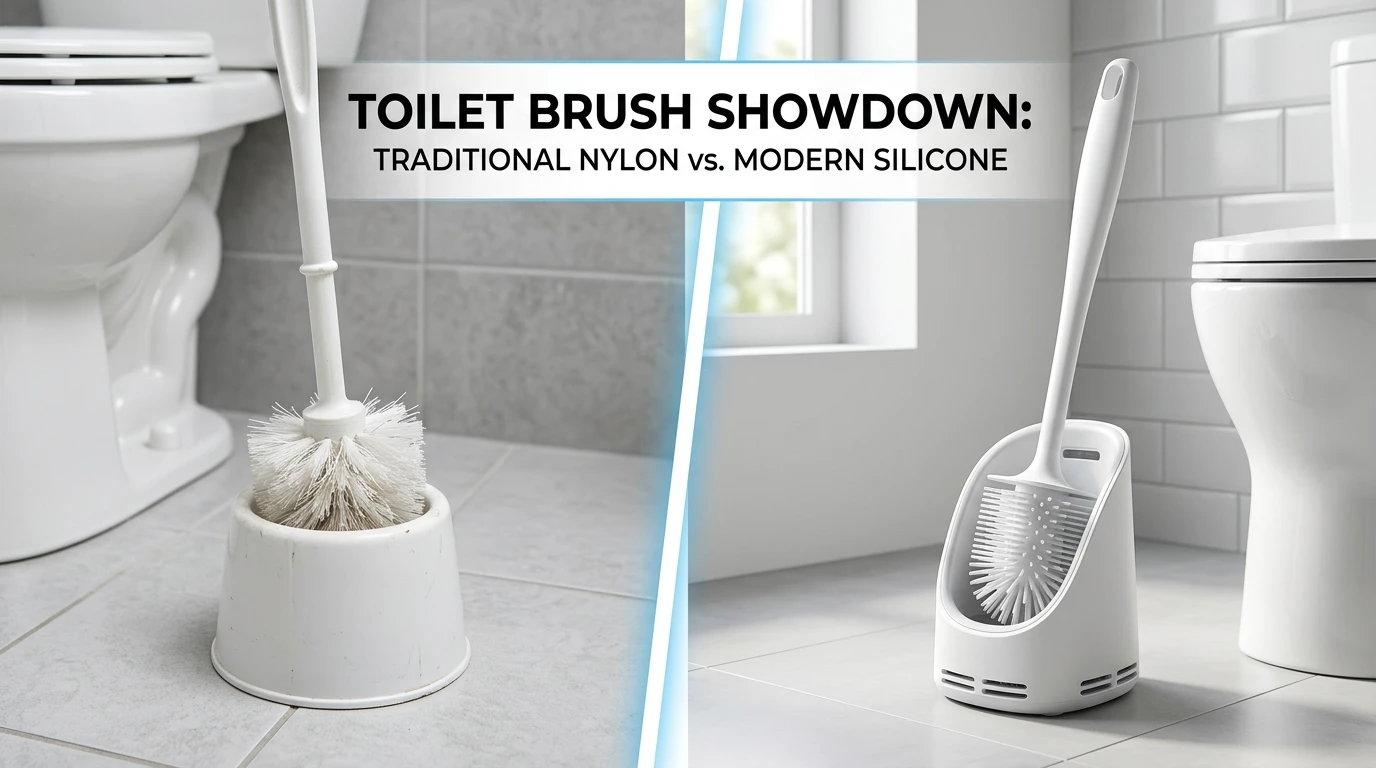
The traditional-versus-silicone question is really a question about which failure mode you would rather live with. Traditional bristle brushes fail by losing their shape: the tufts splay, the head stops reaching the water line, and the brush quietly becomes less effective while still looking perfectly usable. Silicone brushes fail by losing their edge on scale: the fins stay clean and flexible for far longer, but they never had the aggressiveness to strip heavy mineral deposits in the first place. Neither failure is fatal, and both are entirely predictable. Once you know which failure you can live with, the choice becomes straightforward rather than a matter of brand preference or price.
| Фактор | Traditional bristle | Silicone |
|---|---|---|
| Scrubbing power | Highest against scale and rust | Moderate; needs a descaler for heavy deposits |
| Drying speed | Slow; retains water between tufts | Fast; non-porous surface sheds water |
| Chemical resistance | Degrades with bleach and acid descalers | Largely inert to both |
| Shape retention | Splays within 3–6 months | Holds shape 12–24 months |
| Cost over time | Low unit price, frequent replacement | Higher unit price, fewer replacements |
| Best match | Neglected or heavily scaled bowls | Routine maintenance and hard-water prevention |
In our experience, the practical answer for most homes is to run both: a stiff bristle head for the deep clean you do monthly, and a silicone head for the quick daily pass. That combination keeps the bowl free of scale without forcing you to choose between scrubbing power and hygiene, and it costs very little because the two heads share a handle in most designs. Alternatively, if you want one brush and your bowl is already clean, silicone is the better default, because it will not degrade under the cleaners you use and it will still be in good condition a year later.
How to Choose the Right Toilet Brush for Your Bathroom
Start with the shape of the bowl, because geometry rules out more brushes than material does. A rimless toilet with a square or rectangular outlet needs a flexible head that can follow flat walls and corners. A deep, narrow bowl needs a longer handle and a head that reaches past the water line without your knuckles touching the rim. Meanwhile, a soft close-coupled suite with a delicate glaze is a poor home for a stiff nylon head that you might press too hard against the surface. Measuring the bowl depth before you shop takes ten seconds and prevents most returns.
Then weigh five practical points:
- Head geometry. Angled or flexible heads reach under the rim; round flat heads clean the bowl floor well but miss the rim channel.
- Handle length and grip. Longer handles keep hands clear of splash, and rubberised grips help if the brush gets wet.
- Holder airflow. Choose ventilated or wall-mounted over an unvented cup, and check that the cup actually drains.
- Cleaner compatibility. If you use bleach or acid descalers weekly, silicone or TPR will outlast nylon by a wide margin.
- Replacement supply. Confirm you can buy spare heads, or budget for a full replacement every few months.
Finally, consider who will use it. In a shared or guest bathroom, the disposable format removes the awkward question of what happened to the brush since the last visit. In a family home with three bathrooms, one durable silicone set per bathroom plus a powered head for the busiest one usually covers everything without cluttering the floor with extra holders.
How to Clean a Toilet Brush (and When to Replace It)
Cleaning the brush is a two-minute job that most people skip entirely. Rinse the head in the bowl after every use, shake it out, and let it dry in a ventilated holder rather than dropping it straight back into a closed cup. Once a week, wash the head in hot soapy water or a diluted disinfectant, then wash the holder as well, because the cup collects the same residue as the bowl and cleaning one without the other simply re-contaminates the brush. For reference, public health guidance is that cleaning with soap and water removes most germs in ordinary household settings, and disinfection is reserved for when someone is sick (CDC, 2025). Following that order keeps the routine short.
Replacement is the part people delay. A brush is finished when the bristles splay outward and no longer reach the water line, when the head discolours permanently, or when it develops a smell that persists after washing. In practice, that means every three to six months for a nylon head, and every 12 to 24 months for silicone. In addition, replace the brush after any bout of illness in the household, and after cleaning a bowl with a heavy mould or biofilm problem. Consequently, buying a set with replaceable heads is usually cheaper over two years than replacing the whole brush each time.
Часто задаваемые вопросы
Which type of toilet brush is the most hygienic?
Silicone is generally the most hygienic reusable option, because it is non-porous, rinses clean and dries quickly. Disposable heads are hygienic by design since they are used once and discarded. Bristle brushes can be kept sanitary, but they need rinsing after every use and open airflow to dry.
Are silicone toilet brushes as good as bristle brushes at scrubbing?
No. Stiff nylon bristles remove hard-water scale and rust staining faster than silicone fins. Silicone keeps the bowl clean between deep cleans and resists the bleach and acid descalers that degrade nylon. Many homes run both and use each for its strength.
How often should I replace a toilet brush?
Replace a nylon or PP bristle head every three to six months, and a silicone or TPR head every 12 to 24 months. Replace sooner if the bristles splay, the head discolours permanently, or a smell persists after washing. Always replace after an illness in the household.
Does the toilet brush holder matter?
It matters as much as the head. An unventilated enclosed cup keeps the head wet for hours and encourages bacterial growth, while a ventilated or wall-mounted holder lets the brush dry between uses. Whichever you choose, wash the holder weekly along with the brush.
Is a disposable toilet brush worth the running cost?
For guest bathrooms, shared facilities and anyone with limited grip strength, yes. The head leaves with the waste, so nothing contaminated is stored, and there is no cross-contamination between bowls. For a heavily scaled bowl, a disposable pad is not a substitute for a stiff bristle brush or a descaler.
Sourcing toilet brushes for your market?
We manufacture silicone, TPR, bristle and disposable toilet brush sets, including ventilated holders and wall-mounted designs, with OEM and ODM support and low MOQs.
Request Wholesale Pricing →Заключение
Every type of toilet brush on the market trades scrubbing power against hygiene, and the right answer depends on the bowl in front of you rather than on the price tag. Silicone gives you a head that dries fast, survives bleach and acid cleaners, and holds its shape for a year or more. Stiff nylon bristles give you the raw aggression to strip scale from a neglected bowl, at the cost of splaying within a few months. Disposables solve hygiene and access in shared bathrooms, and powered heads reduce the physical effort of keeping several bathrooms clean. Meanwhile, the holder quietly decides how well any of them performs between washes.
Whatever you choose, buy the holder with the same care as the head, wash both weekly, and replace on schedule rather than on appearance. Our team builds toilet brush sets across all five categories, and we are happy to talk through which configuration suits your market.
Ссылки
- Gerba CP, Wallis C, Melnick JL — “Microbiological Hazards of Household Toilets: Droplet Production and the Fate of Residual Organisms,” Applied Microbiology 30(2):229–237, 1975. journals.asm.org/doi/10.1128/am.30.2.229-237.1975
- US Centers for Disease Control and Prevention — “When and How to Clean and Disinfect Your Home.” cdc.gov/hygiene/about/when-and-how-to-clean-and-disinfect-your-home.html
- ABC News — “How often should you change your toilet brush?” (cleaning professionals quoted on nylon brushes at three to six months and silicone at up to two years). abc.net.au/news/2026-04-04/how-often-should-you-change-your-toilet-brush/106503772
- Better Homes & Gardens — “The 5 Best Toilet Brushes of 2026, Tested for Scrubbing.” bhg.com/best-toilet-brushes-6891820
This guide was written by the JESUN Cleaning Tools Team and reviewed by our product engineering group. You can read more about us или contact our team with questions about toilet brush specifications.
Continue Learning
- За пределами унитаза: глубокая очистка туалетного ёршика — how to sanitise the tool itself, not just the toilet.
- Toilet brush catalog — silicone, TPR, bristle and disposable sets with holders.




 Russian
 English
 Spanish
 Arabic