
Основные выводы
- Seven duster types cover the home: feather, microfiber, chenille, lambswool, electrostatic, disposable and extendable or bendable heads.
- Microfiber and damp cloths trap dust; traditional feather dusters mostly move it into the air, which matters if anyone in the house has allergies.
- Match the head to the surface: soft fibre for screens and electronics, chenille or microfiber for blinds and slats, extendable heads for ceilings and fans.
- Wash fibre dusters every 4–8 weeks and replace them when the fibres mat, because a loaded duster redistributes dust rather than removing it.
- Dust top-down and finish with the floor, so nothing you knock loose lands on a surface you have already cleaned.
Введение
The main types of dusters differ in how they hold on to dust, and that single property explains almost every other difference between them. Feather dusters brush dust off a surface and leave it airborne. Microfiber attracts it electrostatically and holds it in the fibres. Chenille traps it in soft tufted fingers that reach between slats. Lambswool lifts it from delicate surfaces without scratching. Electrostatic and disposable heads are engineered specifically to capture rather than displace. Extendable heads solve reach rather than capture. Choosing well means knowing which of those behaviours you actually want in a given room. For the tools that work the floor rather than the surfaces, see types of carpet sweepers, and for the schedule that keeps either one working, when to replace a cleaning brush.
The distinction matters more than it sounds, because airborne dust does not disappear. It settles again within hours, often on the surface you just cleaned, and it carries allergens with it. Public health guidance is explicit about this: dust mites live in house dust and feed on shed skin, and they are a common trigger for allergy and asthma symptoms, which is why regular dusting is treated as a health measure rather than a cosmetic one (EPA, 2025). Consequently, a duster that traps dust is doing a different job from one that simply moves it, and the difference shows up in the air quality of the room.
This guide covers seven duster types, the surfaces each one suits, and the damp-versus-dry question that decides most of the outcome. In addition, it covers washing intervals and the signs that a duster needs replacing. Notably, we manufacture fibre, chenille and extendable dusters, so the comparisons below draw on our own product testing. In addition, we tested each head on the same dusty shelf so the pickup difference was visible rather than theoretical.
Start With the Surface, Not the Duster
Every guide to dusters, including the rest of this one, is organised by duster type. That is the wrong way round when you are standing in a room with a cloth in your hand, because the surface decides the tool rather than the other way about. Consequently, start here and use the type sections that follow only for the detail. The decision takes four questions, and most rooms resolve after the first two.
- Is the surface fragile? Screens, lenses, lacquer and unfinished wood are dry-only and soft-only: a microfiber or lambswool head, no moisture, light pressure.
- Does the dust sit in a gap? Slats, vents, radiators and grilles need tufted fingers, which means chenille rather than a flat cloth.
- Is it out of reach? Ceilings, fans, cornices and wardrobe tops need a pole. Reach decides whether the job happens at all.
- Is anyone in the house allergic? If so, trap the dust rather than move it: damp microfiber on hard surfaces, a vacuum brush attachment on fabric, and no dry feather wand.
Those four questions cover the whole category. Everything after this section is the reasoning behind them, plus the wash intervals and replacement signals that keep whichever head you choose working. In our experience, buyers who answer the four questions first end up with two dusters instead of five, and they use both of them.
The Seven Duster Types at a Glance
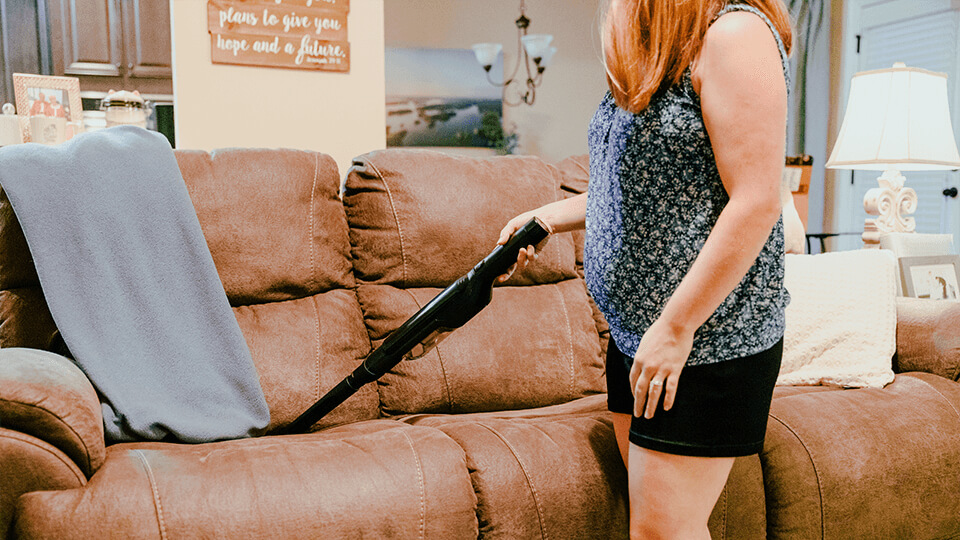
The table below sorts the category by how each head captures dust and where it works best. In contrast to a single all-purpose duster, most homes benefit from two or three heads rather than one, because the surfaces differ so much in fragility and shape. Notably, the head that is best for a screen is the worst possible choice for a set of blinds. The vacuum duster in the last row is included for completeness: a soft brush attachment on a vacuum hose does the same job as a hand duster on blinds, vents and upholstery, but it collects the dust into a filter rather than holding it in fibres, which is why it suits allergy households better than a dry wand.
| Тип | How it captures dust | Best surfaces | Washable | Typical life |
|---|---|---|---|---|
| Feather | Brushes dust off; mostly displaces it | Delicate ornaments, quick touch-ups | Rarely | 12–24 months |
| Микрофибра | Electrostatic attraction, traps in fibres | Furniture, screens, blinds, hard surfaces | Yes, machine washable | 12–24 months |
| Chenille | Tufted fingers trap and lift | Blinds, slats, vents, radiators | Yes, gentle cycle | 12–18 months |
| Lambswool | Fine fibres hold dust without scratching | Polished wood, glass, delicate finishes | Yes, hand wash | 12–24 months |
| Electrostatic | Charged fibres attract and hold particles | Ceilings, walls, large flat areas | Sometimes; charge fades | 6–12 months |
| Disposable | Pre-treated pad captures on contact | Quick passes, hard-to-reach ledges | Нет | One use |
| Extendable | Depends on the head fitted; adds reach | Ceiling fans, high shelves, cornices | Depends on the head | 12–24 months |
| Vacuum duster | A brush attachment on a vacuum hose | Blinds, vents, skirting, upholstery, car interiors | Filter dependent | Brush attachment: 12–24 months |
Feather Dusters
A feather duster is the oldest design in the category and the least effective at removing dust, because its barbs brush particles into the air rather than holding them. That said, it still has a place. Feathers are extremely soft, so they are safe on fragile ornaments, dried flowers and dusty picture frames where anything stiffer would catch or scratch. The traditional ostrich-feather duster is also fast for a quick pass over a shelf, and it looks better than a plastic wand in a living room. Consequently, the honest recommendation is to treat a feather duster as a display-and-touch-up tool rather than a cleaning tool.
The allergy caveat is the important one. If anyone in the house has asthma or dust-mite sensitivity, a feather duster is the wrong choice for regular use, because it puts fine dust back into the air and holds it there. Public health sources recommend reducing everyday dust build-up by dusting with a damp cloth rather than a dry brush for exactly this reason, and damp methods trap particles instead of suspending them (EPA, 2025). In our testing, a feather duster moved visibly less dust off a shelf than a microfiber head, and the surface was dusty again within a day. Feathers are also difficult to wash, so a used feather duster tends to stay loaded with dust until it is replaced. However, it remains the safest option for dried flowers and fragile ornaments where anything stiffer would catch.
Тряпки из микрофибры

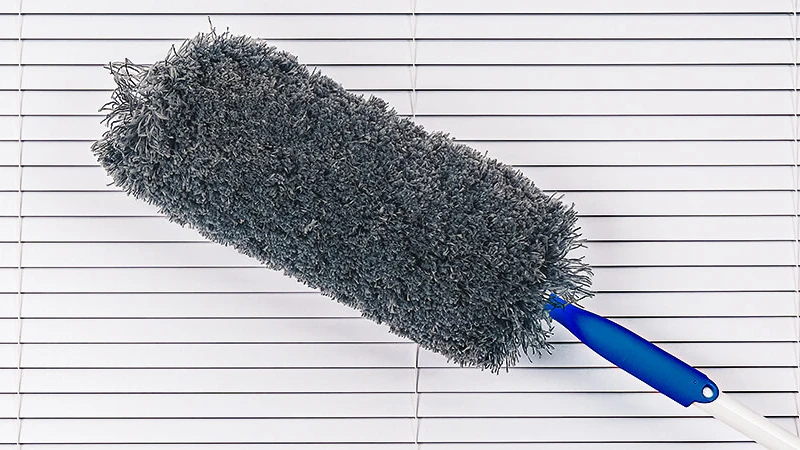
A microfiber duster is the default recommendation for most household dusting, because the fibres attract particles electrostatically and hold them until you wash the head. That means the dust leaves the surface instead of moving into the air, which is the outcome that matters for both cleanliness and indoor air quality. The heads are usually machine washable, so a microfiber duster can be restored rather than replaced, and the fibre stays effective across many washes. For furniture, skirting boards, window sills and hard surfaces generally, it is the fastest tool that actually removes what it touches.
Two variations are worth knowing. A microfiber wand with a flexible or swiveling head reaches the top of a bookshelf or a picture rail without a step ladder, which is where most household dust collects unnoticed. A microfiber mitt or glove suits balustrades, chair backs and blinds, because you can wrap your hand around the shape rather than pushing a head into it. In our experience, the combination of one long-handled microfiber duster and one mitt covers most of a house, and both can go in the washing machine. Meanwhile, a microfiber head used dry on a screen or a lens is safe, whereas a damp one can leave streaks. For example, a dry microfiber sleeve cleans a monitor without water marks, while a damp cloth leaves a film that shows under light.

JESUN Microfiber Feather Duster with Adjustable Handle (L7-P)
Steel and microfiber head, 46.5×5 cm, on a pole that adjusts from 81 to 245 cm, 0.26 kg. The extendable microfiber sleeve we recommend for high shelves, cornices and ceiling fans.
Chenille Dusters
A chenille duster is built from soft tufted fingers rather than flat fibre, and those fingers are what make it good at slats and gaps. Push a chenille head into a set of blinds or across a radiator, and the tufts reach between the surfaces and lift the dust out rather than pushing it along. That geometry is why chenille is the standard head for blind cleaning, and why it also works well on vents, grilles and the fins of a radiator. The material is soft enough for painted and polished surfaces, so it rarely scratches anything it touches.
The trade-off is cleaning the duster itself. Chenille tufts hold a lot of dust, which is the point, but they also take longer to rinse out, and a heavily loaded head needs a gentle cycle rather than a hot wash to avoid matting. In addition, chenille tends to shed a little fibre when new, so it is worth shaking it out before the first use on a dark surface. Notably, a chenille head used on a slatted blind removes far more dust per pass than a flat cloth, because the tufts make contact with three surfaces at once instead of one. Similarly, a chenille head clears a radiator grille far faster than a flat cloth that only reaches the front face.

JESUN Bendable Chenille Microfiber Duster (BS-09)
Chenille head on a bendable steel core, 127–177 cm, 0.43 kg. The tufted fingers reach between slats and vents, and the bendable shaft lets the head follow the shape it is cleaning.
Lambswool and Natural-Fibre Dusters
A lambswool duster uses fine natural fibres to pick up dust from polished and delicate surfaces without scratching them. Its advantage is gentleness rather than raw pickup: the fibres are soft enough for lacquered wood, glass, brass and antique finishes, where a synthetic brush might leave fine marks. Lambswool also holds a static charge reasonably well in dry conditions, which helps it retain what it lifts. For a room with a lot of polished furniture, it is often the tool that gets used most, because it is fast and it never scratches.
Care is where natural fibres demand more than synthetics. Lambswool should be hand washed in cool water with a mild detergent, then air dried away from direct heat, because a hot wash or a tumble dryer mats the fibres permanently. It should also be kept away from damp storage, since natural fibres absorb moisture and can develop a smell. Meanwhile, sisal and other plant fibres behave differently again: they are more abrasive and better suited to outdoor furniture and rough surfaces than to a polished interior. In our experience, a lambswool duster that is washed twice a year and stored dry stays effective for well over two years. In our experience, the failure mode for lambswool is almost always a hot wash rather than wear.
Electrostatic and Disposable Dusters
Electrostatic dusters use charged fibres to attract and hold particles, and they are usually sold with a disposable or semi-disposable head. They are excellent on large flat areas such as ceilings, walls and the tops of high furniture, where the goal is to cover ground quickly rather than to be gentle. The charging effect fades with use and with washing, however, so an electrostatic head is a consumable rather than a long-term tool. That is not a flaw in the design; it is simply what the technology costs to run.
Disposable dusters extend the same logic to convenience. A pre-treated pad captures dust on contact and is then discarded, which removes the washing step entirely and suits occasional jobs such as a rental changeover or a spring clean. For example, a disposable pad is the fastest way to clear a high ledge that only gets attention once a year, and there is no loaded duster left in a cupboard afterwards. The counterpoint is running cost and waste, so most households use disposables for the awkward jobs and keep washable microfiber for the routine ones. Consequently, the running cost stays low while the awkward jobs still get done.
Extendable and Bendable Dusters
An extendable duster solves reach rather than capture, and reach is where most household dust actually lives. Ceiling fans, cornices, the tops of wardrobes, high shelves and light fittings collect dust for months precisely because nobody wants to fetch a ladder. A telescopic handle removes that barrier, and a bendable head lets you follow a fan blade or reach over the top of a cabinet without changing your grip. Consequently, this is the duster that changes how often the job gets done rather than just how well it is done.
Two specifications matter when you buy one. First, the handle should lock firmly at each extension, because a pole that slips mid-reach is worse than a step ladder. Second, the head should be replaceable or washable, since the pole outlasts the head by a wide margin. In addition, choose the head for the job: a microfiber sleeve for general surfaces, a chenille head for slatted vents and a soft fibre head for anything delicate. In our testing, a locking telescopic pole with a washable microfiber sleeve handled ceiling fans, high shelving and cornices, which covers nearly every hard-to-reach surface in a home. As a result, the duster that gets used most is often the one that requires the least effort to reach for.
Damp vs Dry Dusting: What Actually Traps Dust
Whether you dust damp or dry decides the outcome more than the duster does. A dry method lifts dust and holds it in fibres or releases it into the air, depending on the material. A damp method wets the particles so they stick to the cloth and cannot become airborne at all. Public health guidance recommends a damp cloth for routine dust reduction for that reason, and it also recommends controlling indoor humidity, since high humidity encourages dust mites and mould to thrive (EPA, 2025). For anyone with allergies in the house, damp dusting is the more effective routine.
Not every surface tolerates damp, however. Electronics, screens, unfinished wood and some antique finishes should be dusted dry, with a microfiber head that traps rather than displaces. A practical compromise is to dust hard surfaces damp, dust delicate surfaces dry with microfiber, and finish with a vacuum pass on carpets and upholstery where dust settles between cleans. Notably, the order matters as much as the method: work top-down so that anything you knock loose falls onto surfaces you have not yet cleaned, and finish with the floor. That sequence alone reduces the amount of dust that ends up back in the air. Importantly, finishing with the floor means the debris you dislodged is collected rather than left to settle again overnight.
Matching the Duster to the Surface
Work from the surface outward and the choice becomes straightforward. The list below covers the common cases in a home.
- Screens, electronics and lenses: dry microfiber only, with light pressure and no moisture.
- Blinds, vents and radiators: chenille head, worked between the slats rather than across them.
- Polished wood and antique furniture: lambswool or a soft microfiber head, dry.
- Skirting, sills and hard furniture: microfiber, damp if the finish allows it.
- Ceiling fans, cornices and high shelves: extendable pole with a washable microfiber or chenille head.
- Fragile ornaments and dried flowers: feather duster, accepting that it displaces rather than traps dust.
- Ceilings and walls: electrostatic head, or a damp microfiber mop for large areas.
If you buy only three dusters, buy a long-handled microfiber duster, a chenille head for slats and vents, and a soft lambswool or microfiber head for delicate finishes. That combination covers trapping, reaching and gentleness, which are the three problems a single duster cannot solve at once.
Dusting Problems and What Causes Them
Most dusting complaints have a mechanical cause rather than a product fault. Use the table to diagnose the symptom before buying anything new.
| Symptom | Usual cause | Fix |
|---|---|---|
| Surfaces are dusty again within a day | Dry dusting moved the dust into the air instead of trapping it | Switch to a damp microfiber pass on hard surfaces, and vacuum fabric rather than brushing it |
| The duster leaves streaks or smears | Too much moisture on a finish that should stay dry | Use a dry head on screens, lacquer and unfinished wood; save damp dusting for sealed hard surfaces |
| Fibres are left behind on the surface | The head is shedding because it is matted or worn | Wash it; if it still sheds, replace the head |
| The head stops picking anything up | It is loaded and has become a redistribution tool | Machine wash microfiber, hand wash lambswool, shake out chenille |
| Dust returns along the top edge of a shelf | Worked bottom-up, so dislodged dust settled on cleaned surfaces | Dust top-down and finish with the floor |
Cleaning and Replacing Dusters
A loaded duster stops cleaning and starts redistributing, so washing is not optional. Machine wash microfiber heads every four to eight weeks on a warm cycle without fabric softener, since softener coats the fibres and reduces their ability to hold dust. Hand wash lambswool in cool water and air dry it away from heat. Shake chenille heads out after every use and wash them gently when they begin to look matted. Meanwhile, hang every duster rather than storing it in a cupboard against other cloth, because a compressed head loses the loft that makes it work.
Replacement follows fibre condition rather than appearance. A duster is finished when the fibres mat into flat clumps, when it sheds fibre onto the surface it is cleaning, or when washing no longer restores its loft. In practice that is twelve to twenty-four months for a washable microfiber head, twelve to eighteen months for chenille, and six to twelve months for an electrostatic head whose charge has faded. An NSF International study reported by Consumer Reports found coliform bacteria on 75% of sampled household sponges and rags, and extension services make the same point about cleaning cloths that are not washed and dried between uses (Consumer Reports, 2025). A duster is a cleaning cloth with a handle, so the same rules apply. That said, a duster stored compressed in a cupboard will mat long before a washed one that is hung to dry.
Часто задаваемые вопросы
What are the main types of dusters?
Seven types cover most homes: feather, microfiber, chenille, lambswool, electrostatic, disposable and extendable or bendable dusters. They differ mainly in how they capture dust, which decides whether they remove it or simply move it into the air.
Are feather dusters or microfiber dusters better?
Microfiber is better for routine cleaning, because it attracts dust electrostatically and holds it until you wash the head. A feather duster brushes dust into the air, which is a problem for anyone with allergies. Feathers are still useful for fragile ornaments where nothing stiffer is safe.
Should I dust with a damp or a dry cloth?
Damp for hard surfaces, dry for electronics, screens and unfinished wood. A damp cloth traps particles so they cannot become airborne, which is why public health guidance recommends damp dusting for reducing household dust. Dry microfiber is the safe choice wherever moisture could cause damage.
How do I clean a duster?
Machine wash microfiber heads every four to eight weeks on a warm cycle with no fabric softener, hand wash lambswool in cool water and air dry it, and shake chenille heads out after every use. Store dusters hanging rather than compressed in a cupboard, so the fibres keep their loft.
How often should a duster be replaced?
Every twelve to twenty-four months for washable microfiber and lambswool, twelve to eighteen months for chenille, and six to twelve months for an electrostatic head once its charge fades. Replace sooner if the fibres mat into flat clumps or shed onto the surface you are cleaning.
Sourcing dusters for your range?
We manufacture microfiber, chenille, lambswool and extendable dusters, plus disposable and electrostatic heads, with OEM and ODM support from low MOQs.
Request Wholesale Pricing →Заключение
Dusters are sorted by how they hold on to dust, and that property decides which one belongs in which room. Microfiber traps dust and is the right default for hard surfaces and screens. Chenille reaches between slats and vents. Lambswool is gentle enough for polished and delicate finishes. Feather dusters displace dust rather than removing it, which makes them a touch-up tool rather than a cleaning one. Electrostatic and disposable heads suit large or occasional jobs, and an extendable pole is what makes high surfaces get cleaned at all. That said, the method matters as much as the tool: dust damp where the surface allows it, work top-down, and wash the heads before they mat.
We build dusters in every common fibre type and handle length, and we are happy to help you assemble the right range for your market.
Ссылки
- US Environmental Protection Agency — “Asthma Triggers: Gain Control” (dust mites, damp dusting and HEPA filtration). epa.gov/asthma/asthma-triggers-gain-control
- National Institute of Environmental Health Sciences — “Dust Mites and Cockroaches.” niehs.nih.gov/health/topics/agents/allergens/dustmites
- NC State Extension — “Creating a Healthy Home Step 1: Clean.” healthyhomes.ces.ncsu.edu/news/creating-a-healthy-home-step-1-clean
- Consumer Reports — “Household Cleaning Tools: How to Clean and When to Replace.” consumerreports.org/home-garden/cleaning/how-to-clean-and-when-to-replace-household-cleaning-tools
This guide was written by the JESUN Cleaning Tools Team and reviewed by our product engineering group. You can read more about us или contact our team with questions about duster specifications.
Continue Learning
- Microfiber Duster vs Chenille vs Feather — the material comparison in more depth.
- How to Clean a Duster — washing and drying every fibre type.
- Тряпки из микрофибры против тряпок Swiffer — reusable versus disposable heads.
- Duster catalog — microfiber, chenille and extendable heads in bulk.


 Russian
 English
 Spanish
 Arabic