
Вкратце:
- Салфетки из микрофибры — лучший универсальный вариант. Они подходят для большинства домов — улавливают мелкую пыль за счет статического заряда, моются и работают практически на любой поверхности.
- Меховые насадки из синели превосходно подходят для фактурных и резных поверхностей. где более толстые «пальцы» могут проникать в бороздки и удерживать более тяжелый мусор.
- Перьевые щетки подходят только для легкой и быстрой чистки. — Они, как правило, скорее разносят пыль, чем задерживают её, и плохо подходят для людей, страдающих аллергией.
- Для высоких потолков, вентиляторов и углов необходима телескопическая щетка для уборки пыли. — В подобных ситуациях охват аудитории важнее материальных ресурсов.
- Многоразовые тряпки для уборки пыли (из микрофибры и синели) обеспечивают большую выгоду в долгосрочной перспективе. чем одноразовые или перьевые варианты, которые быстро изнашиваются.
В этом руководстве сравниваются щетки для пыли из микрофибры, синели и перьев, чтобы помочь вам выбрать подходящую для вашего дома. Оно написано для домовладельцев, владельцев бытовой химии и покупателей с ограниченным бюджетом, которые хотят получить понятную, основанную на материале систему принятия решения без лишней маркетинговой информации.
Чем отличаются щетки для пыли из микрофибры, синели и перьев?
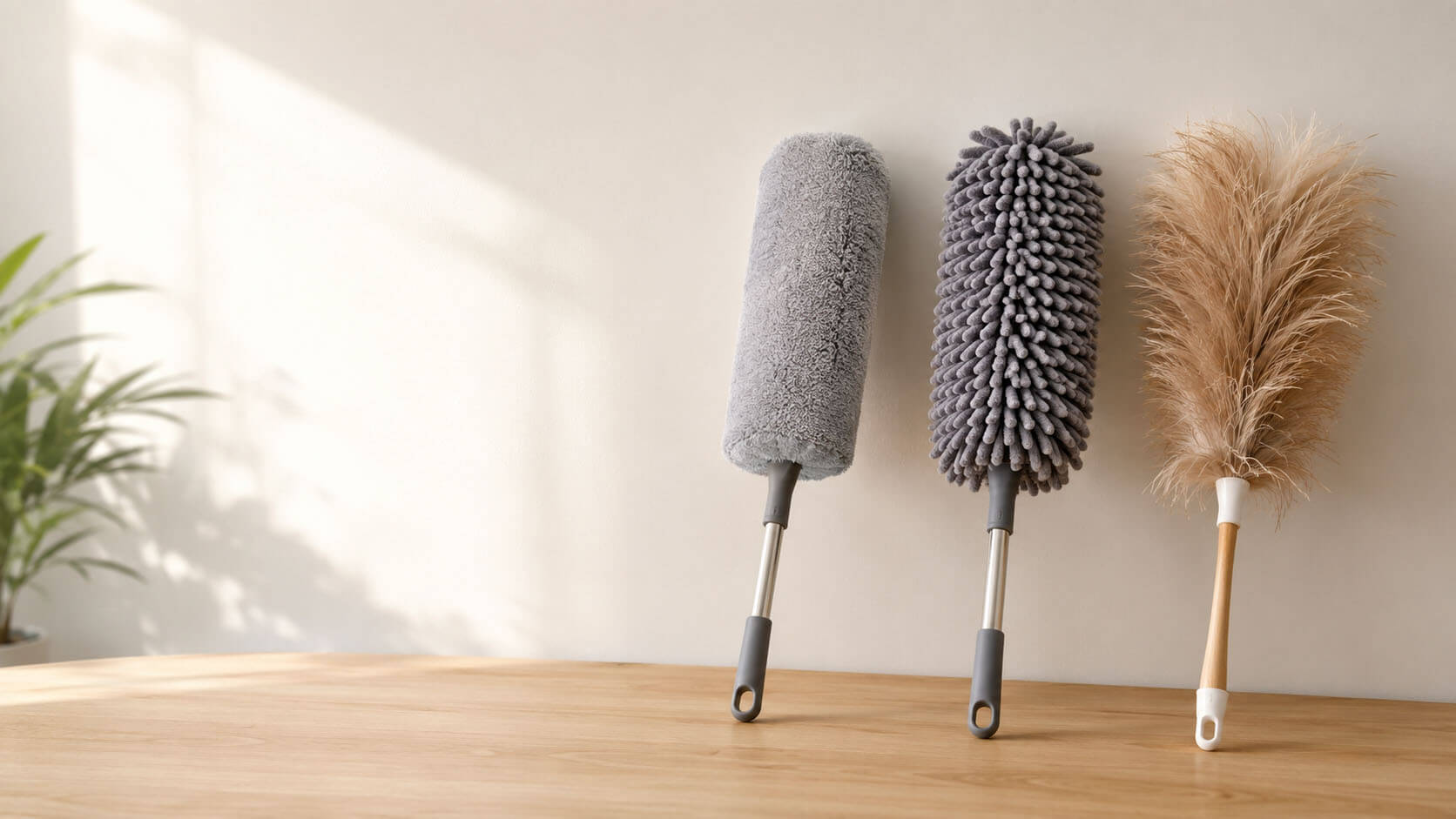
Основное различие заключается в структуре волокон, которая определяет, как каждая щетка для уборки пыли захватывает и удерживает пыль. Микрофибра состоит из сверхтонких синтетических волокон (обычно расщепленного полиэстера и полиамида), которые генерируют статический заряд при перемещении по поверхности. Согласно По результатам независимых лабораторных испытаний, микрофибра собирает 99% пыли, грязи и бактерий. Невидимый невооруженным глазом — без использования химикатов. Это делает его самым эффективным универсальным средством для удаления пыли из всех доступных.
Синель использует более толстые, скрученные «гусеничные» волокна, обеспечивающие большую площадь контакта за один проход. Такая конструкция позволяет ей проникать в бороздки, резьбу и текстурированные поверхности, где плоские микроволокна не могут полностью соприкоснуться. Она генерирует умеренное статическое электричество, но для удаления пыли в большей степени полагается на физический контакт.
Перьевые щетки для пыли — особенно модели из натуральных страусиных перьев — используют натуральные волокна, несущие слабый электростатический заряд. Однако, Журнал Consumer Reports не рекомендует использовать перьевые щетки для пыли. Они предназначены для тщательной очистки, но, как правило, скорее разбрасывают пыль, чем собирают её. Они полезны только для деликатной чистки хрупких предметов.
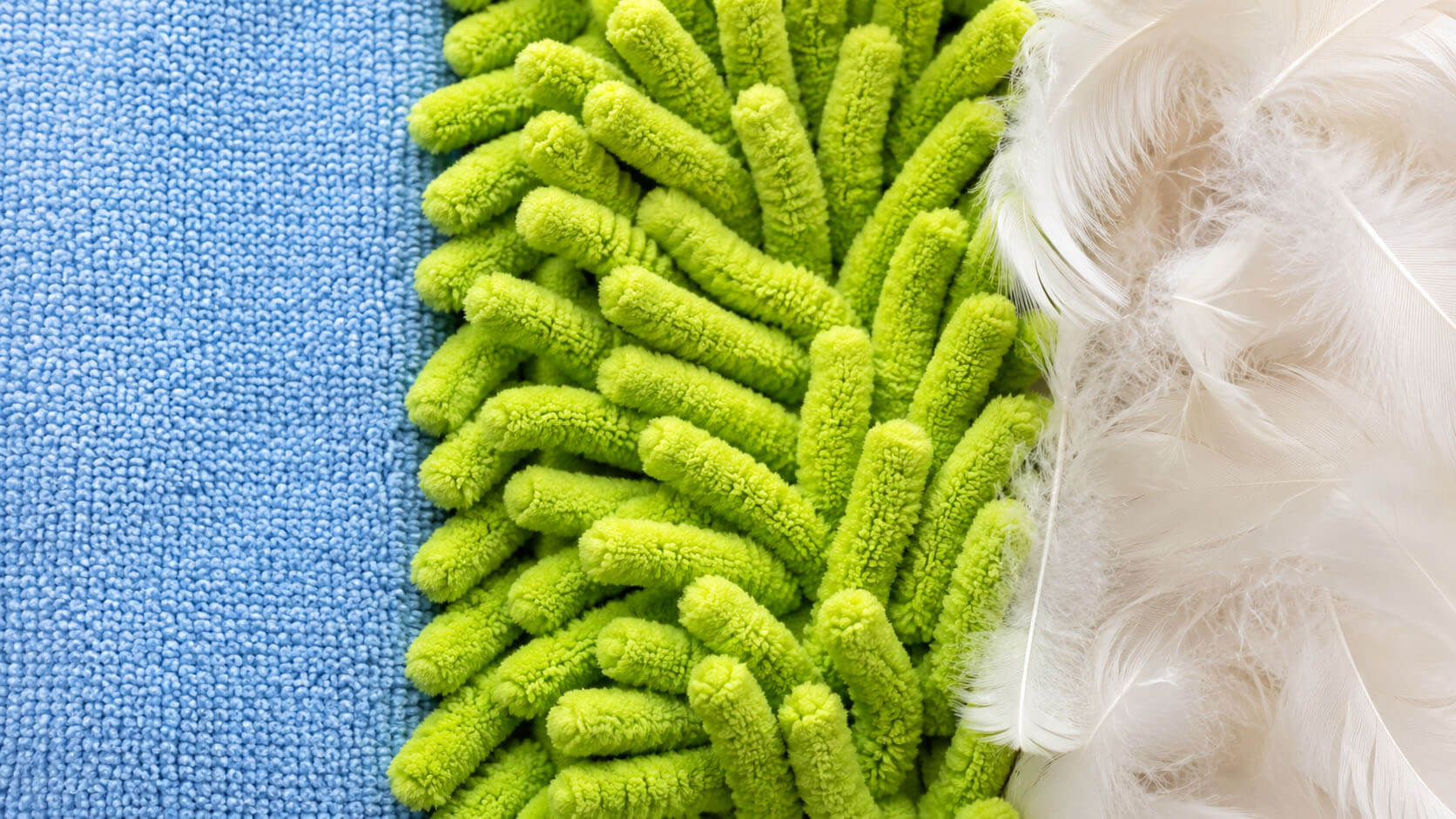
Сравнительная таблица: Лучший материал для пылезащитных салфеток по характеристикам
| Особенность | Щетка для пыли из микрофибры | Шениль Дастер | Перьевая щетка |
| Пылесборник | Отличный | Хороший | Низкий–Умеренный |
| Удержание пыли | Высокий (статическая ловушка) | Средний (физический контакт) | Низкий уровень (перераспределяет пыль) |
| Наилучшее применение | Мелкая пыль, электроника, гладкие поверхности | Густая пыль, резное дерево, фактурная мебель | Небольшая поверхностная доработка, деликатные предметы. |
| Можно стирать / Многоразовое использование | Да — сотни стирок. | Да | Обычно нет |
| Электростатический эффект | Сильный | Умеренный | Слабый |
| Прочность | Высокий | Середина | Низкий |
| Подходит для людей с аллергией | Да | Умеренный | Нет |
Пошаговая инструкция: Как выбрать подходящую щетку для уборки пыли для дома
Выбор оптимальной щетки для уборки пыли зависит от трех факторов: типа поверхности, степени запыленности и необходимой высоты. Используйте эту пятиступенчатую схему для принятия решения.
Шаг 1: Определите тип вашей поверхности.
Микрофибра лучше всего подходит для гладких, плоских поверхностей — полок, стеклянных столов, электроники и плоской мебели. Если в вашем доме есть резные деревянные элементы, декоративная отделка или предметы с шероховатой текстурой, синель обеспечит лучший контакт с такими неровными поверхностями.
Шаг 2: Оценка типа и объема пыли.
Для удаления мелкой пыли и аллергенов необходимы превосходные статические свойства микрофибры. Для удаления тяжелой, накопившейся пыли или густых загрязнений лучше подойдут более толстые волокна синели. Если вам нужно удалить лишь видимый тонкий слой между более тщательной уборкой, подойдет перьевая щетка — но двигайте ее медленно, чтобы не разносить частицы в воздух.
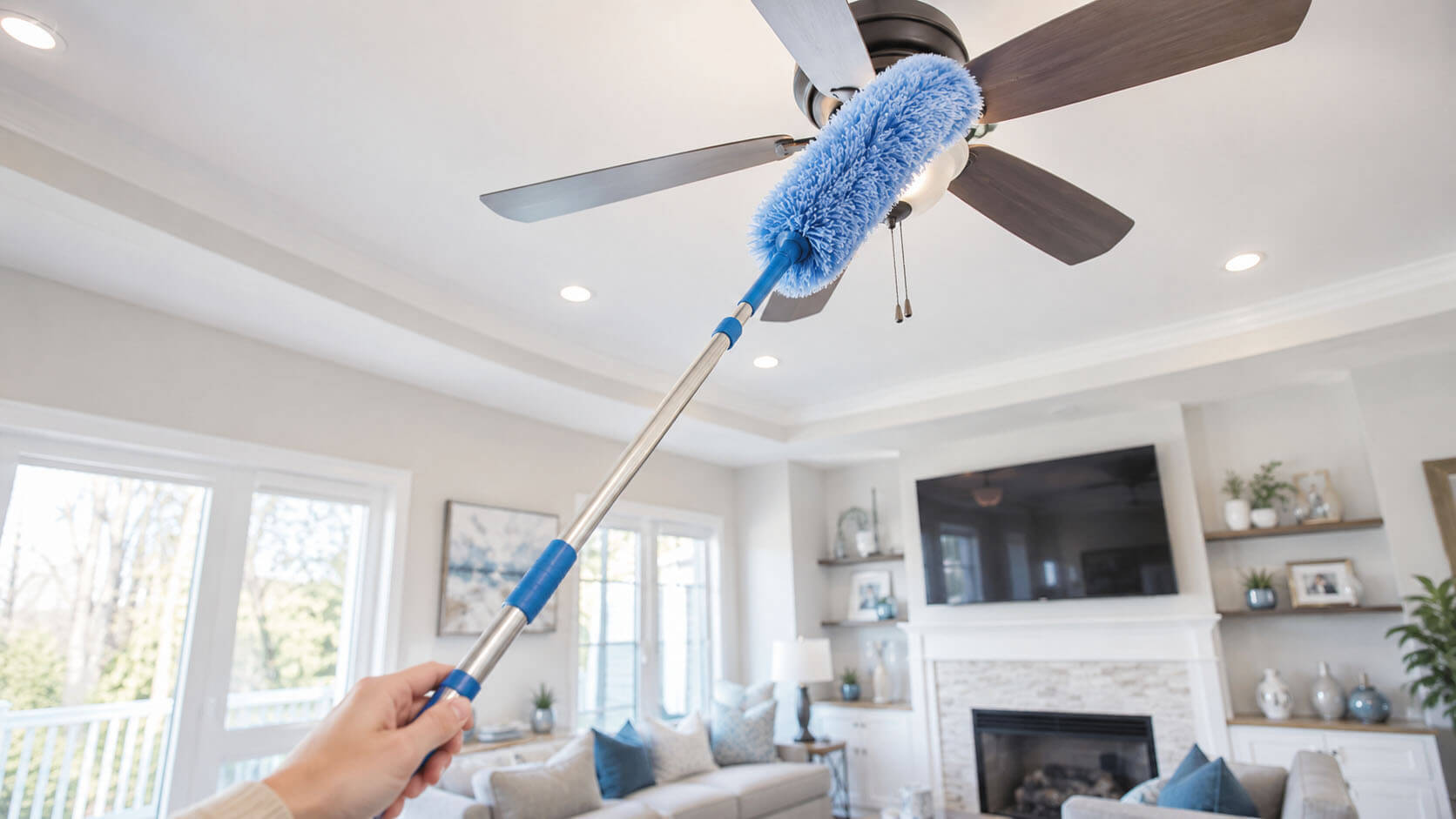
Шаг 3: Проверьте требования к дальности действия
Для очистки потолков, лопастей вентиляторов, высоких полок и вентиляционных решеток требуется телескопическая щетка для удаления пыли. Например, Гибкая щетка для пыли из микрофибры с синелью JESUN BS-09 Длина щетки регулируется от 127 см до 177 см, а головка изготовлена из двух материалов (синель с одной стороны, микрофибра с другой), что избавляет от необходимости использовать лестницу. Для удаления паутины рекомендуется использовать специальную щетку для паутины, например, такую. JESUN ALA04 Благодаря вращению на 360° и щетине из ПЭТ, эта насадка для пыли эффективнее любой плоской насадки.
Шаг 4: Оценка необходимости технического обслуживания
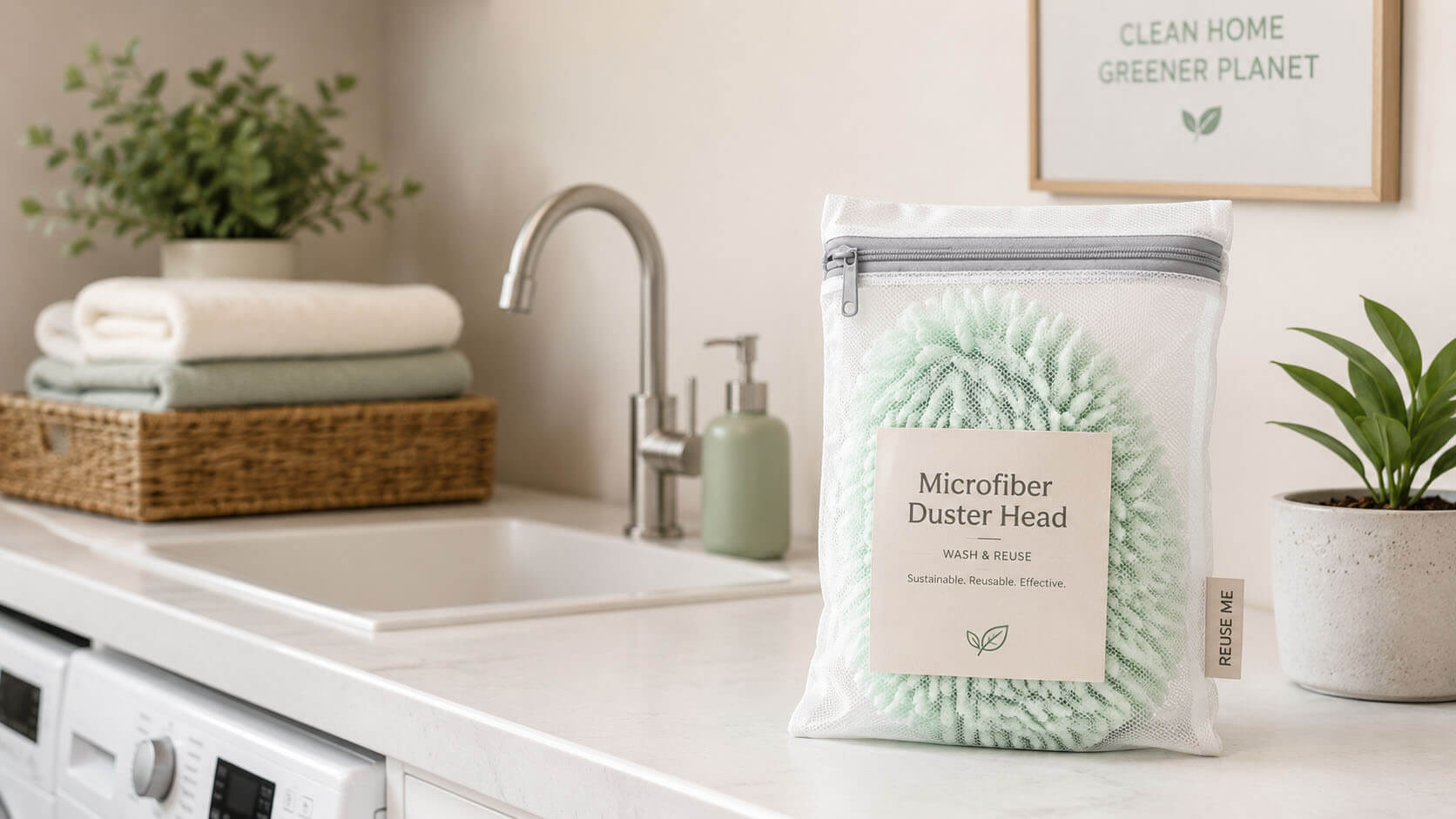
Если вам нужна моющаяся, многоразовая тряпка для уборки пыли, выберите микрофибру или синель. Оба материала можно вытряхнуть, постирать с мягким моющим средством и высушить на воздухе. Подробные инструкции по чистке и уходу см. в нашем руководстве. как правильно чистить тряпку для пылиПерьевые щетки для пыли нельзя стирать — они изнашиваются при намокании — и их необходимо чаще заменять.
Шаг 5: Сравните долгосрочную ценность
Качественная щетка из микрофибры может стираться и использоваться сотни раз. Щетки из синели также многоразовые, что делает их выгодным приобретением для домов с фактурной мебелью. Перьевые щетки изнашиваются быстрее, а одноразовые щетки требуют постоянных затрат на замену. Оценки Агентства по охране окружающей среды Исследования показывают, что многоразовые чистящие средства значительно сокращают количество бытовых отходов с течением времени — это дополнительный фактор, который следует учитывать покупателям, заботящимся об окружающей среде.
Краткие сценарии: Подберите подходящую тряпку для вашей ситуации
Аллергик, проживающий в квартире → Салфетка для уборки из микрофибры со сменной головкой. Статический заряд улавливает мелкие аллергены, предотвращая их повторное попадание в воздух.
Дом с резной деревянной мебелью и декоративной отделкой → Мешок из синели. Толстые волокна проникают в бороздки и выпуклые детали, по которым скользит микрофибра.
Быстрая чистка офиса между профессиональными уборками → Перьевая щетка предназначена только для удаления легкой пыли с поверхностей. Не используйте ее в качестве основного инструмента для уборки.
Высокие потолки, потолочные вентиляторы или лепнина → Выдвижная щетка для уборки из микрофибры или синели с телескопической ручкой. Отдавайте предпочтение длине ручки (ищите ручки длиной не менее 150 см) и гибкой головке для уборки на наклонных поверхностях.
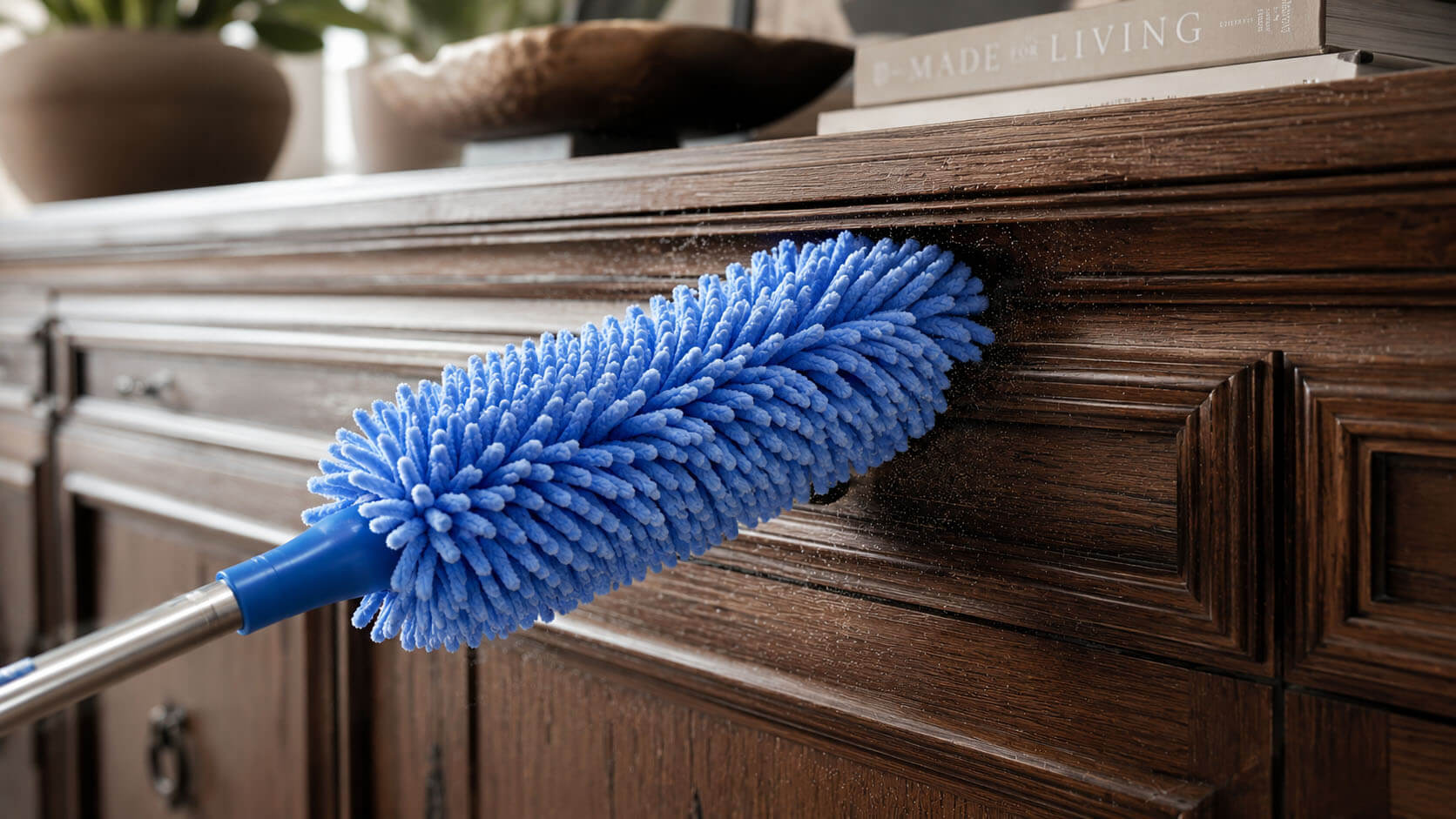
Рекомендации по выбору лучших пылесосов в зависимости от задачи
Потолочные вентиляторы и высокие поверхности: Идеальным вариантом станет выдвижная щетка для пыли из микрофибры с гибкой головкой. JESUN L9 (90–131 см, ПП + микрофибра) имеет гибкое соединение, которое изгибается в соответствии с углом лопастей вентилятора, и головку с кнопкой для легкой стирки. Для большей высоты модель BS-11 выдвигается до 172 см и использует ПЭТ-волокна с электростатической адсорбцией.
Гладкая мебель и электроника: Стандартная ручная щетка для пыли из микрофибры — самый безопасный выбор. Тонкие волокна микрофибры не царапают поверхности и не поцарапают экраны или полированные поверхности. Для сравнения щеток из микрофибры с популярными одноразовыми аналогами, см. нашу статью. тряпки из микрофибры против тряпок Swiffer.
Резная или фактурная мебель: В этом отношении синель превосходит микрофибру. Ее более толстые волокна принимают неправильную форму и вытягивают пыль из щелей, которые не проникают через плоские волокна.
Паутина и углы: Специальная щетка для паутины с жесткими, но мягкими щетинками и вращающейся головкой справляется с липкой паутиной гораздо лучше, чем любая щетка из микрофибры или синели. В сочетании с телескопической ручкой она обеспечивает безопасный доступ на высоте потолка.
Когда НЕ следует использовать определенные виды щеток для пыли
Не каждая тряпка подходит для всех ситуаций. Избегайте этих распространенных несоответствий:
- Проблемы с аллергией → Не используйте щетку для пыли из перьев. Она выпускает мелкие частицы обратно в воздух. Вместо нее используйте щетку из микрофибры.
- Влажные поверхности → Не используйте синель для влажной уборки. Используйте специальную салфетку или швабру из микрофибры.
- Густая паутина → Не используйте мягкую щетку из микрофибры. Лучше воспользуйтесь щеткой для паутины с более жесткой щетиной.
- Точная очистка (клавиатур, электроники) → Не используйте щетку для пыли из перьев. Для контролируемого удаления статического электричества используйте компактную щетку из микрофибры.
Люди также спрашивают
Для удаления пыли лучше подходит микрофибра или синель?
Микрофибра лучше подходит для удаления мелкой пыли с гладких поверхностей, поскольку её статический заряд улавливает частицы, а не вытесняет их. Синель лучше подходит для удаления густой пыли с текстурированных или резных поверхностей, где её более толстые волокна обеспечивают более плотный контакт. Для большинства домов микрофибра покрывает 80% потребностей в уборке пыли.
Действительно ли перьевые щетки для пыли чистят?
Натуральные щетки для пыли из страусиных перьев могут слегка собирать пыль с поверхности за счет слабого статического электричества, но они не задерживают и не удерживают частицы эффективно. Для чего-либо, кроме быстрой визуальной очистки, микрофибровые или синельные щетки обеспечивают значительно лучшие результаты.
Какая тряпка для уборки пыли лучше всего подойдет человеку, страдающему аллергией?
Многоразовая щетка для пыли из микрофибры с высокой пылеудерживающей способностью. Электростатические свойства микрофибры улавливают аллергены, такие как отходы жизнедеятельности пылевых клещей, пыльца и шерсть домашних животных, предотвращая их распространение в воздухе. Для достижения наилучших результатов рекомендуется регулярно стирать щетку после каждого использования.
Как убрать пыль с высоких потолков без лестницы?
Используйте выдвижную щетку для уборки пыли с телескопической ручкой длиной не менее 150 см (60 дюймов). Выбирайте модель с гибкой или поворотной головкой, позволяющей убирать в углах и вдоль плоских потолочных поверхностей. Модели с фиксаторами обеспечивают устойчивость ручки в полностью выдвинутом состоянии.
Как долго служат салфетки из микрофибры?
Качественная насадка для щетки из микрофибры выдерживает сотни машинных стирок, прежде чем ее волокна потеряют свои свойства. При правильном уходе — использовании холодной воды, мягкого моющего средства, без кондиционера для белья или отбеливателя — одна насадка из микрофибры может прослужить несколько лет при регулярном использовании в домашних условиях.
Наш вердикт: Какую тряпку для уборки вам следует купить?
Микрофибра — лучший материал для щеток для уборки дома. Она собирает мелкую пыль, подходит практически для любой поверхности и может использоваться много лет. Добавьте щетку из синели, если в вашем доме есть фактурная мебель или сильное скопление пыли. Перьевые щетки используйте только для легкой и быстрой чистки деликатных предметов.
Если вы являетесь розничным продавцом, оптовиком или владельцем бренда и ищете высококачественные тряпки для уборки по оптовым ценам, Ознакомьтесь с полной коллекцией пылезащитных пальто от JESUN. — Подкреплено 38-летним опытом производства, более чем 400 патентами и сертификацией GRS на все виды пылезащитных средств. Возможна OEM/ODM-настройка при минимальном заказе 1000 единиц для индивидуальных заказов или 100 единиц для продукции, имеющейся на складе.



 Russian
  English
  Spanish
  Arabic