
أهم النقاط
- Four types cover most homes: manual carpet sweepers, cordless electric sweepers, spray or wet-dry sweepers, and 3-in-1 combination units.
- A sweeper picks up crumbs, pet hair and surface dust in one pass, but it is not a vacuum and will not pull grit from deep in a carpet pile.
- Cordless models trade weight and battery runtime for convenience, so runtime and bin capacity matter more than suction claims.
- Spray models add a misting function for hard floors, which helps with sticky residue but needs the tank cleaned after every use.
- Clean the brush roll weekly and replace it when bristles flatten, because a loaded roll stops picking up debris.
مقدمة
The main types of carpet sweepers split by how the brush roll is driven. A manual carpet sweeper uses the motion of the push to turn a roller, which flicks debris into a small bin. A cordless electric sweeper adds a motor, so the roll keeps turning at a constant speed regardless of how fast you push. A spray sweeper adds a misting tank and a pump for hard floors, which lets you loosen sticky residue while you sweep. A 3-in-1 unit combines sweeping with a mop or a vacuum function, so one tool covers more of the floor-care routine. Each step up adds convenience and adds something to maintain. The maintenance side of that trade-off is covered in how to clean broom bristles, and the surface dusters that do the same job on furniture in types of dusters.
Note the scope, because the same words mean different things to different buyers. This guide covers household carpet and hard-floor sweepers — the light, push-along tools you keep in a cupboard. It does not cover the industrial ride-on and walk-behind sweeping machines used in warehouses, car parks and factories, where the deciding specifications are sweep width, hopper capacity and whether the operator rides or walks. Those machines answer a facilities-management question; this guide answers a household one. If you are specifying a ride-on or walk-behind sweeper, ask us separately.
What none of them are is a vacuum cleaner. A sweeper lifts surface debris, crumbs, pet hair and dust from a floor or from the top of a carpet pile, and it does that quickly and quietly without a cord. It does not generate the airflow needed to pull grit from deep in a pile, and it will not filter fine allergens the way a vacuum with a HEPA filter does. Public health guidance recommends a HEPA filter on carpet and fabric-covered furniture to reduce dust build-up, and a sweeper does not replace that (EPA, 2025). Understanding the boundary is what stops people buying a sweeper and being disappointed by it.
This guide covers the four types, the specifications that decide whether one suits your floors, and the maintenance that keeps a brush roll picking up debris. Notably, we manufacture manual, electric and spray sweepers, so the comparisons below draw on our own product testing rather than on a specification sheet. In addition, we tested each type on the same low-pile rug so the pick-up difference was visible rather than theoretical.
The Four Types of Carpet Sweepers at a Glance
The table below sorts the category by power source and function. In contrast to a vacuum, every one of these tools is designed for a fast pass rather than a deep clean, so the useful comparison is how much effort and maintenance each one costs. Notably, the simplest model is often the one that survives longest, because there is less to break.
| يكتب | Power | الأفضل ل | صيانة | Limitation |
|---|---|---|---|---|
| Manual carpet sweeper | Push-driven roller | Carpets, rugs, quick crumb pick-up | Empty bin, comb the roll | Needs steady momentum to work |
| Cordless electric sweeper | Rechargeable battery and motor | Hard floors and low-pile carpet | Charge, empty bin, clean roll | Runtime limited by battery |
| Spray sweeper | Battery plus a misting pump | Hard floors with sticky residue | Rinse tank after every use | Tank adds weight and cleaning |
| 3-in-1 combination | Battery, with a mop or vacuum head | Whole-floor routines in one tool | Clean every head and tank | Heavier; each function is a compromise |
مكانس السجاد اليدوية
A manual carpet sweeper is the simplest tool in the category and still one of the most useful. Pushing the handle turns a roller, and the roller flicks crumbs, hair and surface dust into a small compartment behind it. Because there is no motor, there is nothing to charge and nothing to fail, which makes it the tool that still works after a decade in a cupboard. For a quick pass after a meal, or for a room where a vacuum would be too loud, it does the job in seconds. The trade-off is that it needs momentum: a slow, hesitant push barely turns the roller, so the sweeper picks up almost nothing. Consequently, technique matters as much as the tool when a manual sweeper is involved.
Manual sweepers suit low-pile carpet, rugs and hard floors with a soft brush roll, and they are particularly good for pet hair because the bristles comb it off the surface rather than blowing it around. They are also the lightest option by a wide margin, which matters if the tool is used by someone who finds a vacuum heavy. In our testing, a manual sweeper cleared visible crumbs from a low-pile rug in two passes, while the same sweeper on a deep shag pile only touched the surface. That result is expected, and it is the reason a sweeper is a supplement to a vacuum rather than a replacement. In our experience, a manual sweeper is the tool people reach for most often between weekly vacuum cleans.

JESUN Magic Hand Manual Household Carpet Sweeper (FD-13)
Push-driven brush roll in an iron and PP body, 110×23×15 cm, 0.92 kg. No battery, no charging, and the lightest option for a quick pass over rugs and low-pile carpet.
Cordless Electric Sweepers

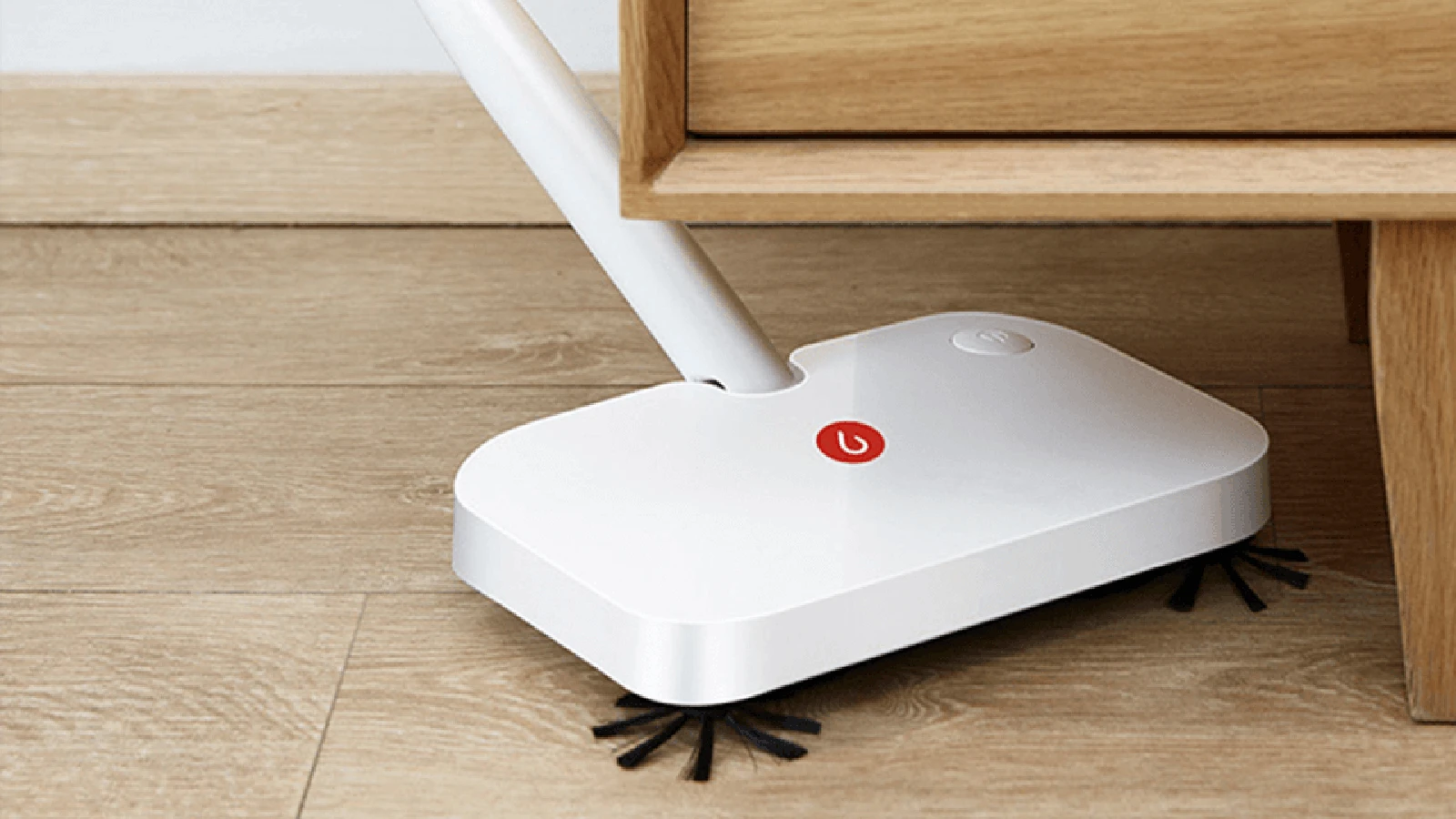
A cordless electric sweeper adds a motor, which fixes the manual sweeper’s main weakness. The roller turns at a constant speed regardless of how you push, so a slow pass still lifts debris, and the tool works well on hard floors where a manual roller tends to skid. Most models are also lighter than a stick vacuum and far quieter, which makes them practical for a kitchen after every meal or a hallway that collects crumbs all day. For an elderly user or anyone with limited strength, the reduction in effort is the real benefit rather than the pick-up itself.
Two specifications decide whether a cordless sweeper is usable in practice, and neither is suction. Runtime determines how much floor you can cover per charge, and bin capacity determines how often you stop to empty it. A sweeper with a twenty-minute runtime and a small bin is fine for a kitchen and frustrating for a whole house. In addition, weight matters more than it looks, because the tool is held away from the body and a heavier head becomes tiring quickly. Consequently, we recommend checking runtime and bin volume before anything else, and treating a manufacturer’s suction claim as the least useful number on the box. Similarly, a removable battery extends the life of the tool far beyond a sealed one.
JESUN Cordless Floor Sweeper (JCD006)
Motorised brush roll in a PP and aluminium body, 27×17×106 cm, 0.952 kg. The version to pick when the floor is hard rather than carpeted, where a manual roller tends to skid.
Spray and Wet-Dry Sweepers
A spray sweeper adds a tank and a pump, so you can mist a hard floor while you sweep. The water loosens sticky residue and holds dust down instead of pushing it into the air, which is why spray models are popular in kitchens and dining areas where spills dry into a film. Some units also include a squeegee blade or a washable pad, so a single pass sweeps and wipes. That combination genuinely shortens the routine on a hard floor, and it removes the need to fetch a separate spray bottle and cloth for a small job.
The cost is maintenance. A tank that is not rinsed after every use becomes a source of smell and, in hard-water areas, of mineral build-up that clogs the nozzle. The pad or blade also needs washing, and the extra water means the floor takes longer to dry than after a dry sweep. Notably, a spray sweeper should not be used on unfinished wood or on laminate with open seams, because standing moisture damages both. For example, a spray sweeper used daily on sealed tile is a genuine time-saver, while the same tool on an engineered wood floor is a liability. However, a light mist on sealed tile is safe and shortens the routine considerably.
3-in-1 and Combination Units
A 3-in-1 unit combines sweeping with one or two other functions, usually a mop or a vacuum head, and sometimes a spray function as well. The appeal is obvious: one tool, one storage spot, one battery. For a small apartment or a single room, that consolidation is genuinely useful, because there is no cupboard space to spare and no need for four separate appliances. A combination unit also reduces the number of times you switch tools during a routine, which shortens a clean even if each individual function is slightly weaker than a dedicated tool.
The trade-off is that every combined function is a compromise. A 3-in-1 head is usually heavier than a dedicated sweeper, its bin is smaller than a stick vacuum’s, and its mop function is lighter-duty than a proper mop. In addition, there are more parts to clean, and one neglected tank or filter affects the whole tool. In our experience, a combination unit works best as the primary tool for a small home and worst as a supplement in a large one, where dedicated tools do each job better. Matching the tool to the size of the space is the deciding factor. As a result, a combination unit is a good first purchase and a poor second one.
Sweeper vs Vacuum vs Broom
Choosing between the three comes down to what is on the floor and how deep it sits. A broom moves debris sideways, a sweeper lifts surface debris into a bin, and a vacuum extracts debris and filters the air. The table below sets out where each one wins.
| Task | مكنسة | مكنسة | مكنسة |
|---|---|---|---|
| Crumbs and dry spills | Fair; spreads fine dust | Excellent; lifts into a bin | ممتاز |
| Pet hair on low-pile carpet | Poor | Very good; combed off the surface | ممتاز |
| Grit deep in a pile | Poor | Poor | ممتاز |
| Allergen and fine-dust filtration | None | None | Excellent with a HEPA filter |
| Speed and quiet operation | ممتاز | ممتاز | Moderate; louder |
| Large outdoor debris | ممتاز | Poor | Poor |
In practice, most homes need two of the three rather than one. A sweeper plus a broom covers daily indoor debris and outdoor grit, and a vacuum handles the deep clean and the allergy case. Meanwhile, a household that already vacuums weekly gets more value from a light sweeper than from a second vacuum, because the sweeper is the tool that gets used between the weekly cleans. For example, a kitchen swept after every meal needs far less vacuuming than one left until the weekend.
Battery, Runtime and Capacity
For any powered sweeper, three numbers decide how the tool feels in daily use, and none of them is the one printed largest on the box. Runtime sets how much floor you can cover per charge, and a realistic figure is usually lower than the headline number once the brush roll is under load on carpet. Bin capacity sets how often you stop, and a small bin on a pet-hair job fills within a single room. Weight sets whether you reach for the tool at all, because a heavy sweeper becomes a chore after five minutes.
Two further details are worth checking. First, battery type and replacement availability matter, because a sweeper with a sealed, non-replaceable battery becomes waste when the cells fade. Second, brush roll access decides how easy weekly cleaning will be, since a roll that requires tools to remove will not be cleaned often. Notably, a roll that is clogged with hair stops picking up anything, so the maintenance design is a functional specification rather than a convenience. In our testing, sweepers with a tool-free roll release were cleaned several times more often than those requiring a screwdriver, and they kept their pick-up performance for far longer as a result. Importantly, a clogged roll is the most common reason a working sweeper appears to have lost its power.
Matching a Sweeper to Your Floors
Floor type decides the model, so start there rather than with the price. The list below covers the common cases.
- Low-pile carpet and rugs: a manual carpet sweeper is light, quiet and effective, and needs no charging.
- Hard floors and tile: a cordless electric sweeper, because a manual roller skids on smooth surfaces.
- Kitchens and dining areas: a spray sweeper for sticky residue, provided the floor is sealed and the tank is rinsed.
- Homes with pets: an electric sweeper with a wide roll and a large bin, plus weekly roll cleaning.
- Small apartments: a 3-in-1 combination unit, where storage space matters more than peak performance.
- Deep-pile carpet or allergy households: a vacuum with a HEPA filter, with a sweeper as a supplement rather than a substitute.
If you buy only one sweeper, buy a cordless electric model with a wide roll and a removable bin, because it works on both hard floors and low-pile carpet. Then add a manual sweeper for a second floor or a spare room, since it costs little and never needs charging.
Maintenance and Replacement
Sweeper maintenance is short but decisive, and almost all of it concerns the brush roll. Empty the bin after every use rather than letting it fill, because a full bin pushes debris back onto the floor. Comb or cut hair off the roll weekly, since hair wraps around the axle and reduces the effective diameter until the bristles stop touching the surface. Wipe the housing and the wheels, and check that the roll turns freely by hand. For spray models, rinse the tank and run clean water through the nozzle after every use, and leave the tank open to dry so it does not develop a smell.
Replacement is driven by the roll rather than the motor. A sweeper needs a new brush roll when the bristles flatten, when the roll leaves a visible line of debris behind, or when it stops turning smoothly even after cleaning. In practice that is every six to twelve months for a household electric sweeper and longer for a manual one. Battery-powered models need a new battery when runtime drops noticeably, and a model with a sealed battery should be replaced rather than repaired. An NSF International study reported by Consumer Reports found coliform bacteria on 75% of sampled household sponges and rags, and extension services make the same point about cleaning tools that are not washed and dried between uses (Consumer Reports, 2025). A sweeper bin and roll deserve the same treatment. That said, the roll is the part that decides performance, so a spare roll is worth more than a spare battery.
الأسئلة الشائعة
What are the main types of floor sweepers?
Four types cover most homes: manual carpet sweepers driven by the push, cordless electric sweepers with a motorised roll, spray sweepers that mist hard floors while sweeping, and 3-in-1 combination units that add a mop or vacuum function.
Is a floor sweeper as good as a vacuum?
No. A sweeper lifts crumbs, pet hair and surface dust quickly and quietly, but it does not generate enough airflow to pull grit from deep in a carpet pile and it does not filter fine allergens. Public health guidance recommends a HEPA vacuum for reducing dust build-up, so a sweeper supplements a vacuum rather than replacing it.
Manual or cordless electric sweeper: which should I choose?
Manual for low-pile carpet and rugs, where it is light, quiet and needs no charging. Cordless electric for hard floors and mixed flooring, because a manual roller skids on smooth surfaces and needs steady momentum to pick anything up.
Do spray sweepers damage wood floors?
They can. Standing moisture damages unfinished wood and laminate with open seams, so a spray sweeper is best on sealed tile, vinyl and stone. Even there, use a light mist rather than a soak, and rinse the tank after every use so it does not clog or smell.
Why has my sweeper stopped picking up debris?
Almost always the brush roll. Hair wrapped around the axle reduces its effective diameter, and flattened bristles stop reaching the surface, so the roll spins without contacting the floor. Comb or cut the hair off weekly, and replace the roll once the bristles flatten or it leaves a line of debris behind.
Sourcing floor sweepers for your range?
We manufacture manual carpet sweepers, cordless electric sweepers, spray models and 3-in-1 units, with OEM and ODM support and low MOQs.
Request Wholesale Pricing →خاتمة
Floor sweepers divide by power source, and each step up adds convenience along with something to maintain. A manual carpet sweeper is light, silent and maintenance-free, but it needs momentum and it skids on hard floors. A cordless electric model fixes both problems at the cost of runtime and charging. A spray sweeper loosens sticky residue on sealed hard floors, provided the tank is rinsed. A 3-in-1 unit consolidates a routine in a small space, with every function slightly compromised. None of them replaces a HEPA vacuum, because a sweeper lifts surface debris rather than extracting grit or filtering allergens. That said, for the crumbs, hair and dust that appear between weekly vacuums, a sweeper is the tool that actually gets used.
We build manual, electric, spray and combination sweepers, and we are happy to help you match a range to the floors your market cleans.
مراجع
- US Environmental Protection Agency — “Asthma Triggers: Gain Control” (HEPA filtration on carpet and fabric-covered furniture to reduce dust build-up). epa.gov/asthma/asthma-triggers-gain-control
- US Centers for Disease Control and Prevention — “When and How to Clean and Disinfect Your Home.” cdc.gov/hygiene/about/when-and-how-to-clean-and-disinfect-your-home.html
- Consumer Reports — “Household Cleaning Tools: How to Clean and When to Replace.” consumerreports.org/home-garden/cleaning/how-to-clean-and-when-to-replace-household-cleaning-tools
- University of Illinois Extension — “A guide to keeping your sponges, dish rags and scrub brushes clean.” extension.illinois.edu/blogs/simply-nutritious-quick-and-delicious
This guide was written by the JESUN Cleaning Tools Team and reviewed by our product engineering group. You can read more about us أو contact our team with questions about sweeper specifications.
Continue Learning
- المكنسة الكهربائية مقابل المكنسة الكهربائية: الإيجابيات والسلبيات وحالات الاستخدام — the wider comparison, including wet-dry vacuums.
- كيفية تنظيف وصيانة المكنسة الكهربائية — filters, belts and the parts that wear first.
- Electric sweeper catalog — cordless models for hard floors and low-pile carpet.


 Arabic
 English
 Spanish
 Russian